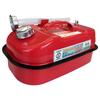
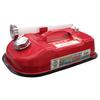
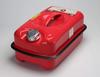
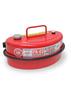
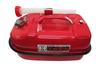
Product Introduction
● Prevents fueling mistakes. Differentiate the can by color. Easy to distinguish, even in the dark.
● A gasoline can designed for safety and ease of use.
● Ideal for automobiles, motorcycles (motocross, etc.), boats (jet skis, etc.), agricultural machinery, generators, etc.
● Certified by the KHK (Hazardous Materials Safety Technology Association) mark.
● Space-saving stackable design.
● 0.8mm thick steel plate for peace of mind.
● Zinc-plated steel plate for long-lasting durability.
● Wide lineup of consumables and repair parts.
● Lightweight, rust-resistant aluminum alloy cap.
● Suitable for transporting and short-term storage of gasoline, diesel, kerosene, mixed oil, oil, etc. (Class 4, Class 1 Petroleum, Hazard Level II).
● Handle on the bottom for easy pouring.
Precautions for Use
● Keep away from flames.
・Do not fill the can with gasoline beyond the specified capacity.
- Always place the portable can on a flat surface with the fuel filler neck facing upwards.
- To prevent gasoline leaks, be sure to tighten the cap and air adjustment screw all the way.
- Do not put anything other than gasoline in the portable can. Otherwise, the inside of the can may rust.
- When removing the cap, place the portable can upside down on a flat surface before loosening the cap and making sure that the gasoline inside does not spill.
- When carrying or moving the portable can, first loosen the air adjustment screw, adjust the pressure inside the gasoline can, and then securely retighten the air adjustment screw.
- If the cap or nozzle gasket is deteriorated or damaged, there is a risk of gasoline leakage, so replace the parts.
- When storing the portable can, regardless of whether it is filled or not, do not place it in direct sunlight, near an open flame, in a place where it is likely to tip over, in a closed car, or indoors.
- When storing an empty portable can for a long period of time, be sure to loosen the cap. This can reduce deterioration of the gasket.
- If the can has not been used for an extended period of time, inspect the can body, cap, and nozzle to ensure there are no abnormalities before using it again.
- When refueling, spilled gasoline may get into the gaps in the body molding and wet the floor, so wipe it up immediately.
- If gasoline gets on the can, it may cause discoloration, so wipe it off immediately.
● Refueling Procedures and Precautions
- Place the gasoline can on a flat surface with the filler neck facing up.
- Loosen the air adjustment screw to release the pressure inside the can.
- Slowly remove the cap.
- Remove the nozzle from the nozzle stopper on the top of the can and attach it securely to the filler neck.
- Make sure the fuel nozzle is straight before refueling.
● Post-Use Precautions
- Make sure the cap is securely tightened.
- Make sure the air adjustment screw is securely tightened all the way.
・Tilt the gasoline can to check that the cap is not leaking.
・When storing gasoline, kerosene, or diesel, use it as soon as possible after filling the can.
・Gasoline, kerosene, or diesel stored for a long period of time will become increasingly acidic and put strain on the engine, so do not use it.
・Even after emptying a gasoline can, a small amount of gasoline will remain in the tank. Remove any remaining gasoline from the filler neck with a rag.
Safety Warning
Safety Warning
・After refueling, tightly tighten the cap and air vent screw.
・Storing gasoline for a long period of time can cause the inside of the can to rust.
・Gasoline also deteriorates. Do not use gasoline stored for a long period of time, as it may have a negative impact on your vehicle.
・Do not leave even a small amount of gasoline in the can. Gasoline may vaporize, and the vapor pressure may cause the can to deform.
・When purchasing gasoline or diesel in a container at a gas station, have an employee fill it for you. Self-service stations do not allow you to fill it yourself.・Rust prevention agent has been sprayed inside the gasoline can, but this does not affect its use.
・When opening and closing the cap and fuel nozzle, take sufficient care not to pinch your fingers or other body parts.
・We assume no responsibility for malfunctions or damage caused by improper use, fire, earthquake, flood, other natural disasters, pollution, salt damage, etc. Additionally, avoid using thinners or water other than gasoline, as this may cause deterioration of the paint and gaskets and rust.
・When refueling indoors, in a car, or in a location where the surrounding area may be soiled, make sure the nozzle is securely screwed on, and take measures to prevent contamination of the surrounding area and to prevent danger to people and the surrounding area in the event of a spill.
・When filling a gasoline can with gasoline and transporting it in a car, etc., be sure to store and transport it on a polyethylene bag or tray. When transporting the can on the bed of a truck, use an anti-slip surface (such as a rubber mat) to protect the bottom of the can from damage, especially. ■Storage Risks
- Gasoline poses an extremely high risk of fire, and if a fire does occur, it will spread explosively. Therefore, we strongly recommend avoiding storing gasoline in containers.
- Storing diesel fuel in large quantities increases the risk of fire and increases the risk of a large-scale fire if it does occur. Therefore, we strongly recommend avoiding storing large quantities.
Advantages of the Meltec FZ Series Gasoline Can: Greater Safety and Security! Compliant with the Fire Service Act and certified by the Hazardous Materials Safety Technology Association (KHK) in Japan!
For transporting and storing hazardous materials! Compact, stackable design for easy storage!
Capacity: 10L
Body Color: Blue
Steel Plate Thickness: 0.8mm
Painting: Powder Coating
Accessories: Oil Type Identification Sticker
Material: Galvanized Steel Plate
Cap: Aluminum Alloy
Nozzle/Clamping Port: PE
Body Size: Approx. 400(W) x 195(H) x 250(D)mm
Body Weight: Approx. 2.2kg
![Meltec FZD-10 10L Portable Gasoline Can, Fire Service Law Compliant, KHK [Zinc-Plated Steel Plate], Steel Plate Thickness: 0.8mm, Stackable, Blue](https://img.joomcdn.net/a762bdfc74f86c613c66a291f4665ba4423eb32b_731_1024.jpeg)
![Meltec FZD-10 10L Portable Gasoline Can, Fire Service Law Compliant, KHK [Zinc-Plated Steel Plate], Steel Plate Thickness: 0.8mm, Stackable, Blue](https://img.joomcdn.net/7d9b647896b6411f5ab3b279dca17fe47e5599f0_731_1024.jpeg)
![Meltec FZD-10 10L Portable Gasoline Can, Fire Service Law Compliant, KHK [Zinc-Plated Steel Plate], Steel Plate Thickness: 0.8mm, Stackable, Blue](https://img.joomcdn.net/2d70fdf18e49a471430c5a180d97799e2bdbe3ed_731_1024.jpeg)
![Meltec FZD-10 10L Portable Gasoline Can, Fire Service Law Compliant, KHK [Zinc-Plated Steel Plate], Steel Plate Thickness: 0.8mm, Stackable, Blue](https://img.joomcdn.net/1abdacb1f3b54b725210f23e0265ea954f998950_731_1024.jpeg)
![Meltec FZD-10 10L Portable Gasoline Can, Fire Service Law Compliant, KHK [Zinc-Plated Steel Plate], Steel Plate Thickness: 0.8mm, Stackable, Blue](https://img.joomcdn.net/4ca81ef4f1de6f021cf8e373a074d4a383030d6d_731_1024.jpeg)
![Meltec FZD-10 10L Portable Gasoline Can, Fire Service Law Compliant, KHK [Zinc-Plated Steel Plate], Steel Plate Thickness: 0.8mm, Stackable, Blue](https://img.joomcdn.net/6933be598994bad3942bcdb7ae33ead4dbd4bc96_731_1024.jpeg)
![Meltec FZD-10 10L Portable Gasoline Can, Fire Service Law Compliant, KHK [Zinc-Plated Steel Plate], Steel Plate Thickness: 0.8mm, Stackable, Blue](https://img.joomcdn.net/dcfc09182c954cd522d4a13d58d575a8ad9a8fc2_731_1024.jpeg)
![Meltec FZD-10 10L Portable Gasoline Can, Fire Service Law Compliant, KHK [Zinc-Plated Steel Plate], Steel Plate Thickness: 0.8mm, Stackable, Blue](https://img.joomcdn.net/57ac044f89c851114b058864b2f14af3ac9193d2_731_1024.jpeg)
![Meltec FZD-10 10L Portable Gasoline Can, Fire Service Law Compliant, KHK [Zinc-Plated Steel Plate], Steel Plate Thickness: 0.8mm, Stackable, Blue](https://img.joomcdn.net/219f068d823bc1560a5a7b04ba8bc3ef622e8a23_731_1024.jpeg)
![Meltec FZD-10 10L Portable Gasoline Can, Fire Service Law Compliant, KHK [Zinc-Plated Steel Plate], Steel Plate Thickness: 0.8mm, Stackable, Blue](https://img.joomcdn.net/fbf7abaec9089fd391c3d58bb945f4569d07fdec_original.jpeg)
![Meltec FZD-10 10L Portable Gasoline Can, Fire Service Law Compliant, KHK [Zinc-Plated Steel Plate], Steel Plate Thickness: 0.8mm, Stackable, Blue](https://img.joomcdn.net/8066b1070a4550f36bc24dfe676a71c8c974edee_original.jpeg)
![Meltec FZD-10 10L Portable Gasoline Can, Fire Service Law Compliant, KHK [Zinc-Plated Steel Plate], Steel Plate Thickness: 0.8mm, Stackable, Blue](https://img.joomcdn.net/ba43312d8c33956ce4ac4907db530d71480cbc1b_original.jpeg)
![Meltec FZD-10 10L Portable Gasoline Can, Fire Service Law Compliant, KHK [Zinc-Plated Steel Plate], Steel Plate Thickness: 0.8mm, Stackable, Blue](https://img.joomcdn.net/21bd6369c12d8c586a6053c9a171b80636ecd35c_original.jpeg)


 No-delivery refund

![Meltec FZD-5 5L Portable Gasoline Can, Fire Service Law Compliant, KHK [Zinc-Plated Steel Plate], Steel Plate Thickness: 0.8mm, Stackable, Blue](https://img.joomcdn.net/7b2d923f9321c4a0b9a7d410c6f1c85a8d9a0a25_71_100.jpeg)
![Meltec FZ-10 10L Portable Gasoline Can, Fire Service Act Compliant, KHK [Zinc-Plated Steel Plate], Steel Plate Thickness: 0.8mm, Stackable](https://img.joomcdn.net/0ae231e83dad8d8ca628a34aed00f9ff97d8cc8b_71_100.jpeg)
![Meltec FZ-5 5L Portable Gasoline Can, Fire Service Act Compliant, KHK [Zinc-Plated Steel Plate], Steel Plate Thickness: 0.8mm, Stackable](https://img.joomcdn.net/8c2cdab0b95924226c33821361ab9ec4b08ef960_71_100.jpeg)