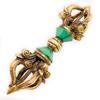
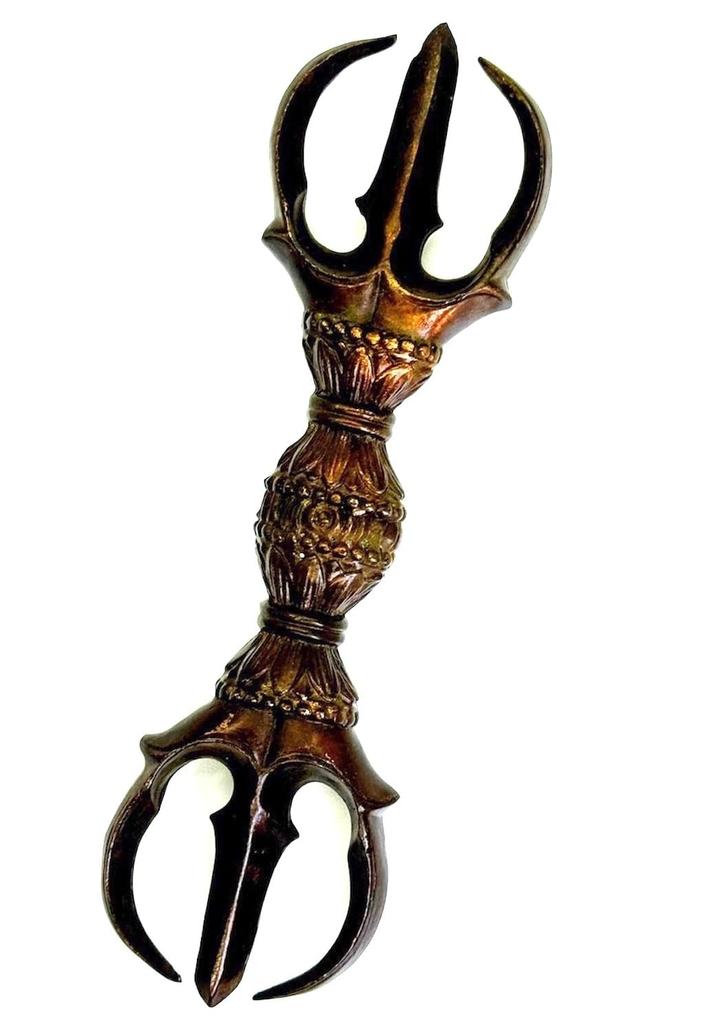
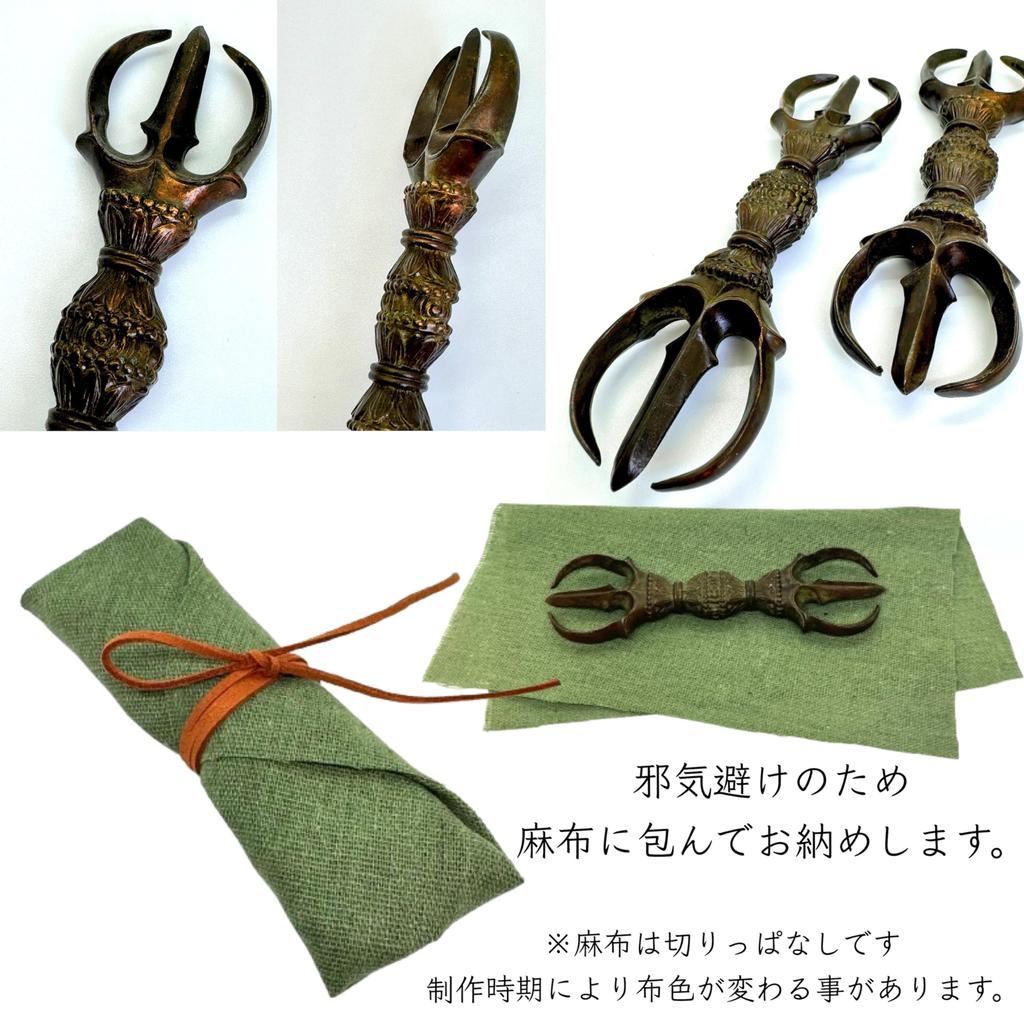
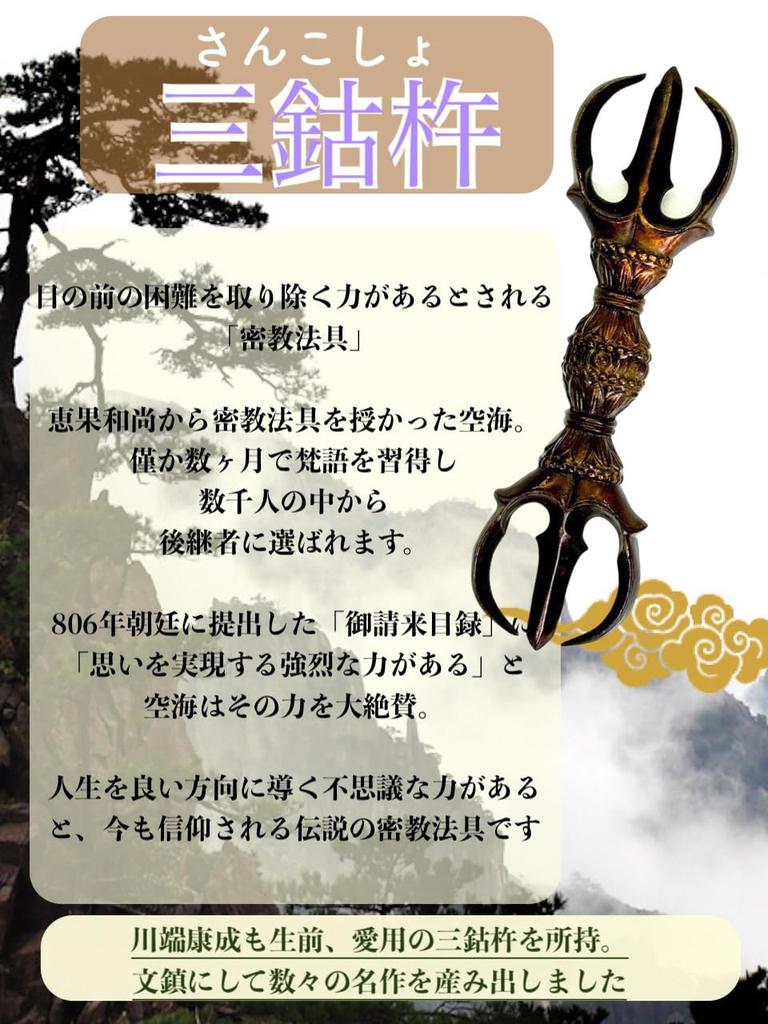
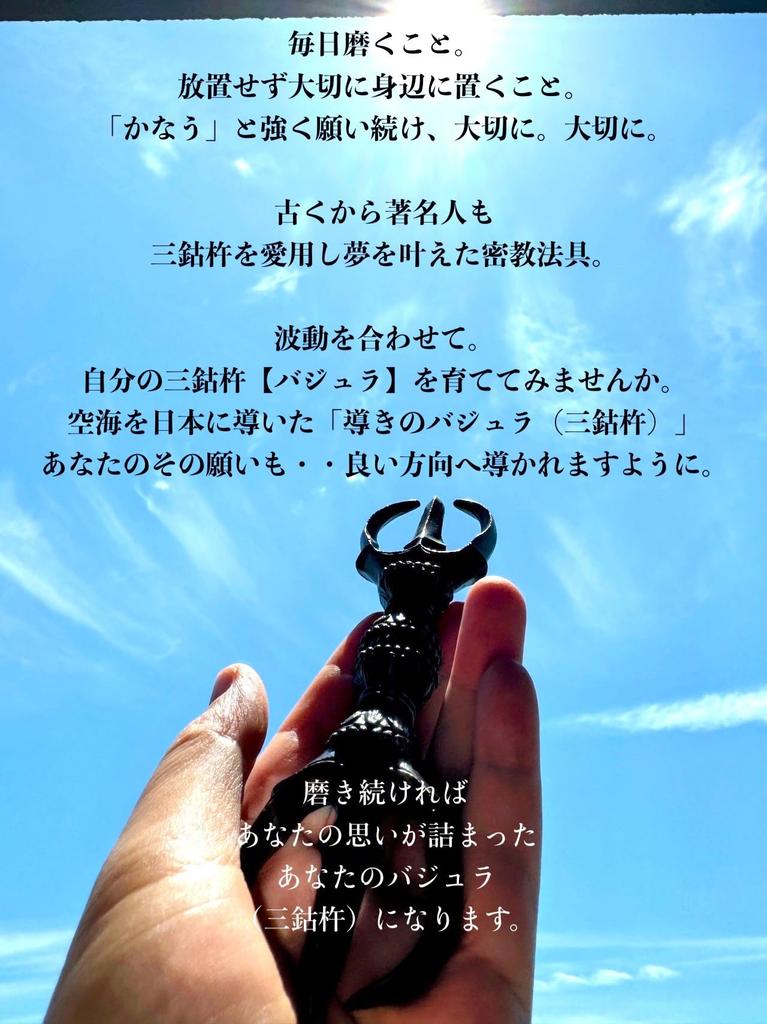
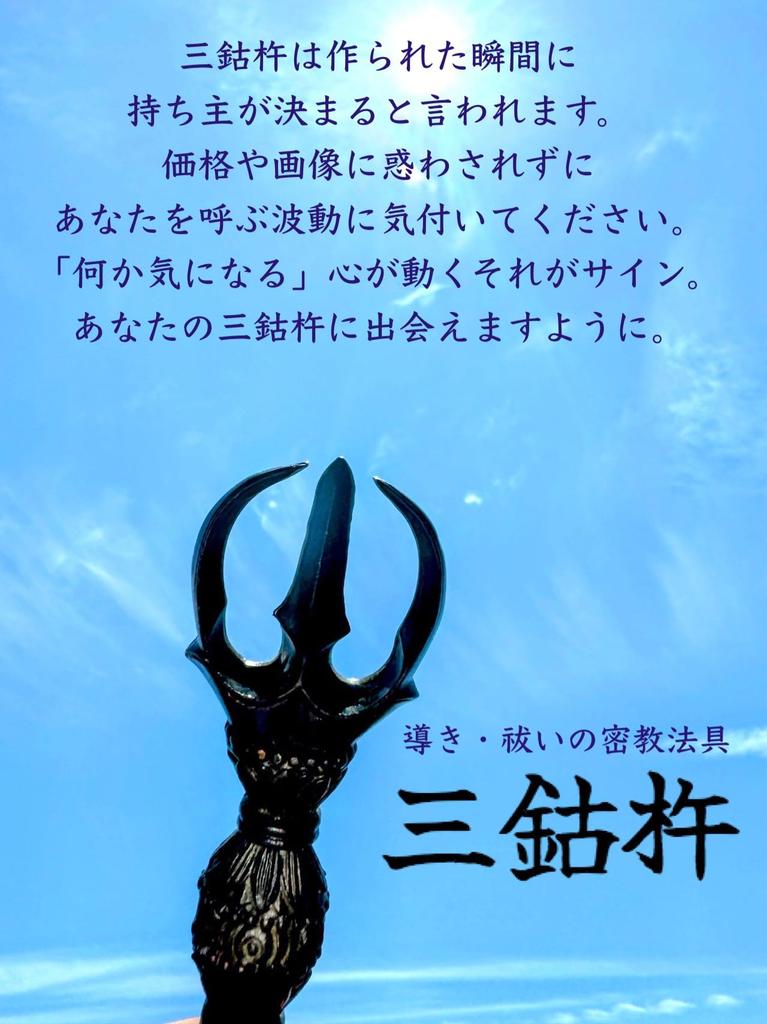
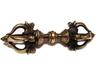
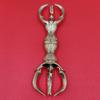
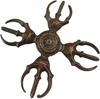
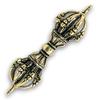
The Sankosho (three-pronged vajra) is a metal, pestle-shaped Buddhist implement used in temples and as a ritual implement in Esoteric Buddhism. In the Nara period, before Kukai formally introduced Esoteric Buddhism to Japan, early forms of Esoteric Buddhism were practiced. This item is a vajra from that period, called a Sankosho because of the number of prongs it has. A vajra is a pestle-shaped weapon with sharp blades at both ends of the handle, symbolizing lightning. There are three forms: a single-pronged vajra at both ends is called a "Dokkosho," a three-pronged one is called a "Sankosho," and a five-pronged one is called a "Gokosho." We will introduce the Sankosho, which is said to ward off immediate misfortune.
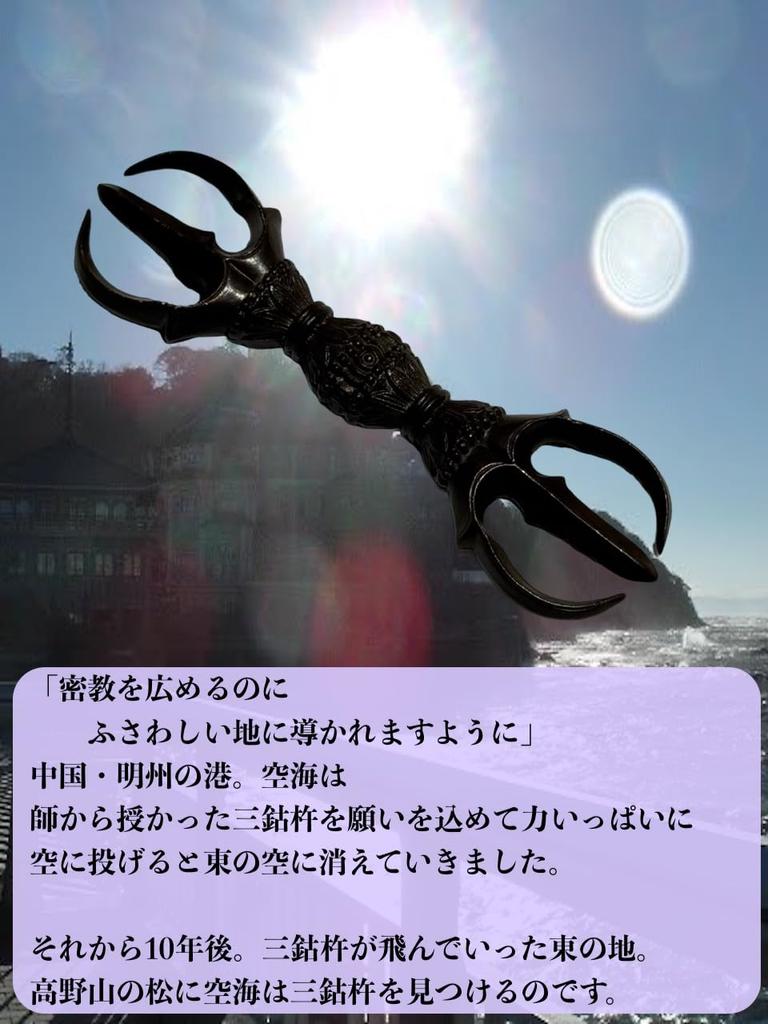
[History] The vajra (three-pronged vajra) has been used since ancient times in Tibetan and Indian rituals, prayers, meditation, purification, and protection against evil. Originally, it belonged to Indra, the god of thunder, but later in Buddhism, it was believed that a god wielding this weapon (Vajrapani) always followed the Buddha like a shadow, protecting him. As a ritual implement in esoteric Buddhism, the vajra was adopted as a symbol of the wisdom of enlightenment that breaks through worldly desires, due to its strength and ability to destroy anything. The "three-pronged vajra" that entered Japan is the oldest form of vajra, and it is said that Kobo Daishi (Kukai) received it from his teacher, threw it when choosing a place to spread esoteric Buddhism, and that it became the ritual implement that guided Kobo Daishi (Kukai) to Mount Koya. [Anecdote] In Indian mythology, the Vajra is the thunder and lightning unleashed by Indra (the god of Buddhism). It is said that when Kobo Daishi, Kukai, was studying in Tang China as part of a Japanese envoy and was on the shore of Mingzhou, preparing to return to Japan after receiving all the teachings of esoteric Buddhism, he threw a three-pronged vajra towards the east, praying, "Show me a suitable place in Japan to spread esoteric Buddhism." The vajra then flew towards Japan on a purple cloud. Its shape is an infinity symbol (∞), the same as the torus cycle. The double helix shape is said to be activated by the user's frequency, releasing upward spiral energy. Therefore, the "three-pronged vajra" has been used to ward off all difficulties and gain upward energy and guidance towards bliss by aligning with the user's frequency.
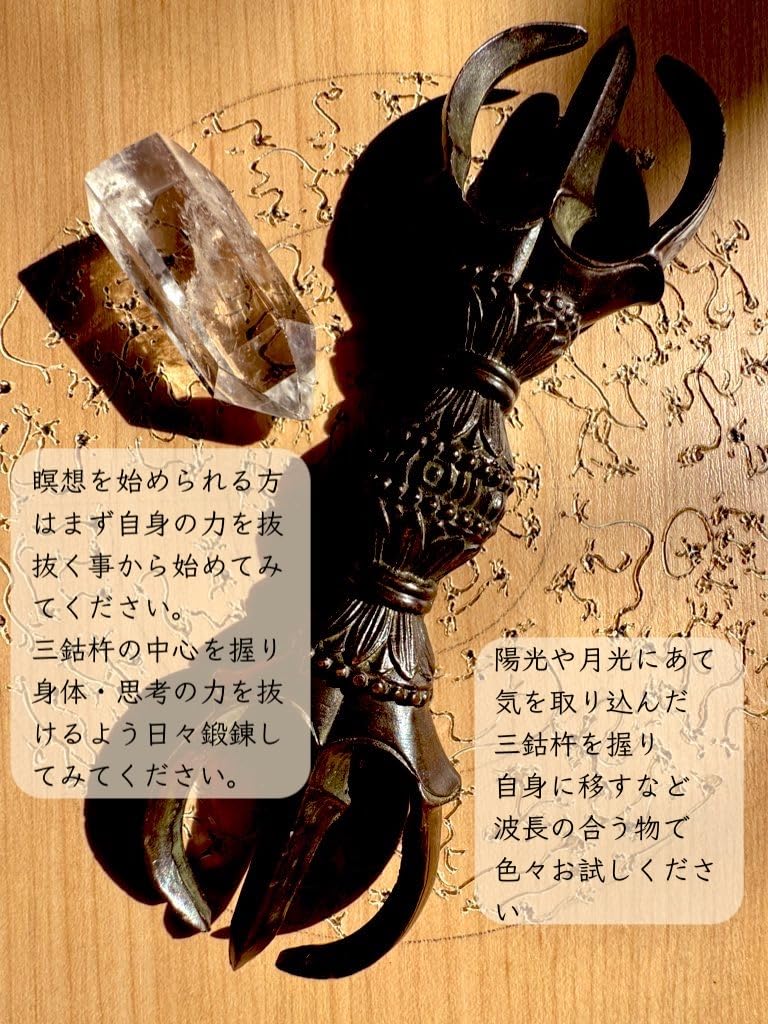
"[How to Use] This three-pronged vajra is believed to possess the power to shatter evil, and is used to ward off difficulties and worldly desires. Simply having it nearby is considered to ward off evil and misfortune. The three-pronged vajra is frequently depicted in ancient Japanese picture scrolls, and in most cases, it is held in the hand as if aligning with one's own energy. You can carry it in your bag as a charm, or place it in a place that concerns you, such as your home altar, entrance, living room, bedroom, or on your desk at work. Use it as you prefer, whether for carrying or keeping it permanently.
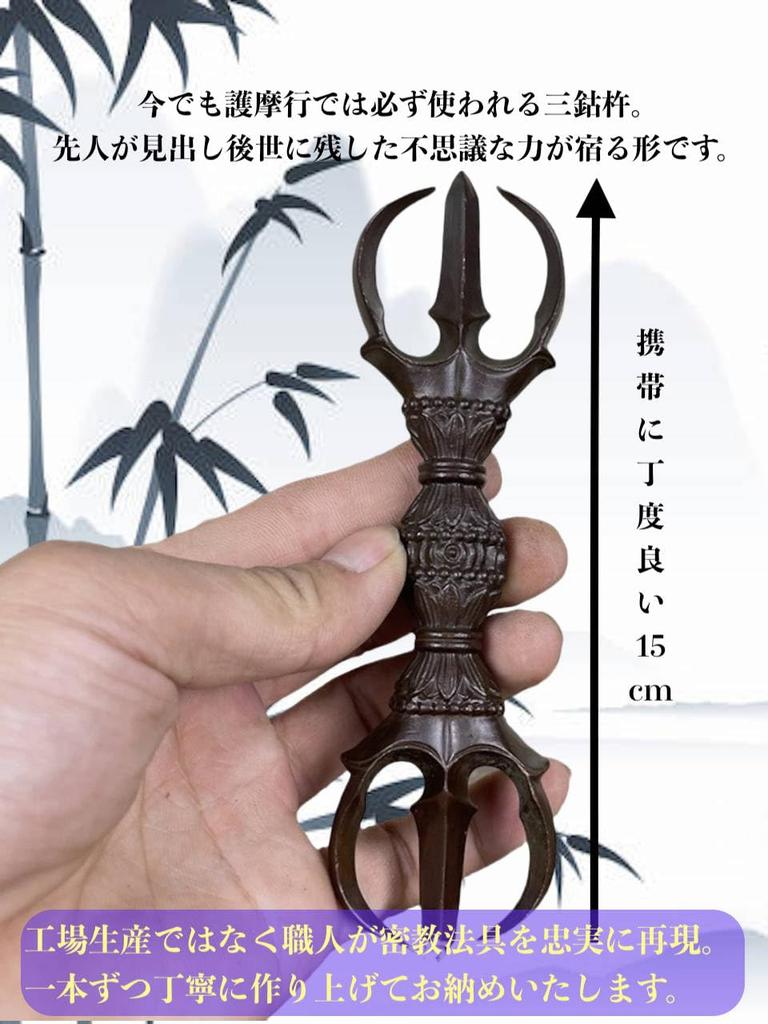
"A weapon from Indian mythology. For family safety, traffic safety, fulfillment of wishes, physical and mental health, success in exams, safe childbirth, elimination of misfortune, elimination of disaster, expulsion of disease, business prosperity, attracting many customers, business success, company prosperity, improved performance, career advancement, abundant harvest, bountiful harvest, abundant catch, fulfillment of wishes, success without evil, wish fulfillment, academic success, job success, safe childbirth, maternal and child health, healthy development." A beautiful amulet for praying for conception, success in competitions, good fortune, protection from evil in new homes, and increased wealth. Keep this amulet close at hand to ward off evil and dispel worldly desires. Material: Alloy. Approx. 15cm (length), 4.3cm (width), 1.6cm (thickness), approx. 300g.


 No-delivery refund

![Sankosho, Three-pronged Vajra, Vajra, Buddhist Meditation Bell, Self-Defense, Sacred Item, Purification, Protection from Misfortune, Orin [Item]](https://img.joomcdn.net/8fa12465c66d2fd9aa2908ff52d5eb6dbdb23614_70_100.jpeg)
![Brass Vajra, a Buddhist Altar Accessory, 15cm, Perfect for Warding Off Evil Spirits, Purification, Meditation, and Healing. [Parallel Import]](https://img.joomcdn.net/10494aa853a35f97d52d77800f684e5796977c2c_100_100.jpeg)
![Sankosho Trident Vajra with Bell for Vajra Weapon Purification, Pilgrimage, Hotsuma, Katakamuna, Lightning, Self-Defense [Item]](https://img.joomcdn.net/631428c46ea406de0a0ee9e1d38574d94ff8cbb1_100_100.jpeg)
![Kurita's Special Buddhist Statue [Ritual Implement] 9cm Metal Vajra, Brass, Buddhist Altar Implement, Esoteric Buddhist Implement (m2001)](https://img.joomcdn.net/004b7ec4531a790c0acaff366a8a73677773d590_100_100.jpeg)