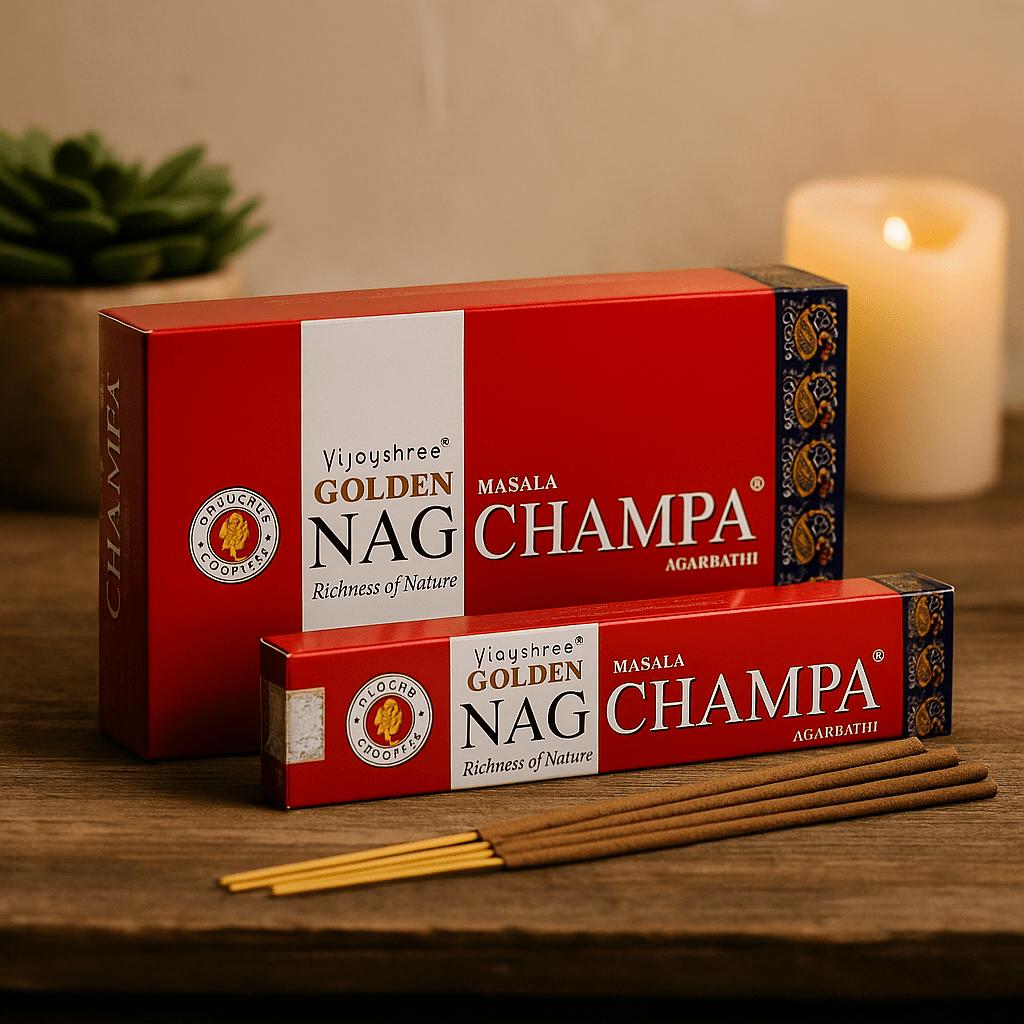
Golden Nag Champa has a particular quality that's hard to place at first, warm and resinous, with a softness underneath that opens slowly as the stick burns. It's the kind of scent that changes a room without announcing itself, settling into the background of a quiet morning or an evening wind-down.
The scent
Nag champa takes its name from the champa flower, Magnolia champaca, a bloom long prized across South Asia for its heady, slightly honeyed fragrance. In the Golden Nag blend, that floral core is deepened with resinous base notes, giving it a richness that lingers after the stick has finished. It's neither sharp nor sweet; it sits somewhere between the two, with a slow, unhurried character.
Burning
Light the coated tip and let it catch for a few seconds, then blow out the flame so the tip glows orange. Rest the plain end in a heat-resistant holder or ash catcher and leave it to burn in a well-ventilated room. Never leave burning incense unattended.
The making
Golden Nag Champa is made in India, where the masala style of incense-making has been practised for centuries. Masala incense is built from a blend of powdered resins, woods, and aromatic materials rolled onto a bamboo core, a method that differs from the dipped sticks common in cheaper ranges, where a plain stick is simply coated in fragrance oil. The result tends to be a more complex scent that evolves as it burns rather than fading quickly to a single flat note.
In context
Nag champa has been closely associated with Indian devotional and meditative practice for generations, used in temples and ashrams across the subcontinent. Its particular blend of floral and resinous notes became widely known in the West through the 1960s and 70s, when it travelled with the broader interest in Indian spiritual traditions. Today it remains one of the most recognised incense fragrances in the world, valued for the atmosphere it creates rather than any single ingredient.
What you get
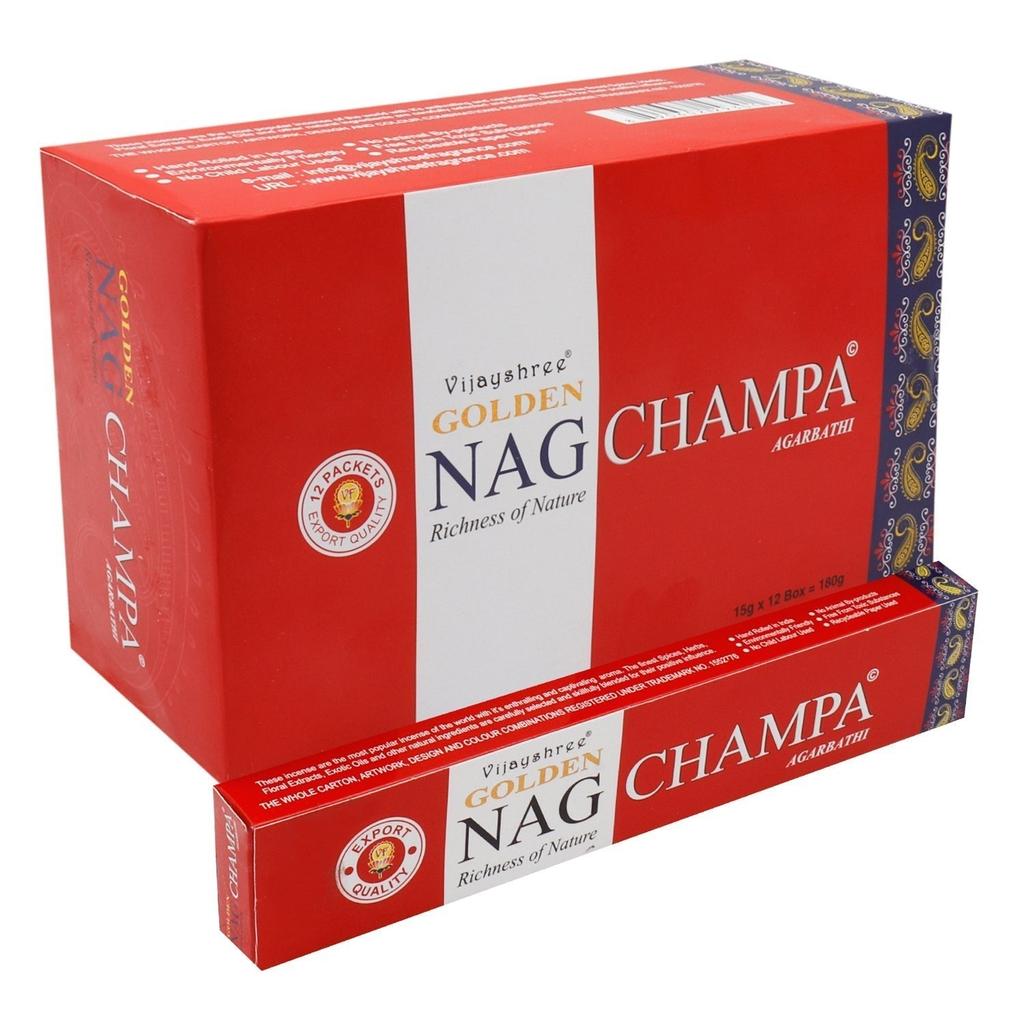
A 15 g pack of Gol…
region of manufacture: India



 No-delivery refund