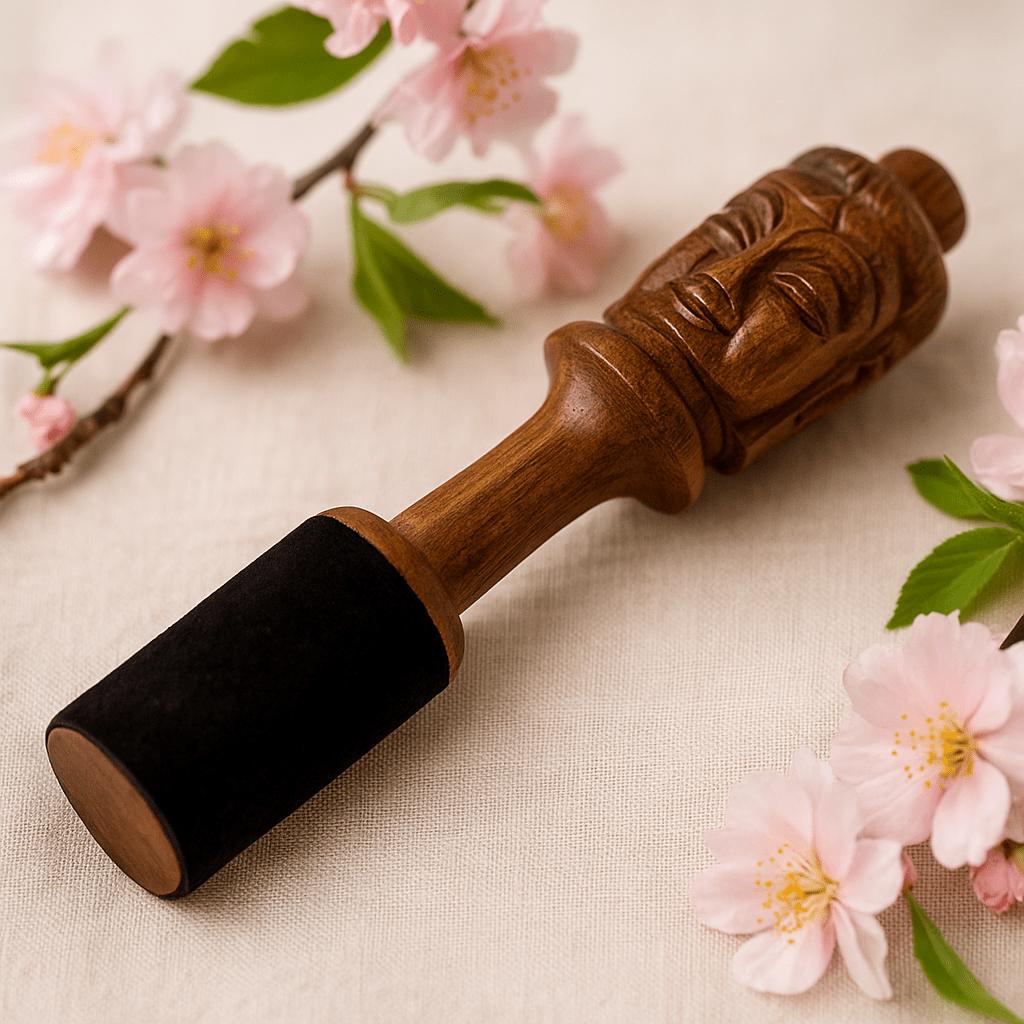
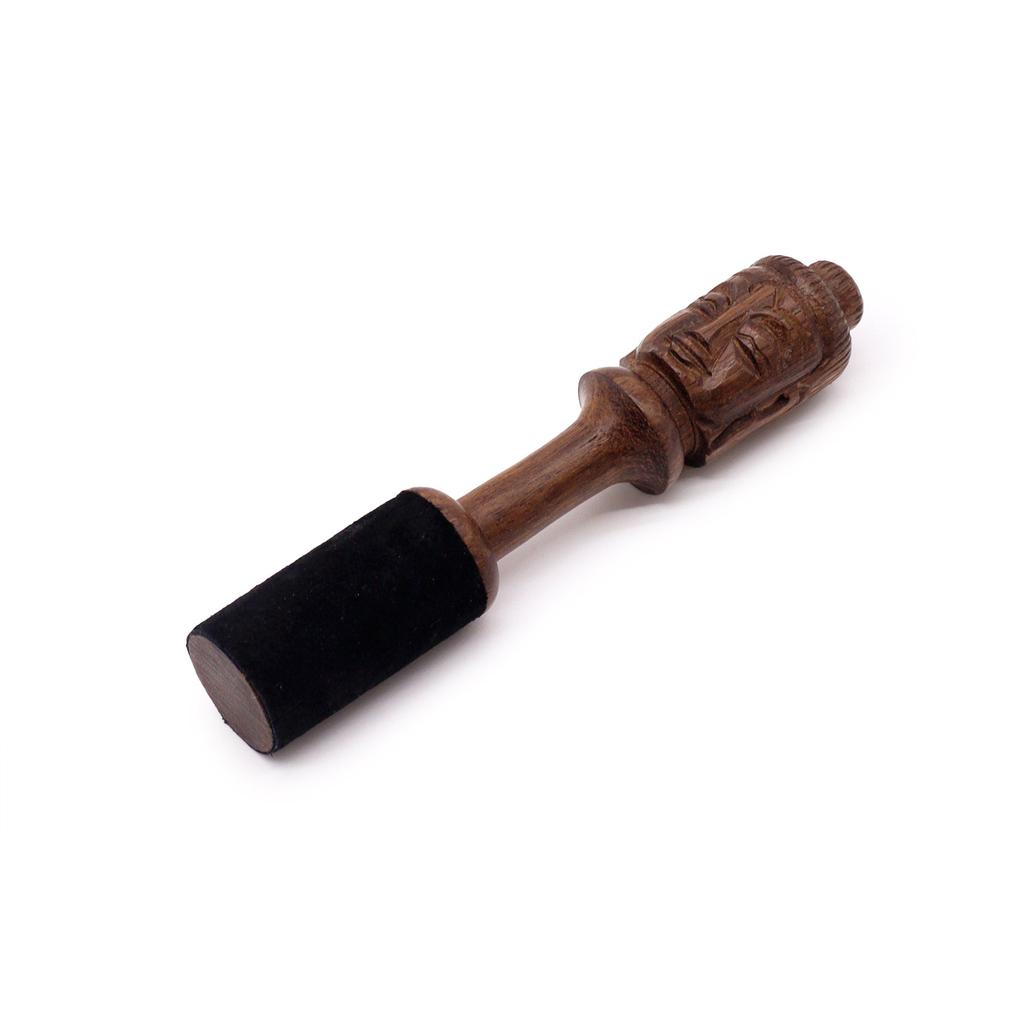
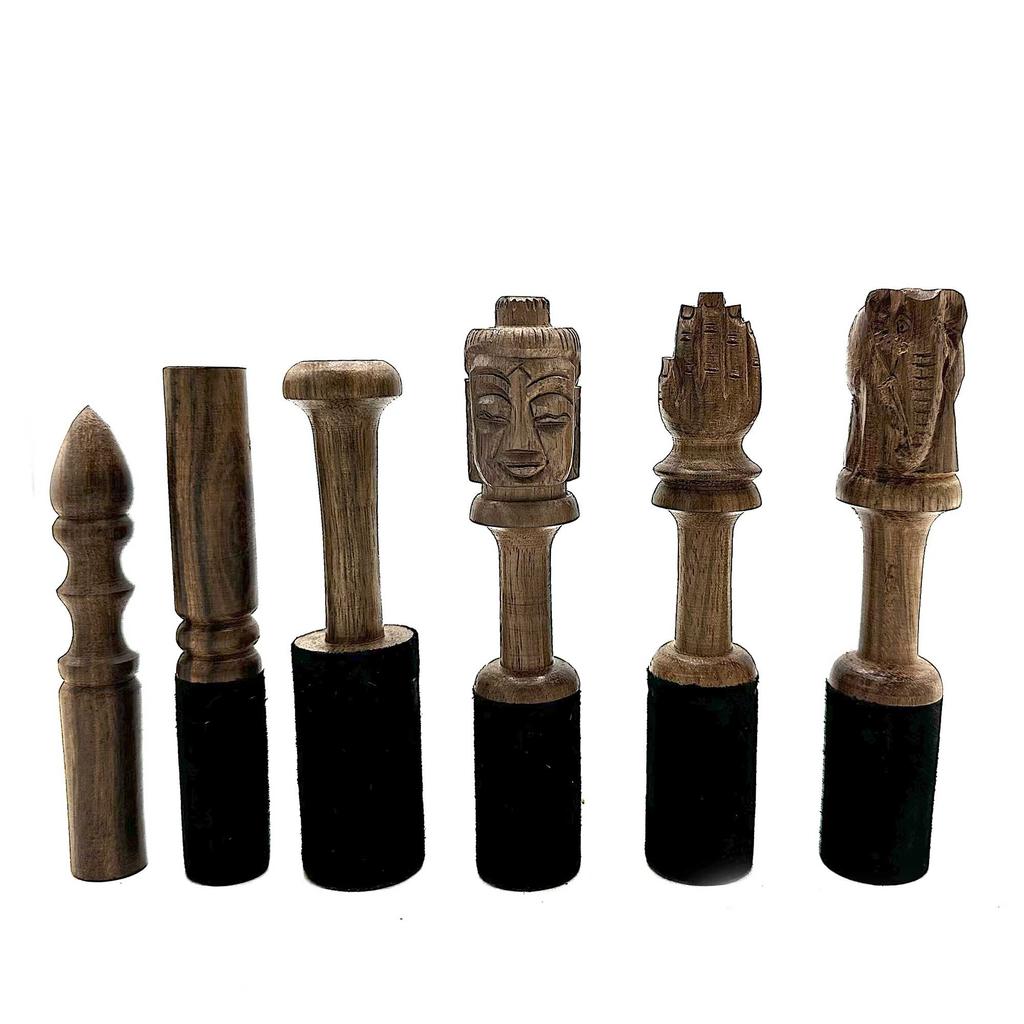
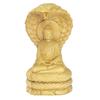
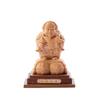
The right wooden singing bowl mallet changes the conversation between hand, bowl and sound. This one brings a simple, steady contact point to a singing bowl or gong, with a carved Buddha detail that makes the tool feel considered rather than purely practical.
What you feel at the rim
Bare wood gives a clear, direct contact with metal, useful for clean strikes and careful rim work.
The light feel suits unhurried playing, where pressure and pace matter more than force.
The Buddha carving adds a quiet focal point when the mallet rests beside a bowl between uses.
It works as a thoughtful accessory for a sound corner, meditation space, or simple home ritual shelf.
The natural wooden form keeps the focus on touch, balance and the tone of the bowl itself.
Wood shaped for singing bowls and gongs
This mallet is made from wood, with Terminalia elliptica given as the stated timber. It is designed as an accessory for singing bowls and gongs, where the hardness of the striker, the angle of contact and the player’s hand all shape the sound.
How to play with a wooden striker
Use the mallet gently at first, striking the outer rim or upper side of the bowl and listening for the cleanest response. For rim playing, keep the pressure even and move slowly around the edge. Different bowls respond differently, so let the bowl guide the pace rather than forcing the sound.
In the hand
A wooden mallet gives a more direct feel than a padded striker. That can make it useful for defined accents, opening tones and careful practice, especially when you want to hear the bowl’s own character clearly.
Nepalese context
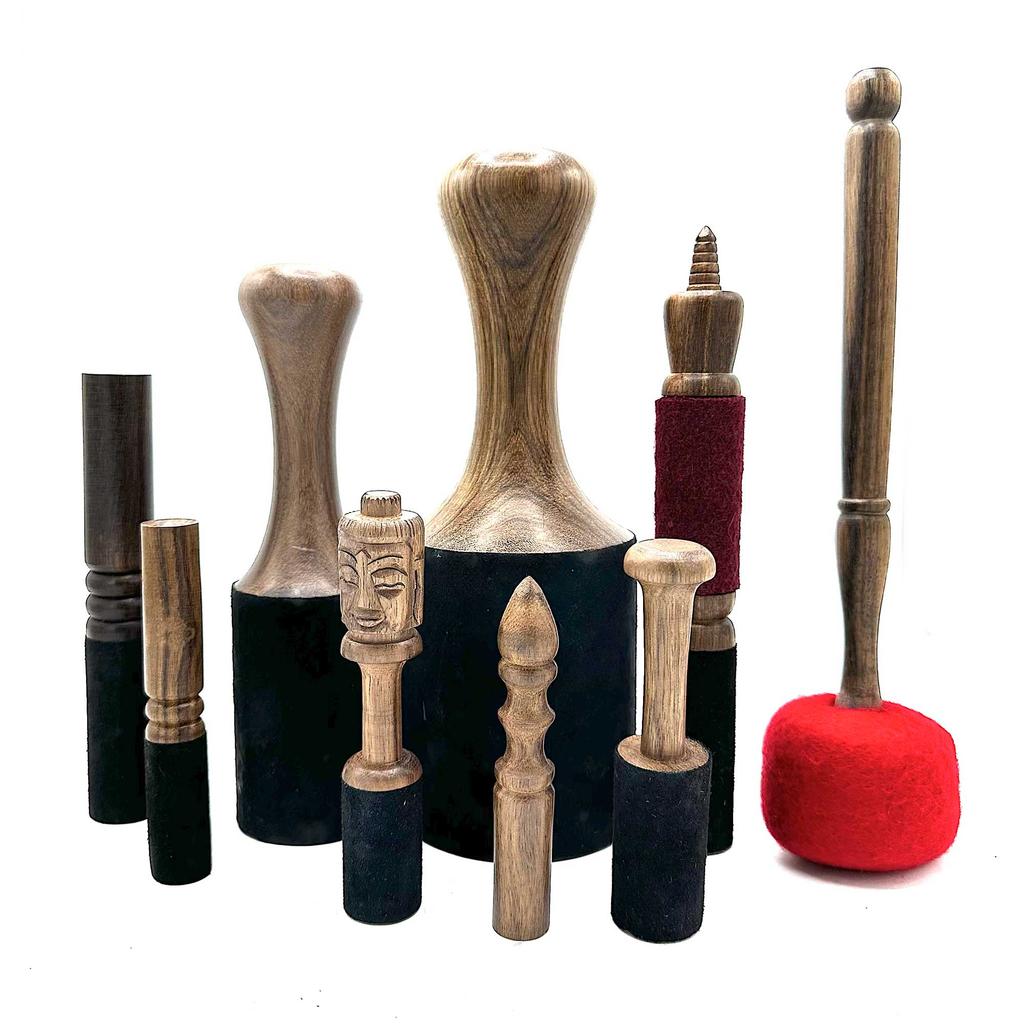
Singing bowls are closely associated with Himalayan sound practice, including Tibetan Buddhist and Nepalese craft contexts, though today they are also used widely in yoga rooms, homes and sound sessions. Mallets vary from plain sticks to padded strikers and carved pieces like this one. The Buddha motif sits within that visual language, adding symbolic stillness …
region of manufacture: Nepal


 No-delivery refund




![By a Practicing Physical Wooden Facial Roller for Facial Sagging and Nasolabial Includes Instruction Manual [Supervised Therapist] Acupressure,](https://img.joomcdn.net/0d06154f02e0e6f249ac36d43f64e25f252b88ac_66_100.jpeg)