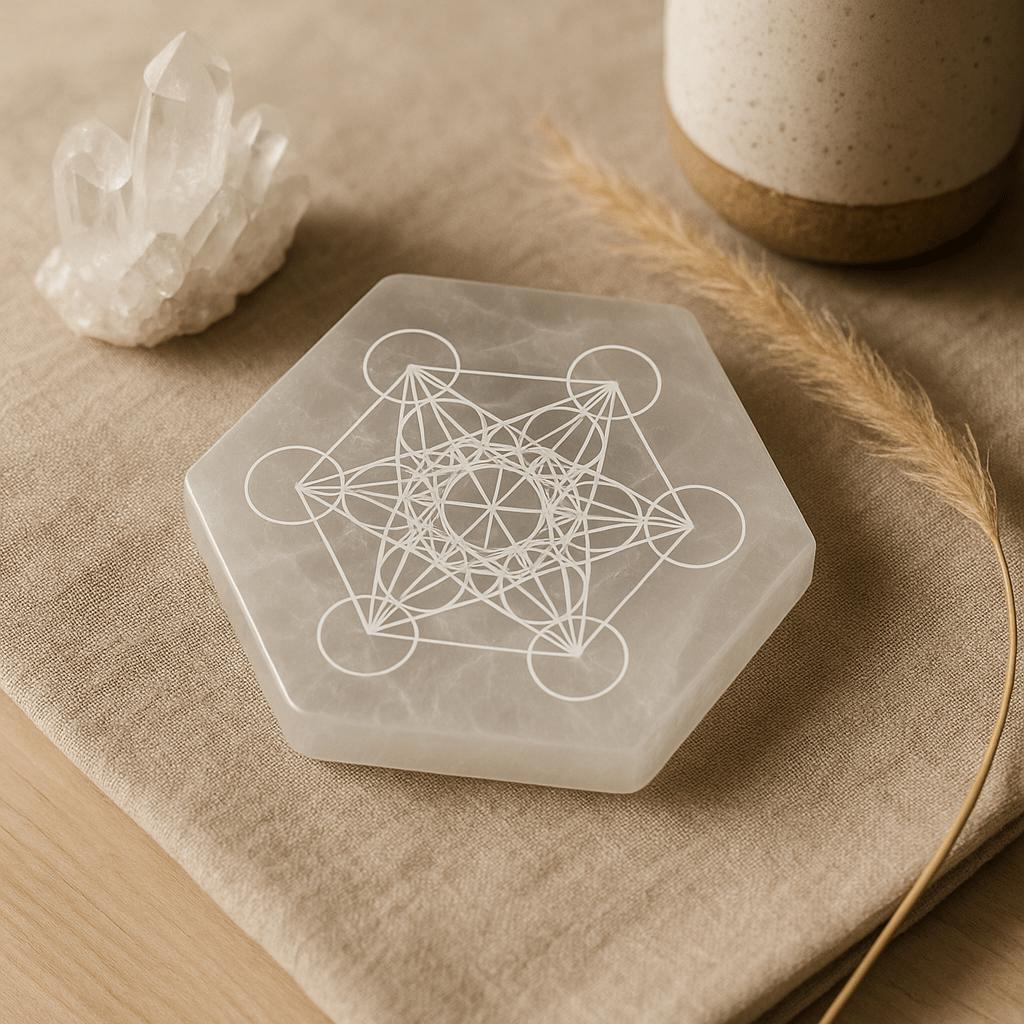
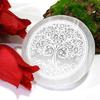
A selenite charging plate brings a pale, moonlit stillness to a shelf, altar or bedside table. Its carved hexagonal form gives crystals, jewellery or small ritual pieces a proper resting place, so the objects you care about feel gathered rather than scattered.
What the selenite brings to a quiet space
The milky surface catches light softly, with the cool, pearlescent look selenite is known for.
The hexagonal shape feels ordered and intentional, a calm little centre point for a dressing table or ritual corner.
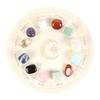
Use it as a dedicated landing spot for rings, tumbled stones, pendants or small objects you reach for often.
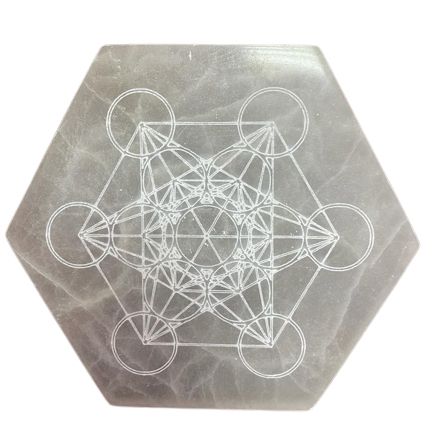
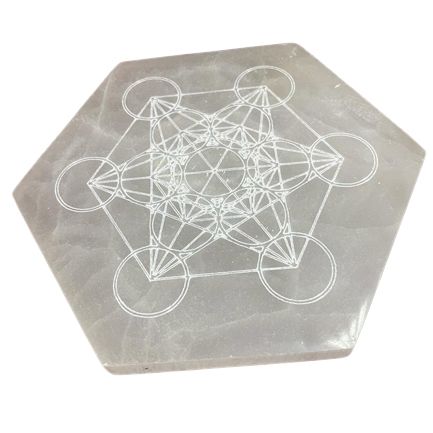
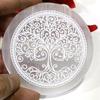
The carved face adds texture without making the piece feel busy, so it sits quietly among other natural materials.
Its weight gives it presence, making it feel more like a small home object than a simple tray.
Hand-carved selenite from Morocco
This plate is made from selenite, a luminous form of gypsum, and is cut and carved by hand in Morocco. Selenite is naturally soft and can show subtle variation in tone, translucency and surface line, so each piece has its own quiet character.
Using it for crystals, jewellery and small rituals
Place the plate somewhere dry and steady, then use it as a resting place for the pieces you like to keep close. It suits small jewellery, crystals, meditation beads or a single object you want to mark with attention at the end of the day.
Avoid dragging sharp edges across the surface. Selenite is very soft, so treat it gently and lift pieces on and off rather than scraping them across the carving.
Selenite in crystal practice
Selenite takes its name from Selene, the Greek moon goddess, a fitting link for a stone with such a pale, lunar glow. In contemporary crystal practice, selenite is traditionally used as a place for resting other stones between uses, especially in simple home rituals around intention, reflection and care. The hexagon also carries a sense of order and balance in sacred geometry, makin…
region of manufacture: Morocco


 No-delivery refund







![[GOLD STONE] Natural Stone Orgonite Pyramid, Spiritual Goods, Approximately 30mm Wide, Fluorite](https://img.joomcdn.net/a1a599c18b91f856622fa603a60911d556f36eae_100_100.jpeg)