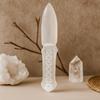
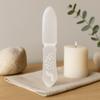
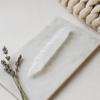
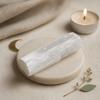
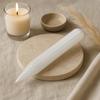
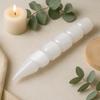
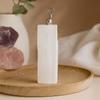
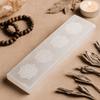
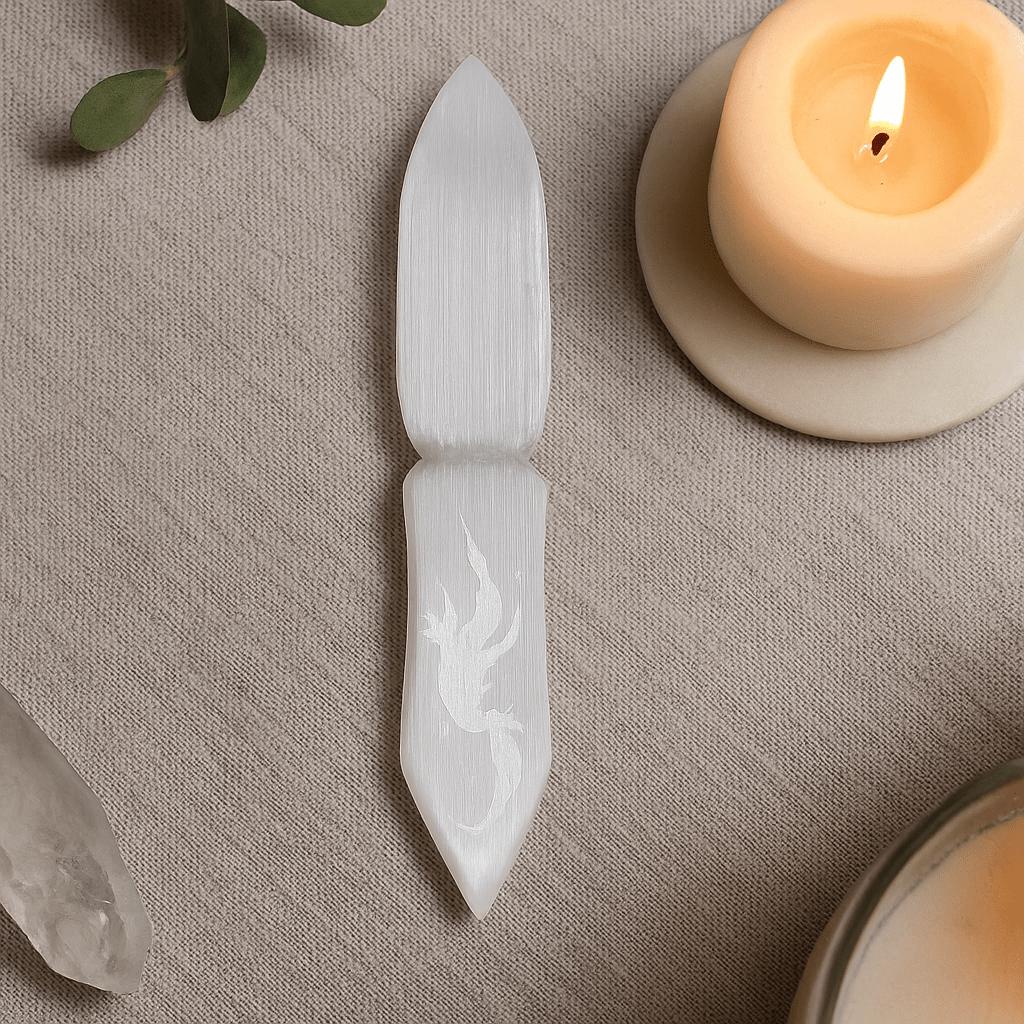
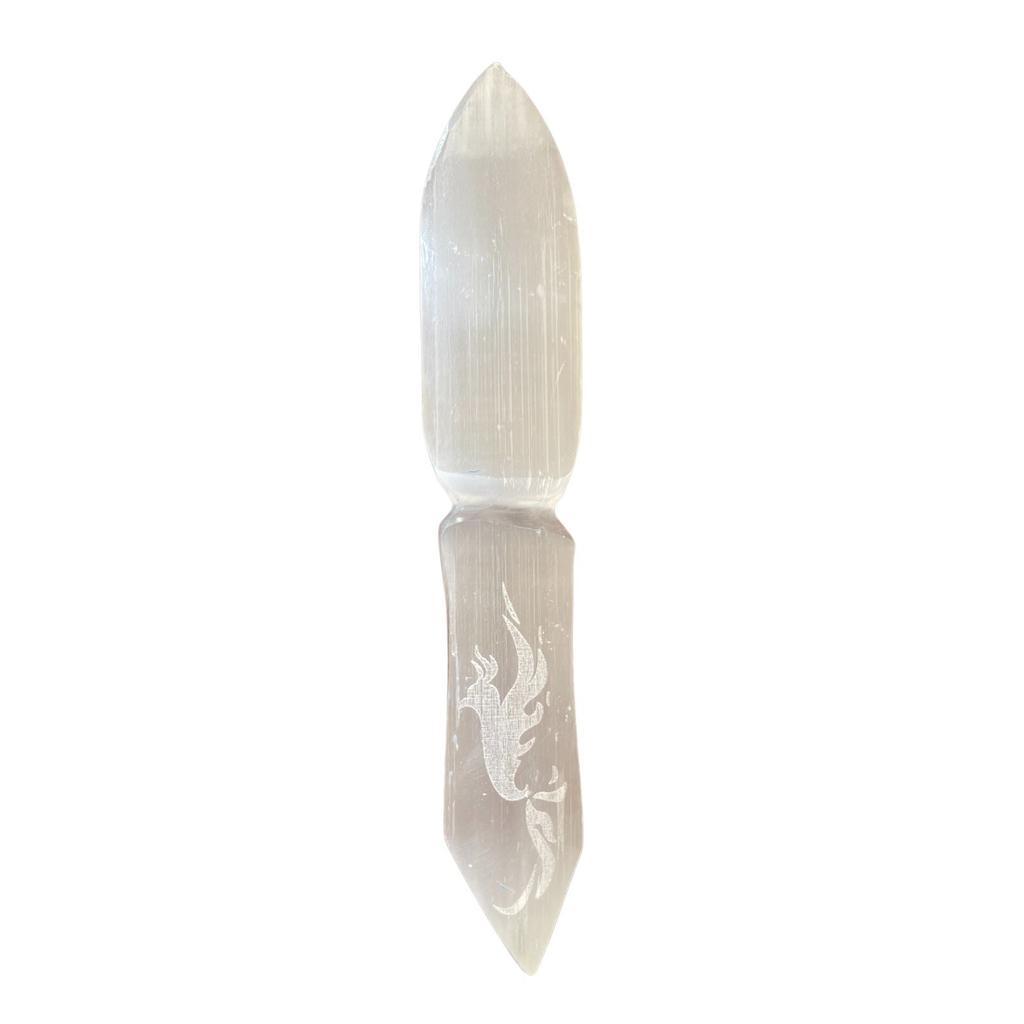
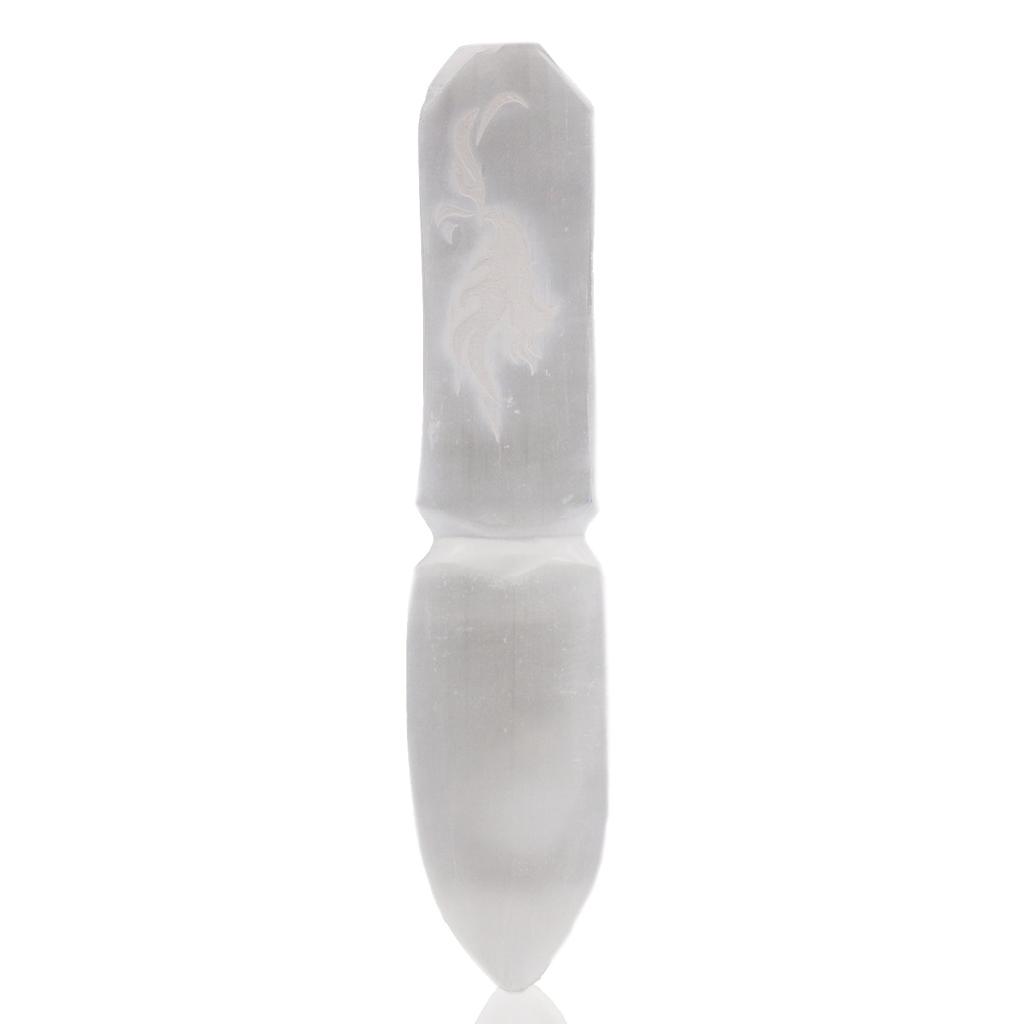
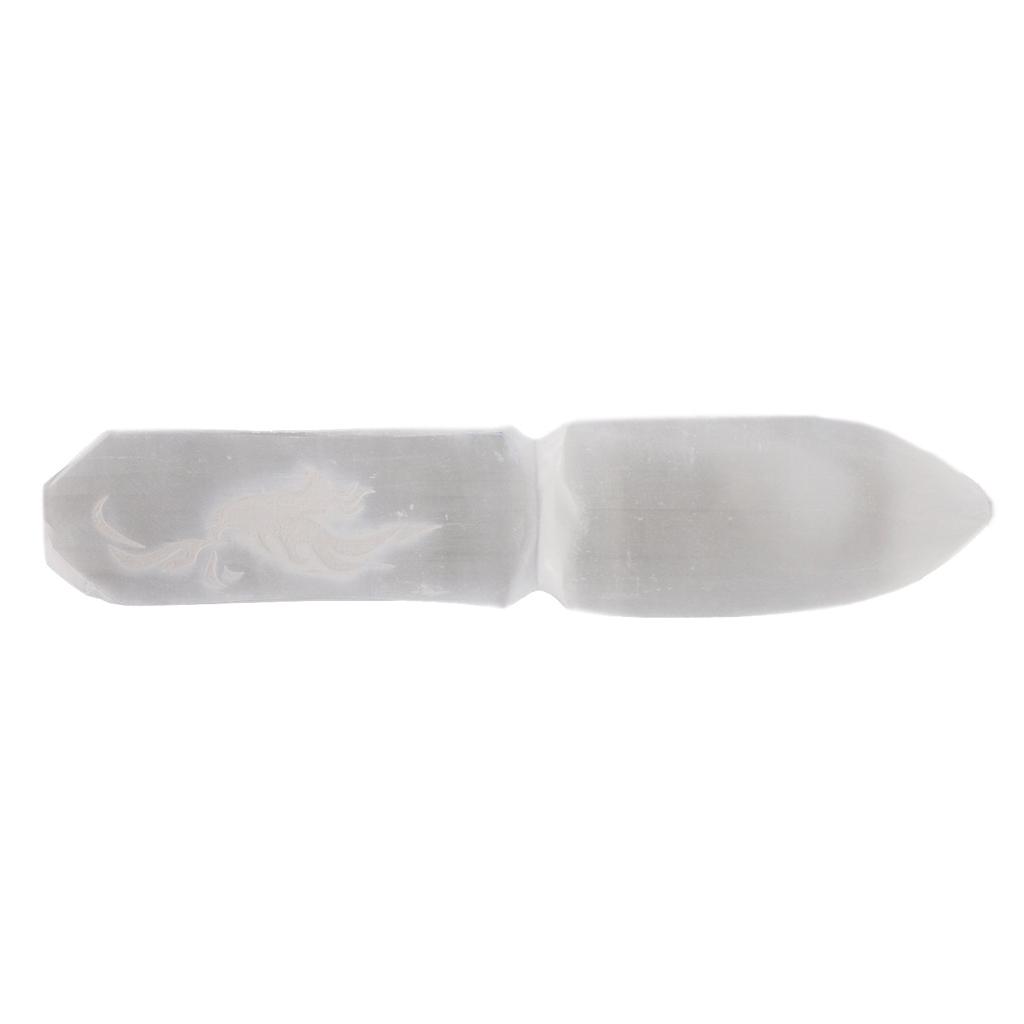
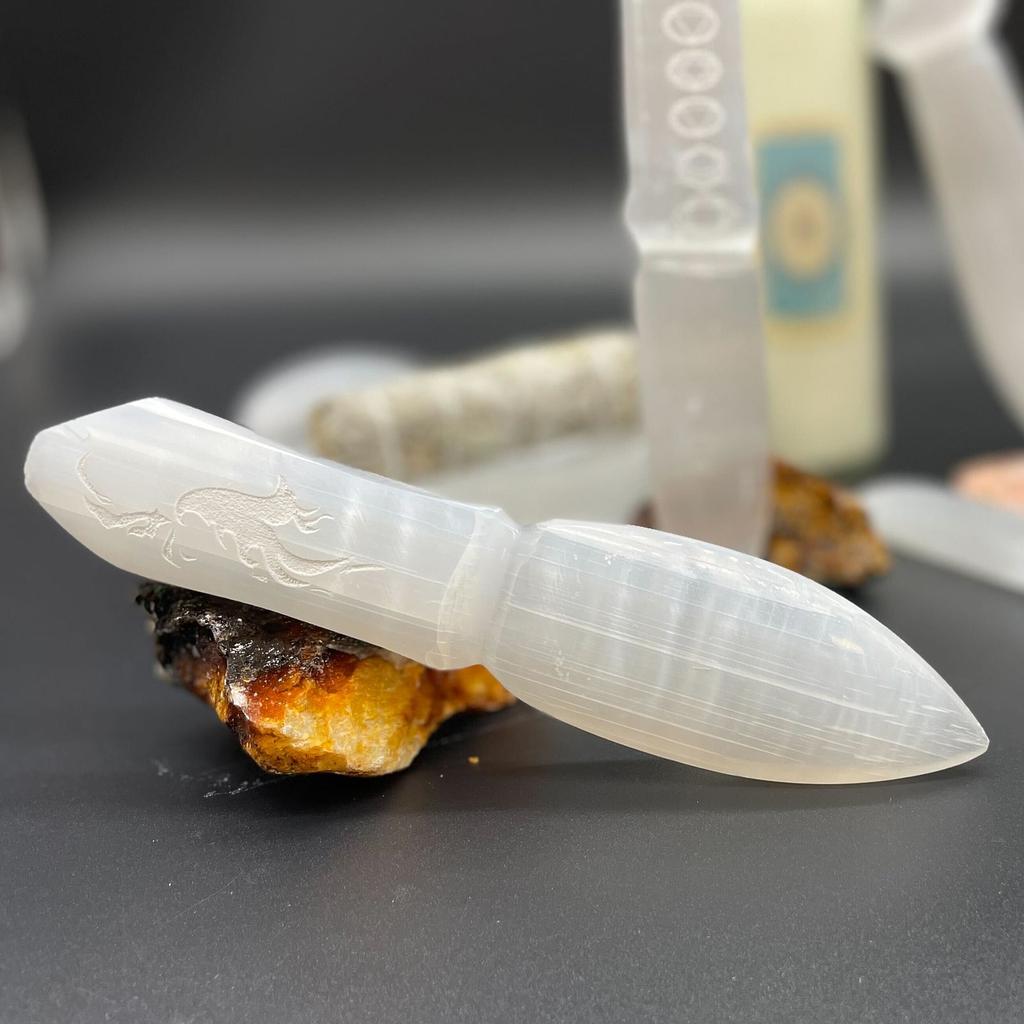
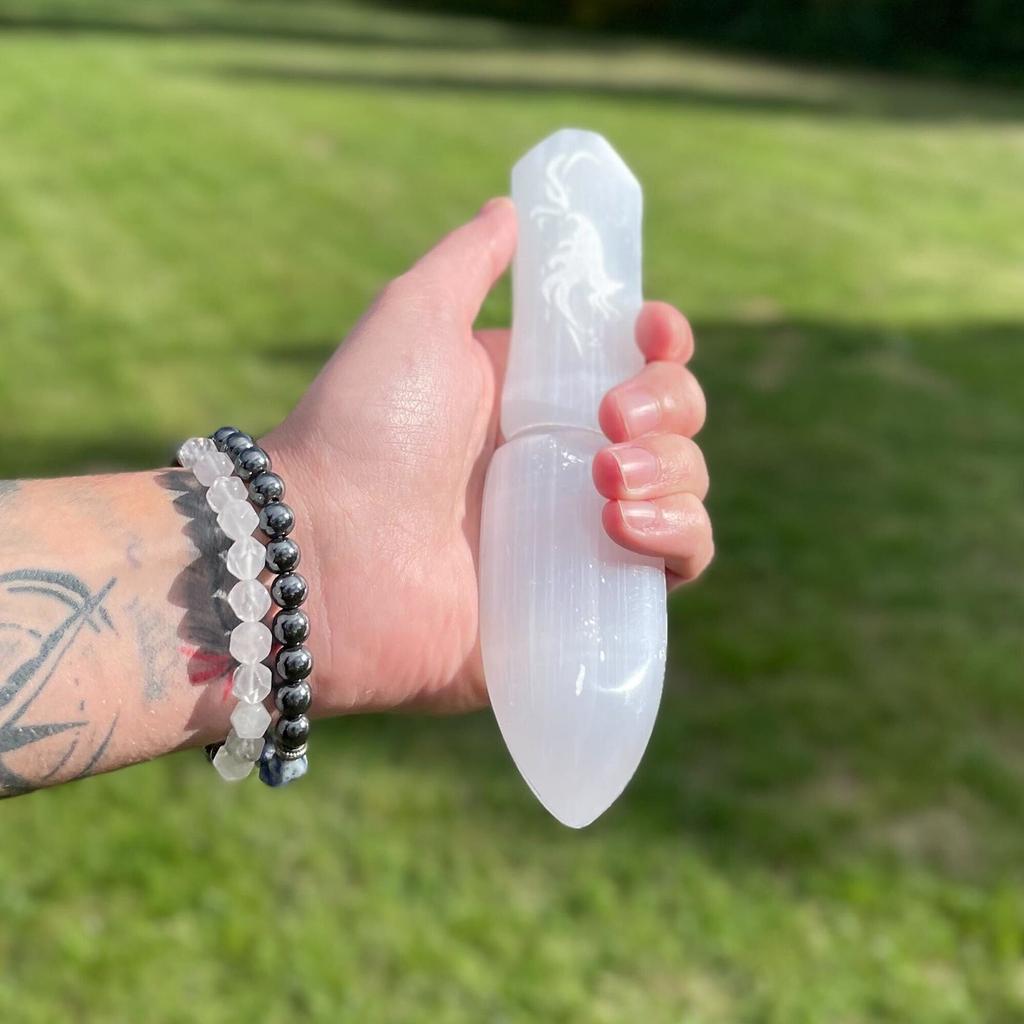
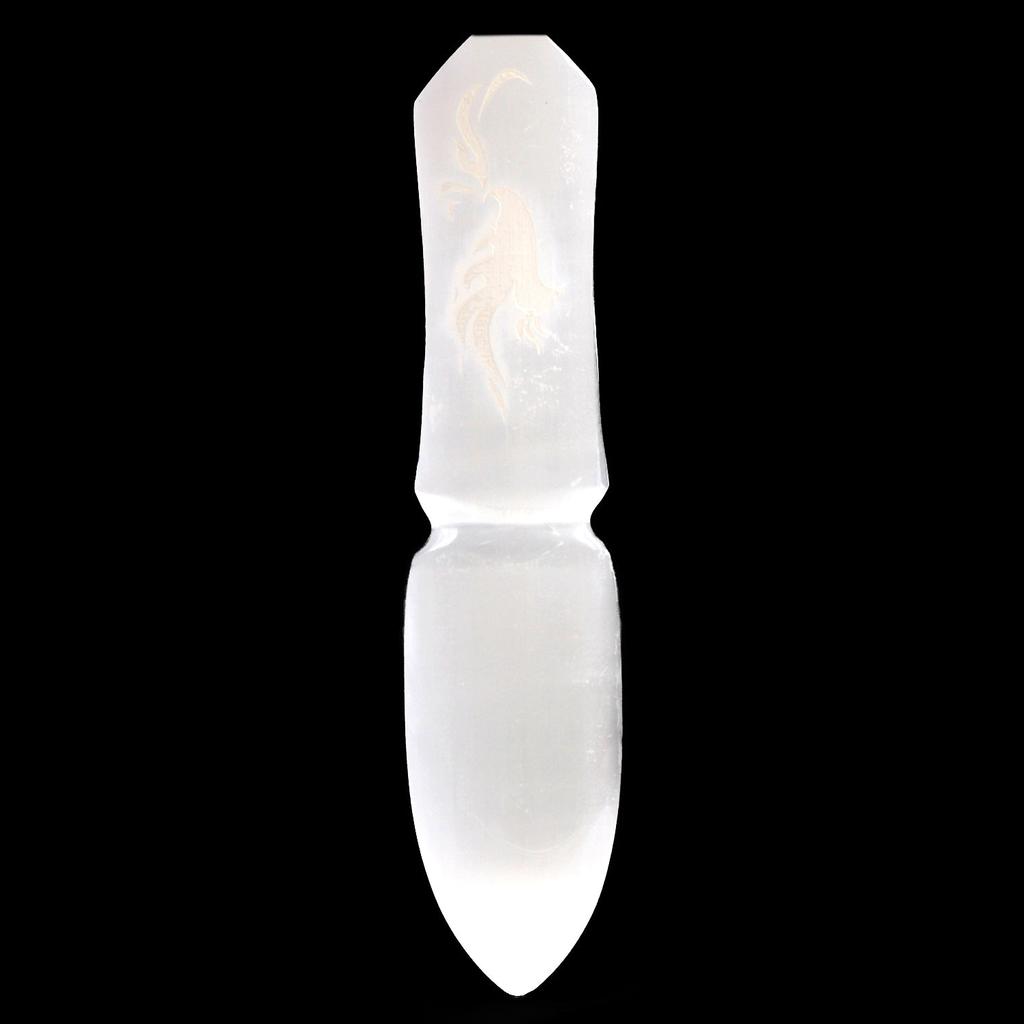
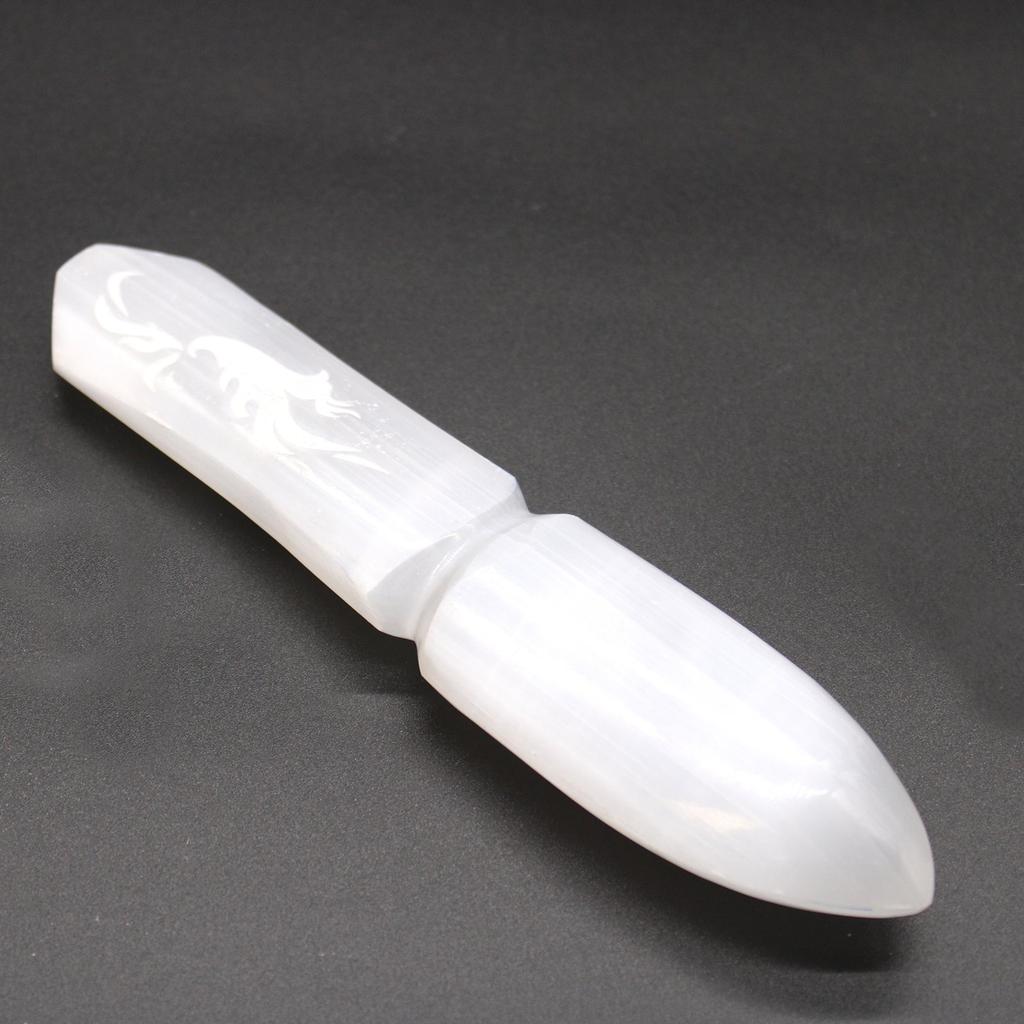
Cool, pale and quietly weighty, this selenite ritual knife is made for a shelf, altar or contemplative corner rather than practical cutting. Its athame form gives it a ceremonial presence, while the hand engraving adds a more personal, worked quality to the stone.
The presence of the object
Selenite catches the light with a soft, pearly glow, bringing a calm mineral brightness to a room.
The knife form feels deliberate and symbolic, suited to intention-setting, display and ritual atmosphere.
Hand engraving gives the surface visual depth, so it reads as a crafted object rather than a plain stone piece.
It works beautifully as a focal point on an altar, desk or cabinet, where the form can be appreciated without frequent handling.
The material has a cool, delicate character, best treated as a meaningful decorative piece rather than a robust tool.
Selenite with hand engraving
The piece is made from selenite and engraved by hand. Selenite is a form of gypsum, loved in crystal practice for its pale translucence and moonlit look. It is also naturally soft and fragile, which gives the object its quiet delicacy but means it should be handled with care.
How to place and handle it
Place it somewhere dry, stable and away from knocks. It suits a still-life arrangement with other ritual objects, crystals or simple ceramics, where its shape can define the centre of the display.
Do not wash or soak selenite, and avoid bathrooms or damp rooms. Clean it only when dry, using a soft cloth or brush, as water and humidity can dull, cloud or damage the surface over time.
The athame in ritual context
In Wiccan and ceremonial magic traditions, an athame is a ritual blade associated with intention, direction and the marking of sacred space, rather than physical cutting. The blade shape carries the idea of focus: a line drawn, a boundary recognised, a moment given form. In crystal practice, selenite is traditionally associated with clarity and cleansing rituals, often c…
region of manufacture: Morocco



 No-delivery refund