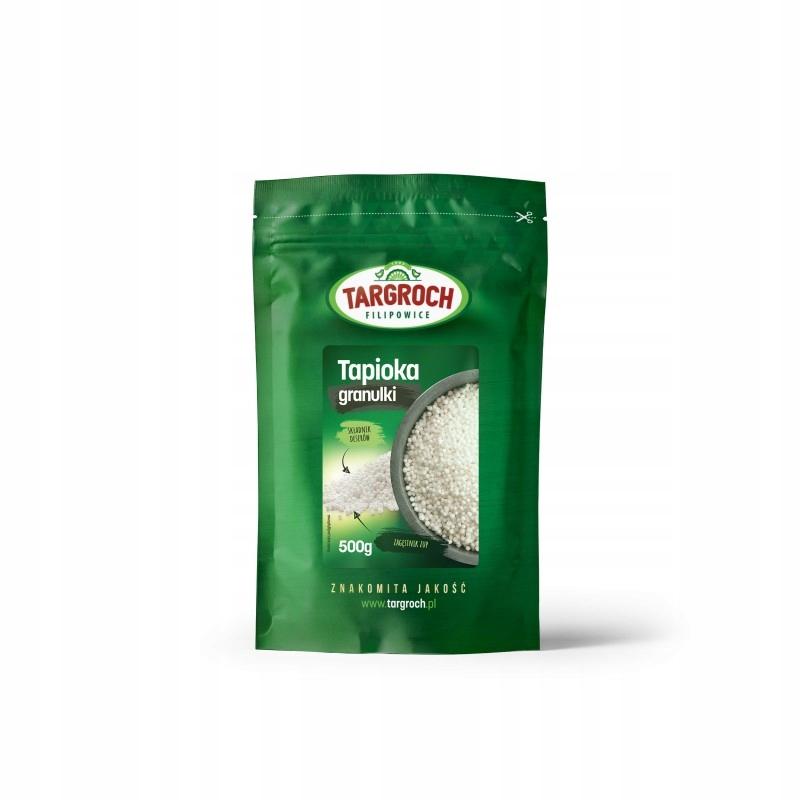
TAPIOCA GRANULES (PEARLS) Made from cassava, a plant associated primarily with South American countries. It is also very popular in Asia, where it is used to prepare bubble tea. In European cuisine, tapioca pearls are most often used in desserts. Thanks to its interesting structure, neutral flavor, and hypoallergenic properties, this product is becoming increasingly popular – although it is still not easily available. WHAT IS IT ACTUALLY? Tapioca is the name of a finished product made from the tubers of the edible cassava plant – a shrub common in the tropics. This plant is a main component of the diet in South American and Asian countries. This is due to its high availability, universal—practically neutral—flavor, and nutritious nature. Cassava tubers resemble horseradish roots or black salsify. Raw, they are inedible due to the presence of harmful compounds that easily convert to cyanide. Cooked, however, they become a completely safe, high-starch meal. Therefore, cassava is heat-processed or processed into semi-finished products such as starch flour (also known as cassava flour), groats (attike), or tapioca granules. Tapioca pearls themselves are simply crushed, dried, and roasted cassava tubers in granulated form. A PRODUCT FOR EVERYONE! Tapioca is one of those foods that has gained popularity due to the increased interest in healthy eating, as well as in response to lifestyle diseases and the increasing prevalence of food intolerances. These tiny granules are not only gluten-free and completely hypoallergenic, but also easily digestible – gentle on the stomach and intestines. They consist primarily of carbohydrates – approximately 90 percent – with trace amounts of protein and fat. Tapioca pearls are therefore a very good choice not only for everyday use but also for medical conditions, chronic digestive ailments, and allergies. Children and the elderly can also safely consume dishes made with it. Tapioca pearls are also an interesting option for picky eaters – the small balls look very attractive in dishes, which can effectively encourage children to eat. WHAT TO EAT TAPIOCA WITH? Tapioca's neutral flavor makes it perfect for sweet dishes—while being too delicate for savory dishes. The granules should be cooked until almost completely transparent. For best results, it's best to cook them in milk—cow's milk, coconut milk, or your favorite milk—rather than water. It's an excellent base for pudding, the most popular dessert made with tapioca pearls. It can be served with whole or pureed fruit, chocolate or cocoa, vanilla, or a hint of coconut. A properly prepared tapioca dessert is recommended even for those on a weight-loss diet—100g of pearls cooked in water contains less than 160 calories! BUBBLE TEA! Tapioca is still a novelty in Polish and European cuisine. However, in Asian countries – where cassava grows naturally – recipes featuring it have been known for years. The most characteristic is bubble tea, a tea made with milk, tapioca granules, and various additions. It was created in the 1980s and met with such great interest that it has become a permanent fixture not only on local menus – today, restaurants serving this tea specialty can also be found in Poland. Bubble tea can be easily prepared at home – all you need is a little patience, your favorite tea, your chosen additions, and, of course, tapioca pearls. It's an original beverage idea not only for children's parties, party favors, and New Year's Eve, but also as a refreshing summer treat or a winter warmer. PREPARATION Rinse the tapioca, soak it, preferably in milk, for about 20 minutes. Then cook it in the same liquid until soft (about 40 minutes) over very low heat, stirring constantly. APPLICATIONS Thickener for soups and sauces, an ingredient in desserts, puddings, and pancakes. INGREDIENTS Cassava starch, water STORAGE CONDITIONS Store in a dry and cool place in a tightly closed container.


 No-delivery refund