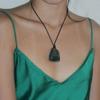
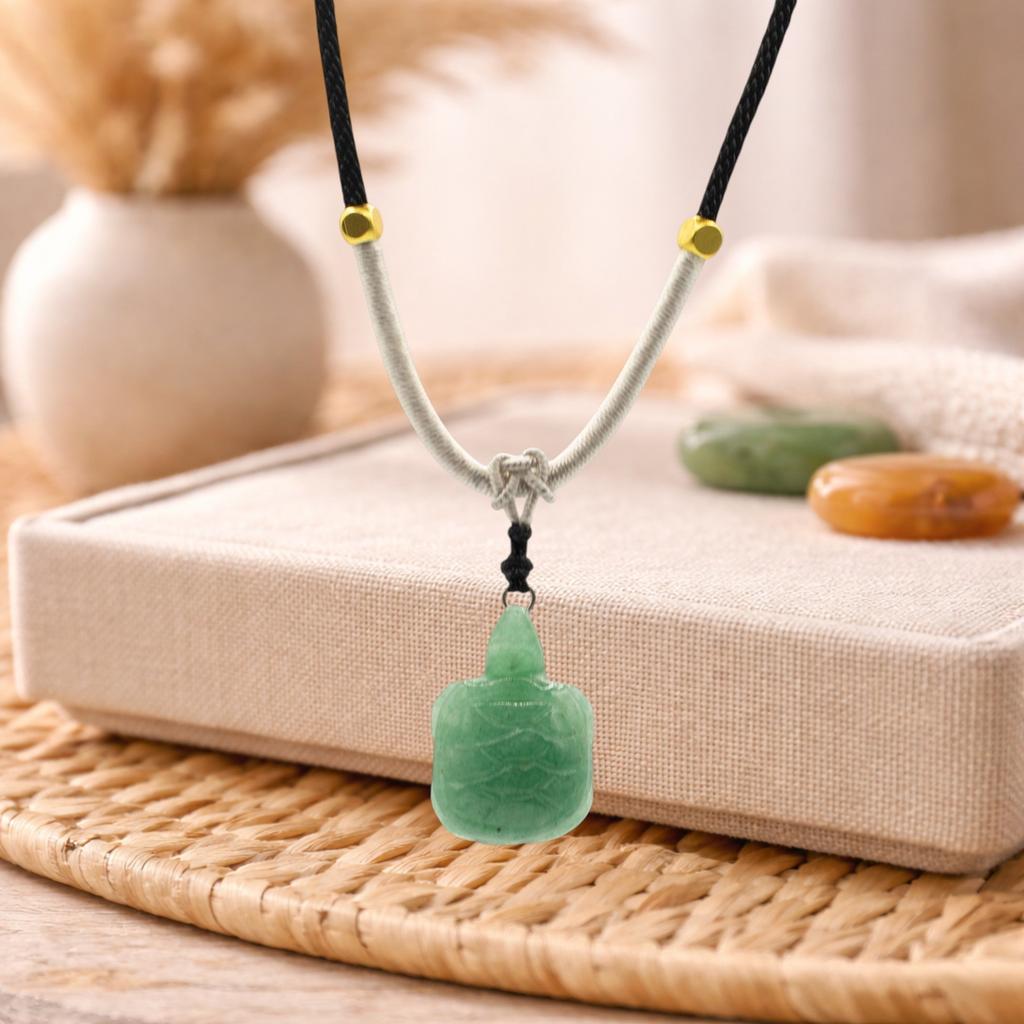
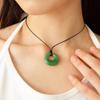
A soft green jade turtle pendant on a cotton cord, made to sit close at the heart as a small daily anchor. Its rounded carved form catches the light gently, with cloudy stone tones that feel earthy, quiet and personal.
What draws the eye
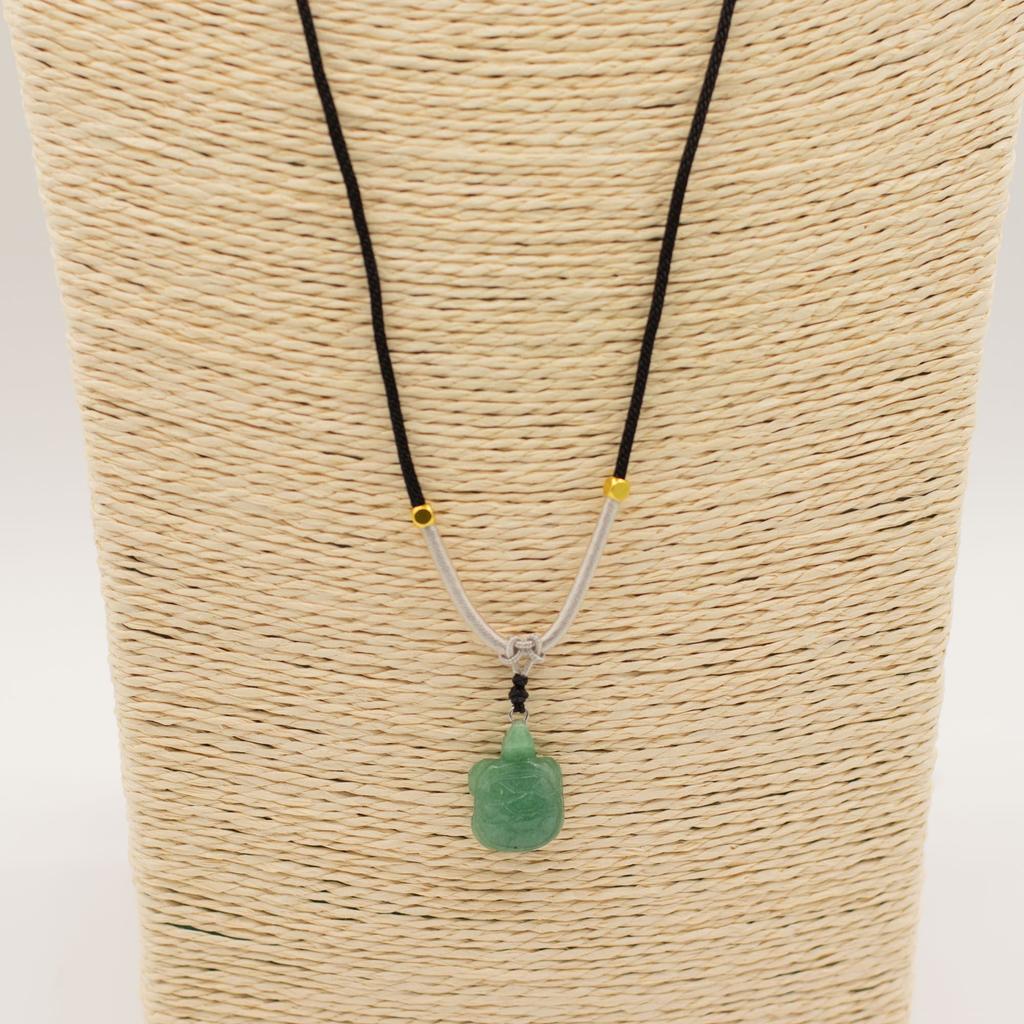
The jade has a milky green depth, with natural variation running through the stone.
The turtle shape feels calm and steady, a tiny motif with a reassuring presence.
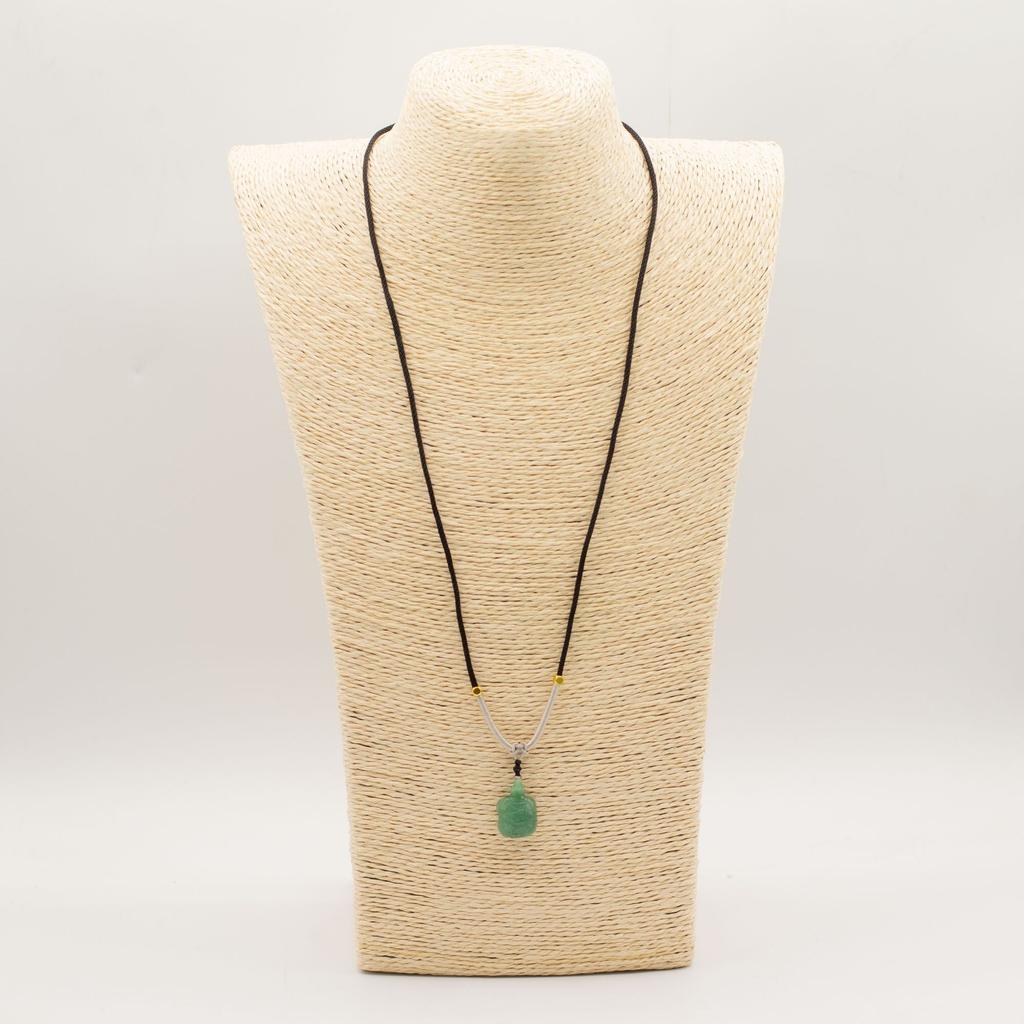
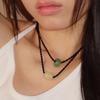
A black cotton cord frames the pendant, softened by pale wrapping near the centre.
Small gold-toned accents add a warm contrast without taking attention from the stone.
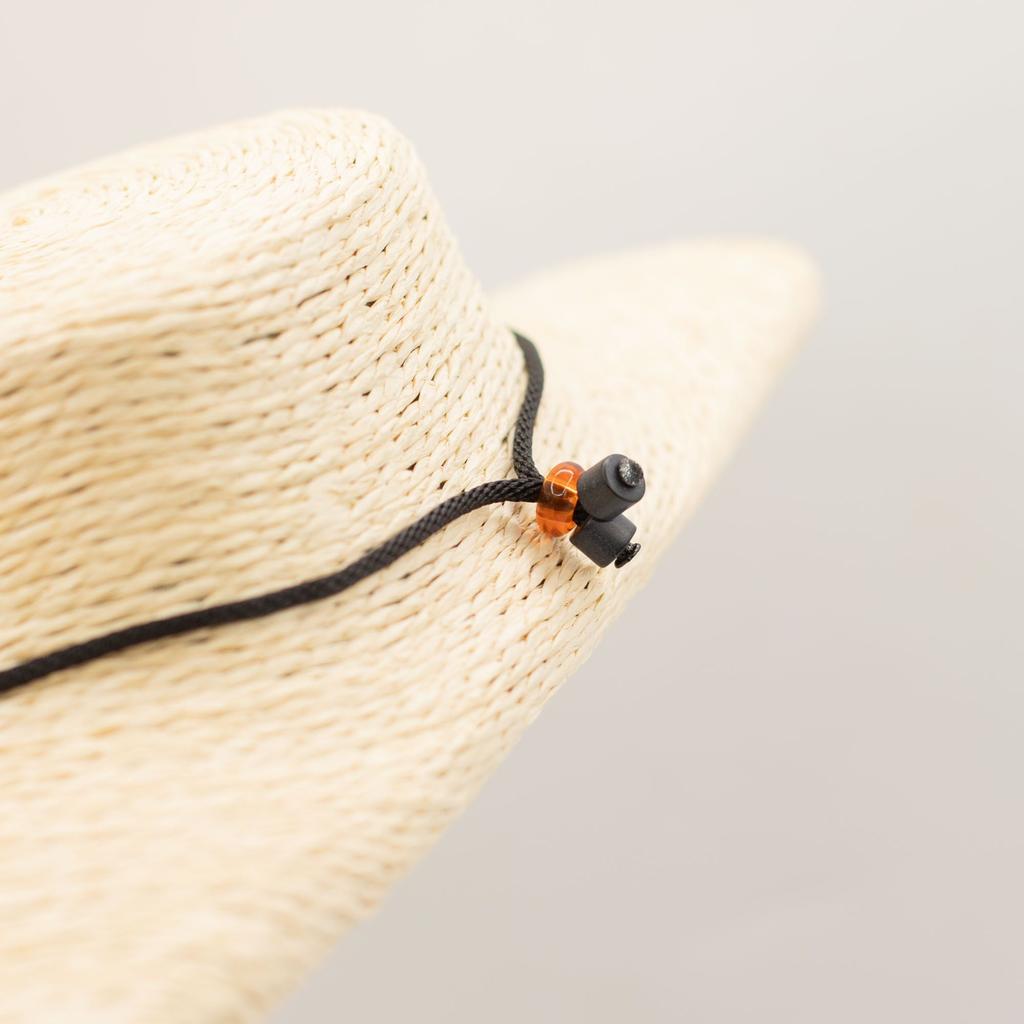
The adjustable cord makes it easy to wear higher or lower, depending on neckline and mood.
Jade, cotton and quiet construction
The pendant is made from jade gemstone and cotton cord, with the stone shaped into a turtle design. As with natural stone jewellery, each piece may show slight differences in tone, translucency and surface marking.
Wearing it well
Wear it with simple cotton, linen or knitwear, where the green stone can sit clearly against the fabric. The cord gives it a relaxed feeling, more talisman than polished chain, suited to everyday wear and slow weekends alike.
The turtle and jade in context
In Chinese tradition, jade has long been valued as a stone associated with harmony, refinement and good fortune. The turtle is also a meaningful motif across many cultures, often linked with longevity, patience and steadiness. Together, the jade turtle pendant becomes a gentle symbol of moving through the day with care, keeping a small piece of meaning visible at the heart.
Care for the stone and cord
Keep the pendant dry where possible, and avoid wearing it in the shower or while swimming. Wipe the jade with a soft cloth after wear, and store it separately from harder jewellery to reduce scratches and rubbing on the cord.
Size and details
This piece weighs 5 g. It is a jade gemstone pendant on an adjustable cotton cord, from China.
A thoughtful small gift
It suits someone w…
region of manufacture: China



 No-delivery refund


![Myanmar Jade Pea Disk Pendant Necklace for Men and Women [COAI]](https://img.joomcdn.net/67d72ade7c20530c6858a30e5510296444882337_100_100.jpeg)


![[KOAI] Guatemalan Jade Nine-Tailed Fox Pendant Amulet Necklace for Women](https://img.joomcdn.net/f0d6b31eed1b26720bef68802eea7e74c3c24d74_100_100.jpeg)


![[Ishimachi] Carefully Selected Dark Jadeite Ring Necklace - Genuine Jadeite, Natural Stone, Protective, Five Virtues, Thumb Ring](https://img.joomcdn.net/1d57d07507a190be1044fcd82668b827da7b4613_100_100.jpeg)