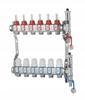
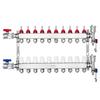
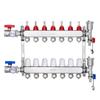
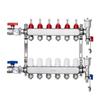
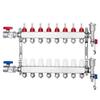
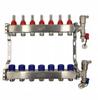
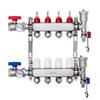
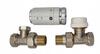
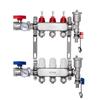
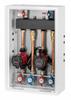
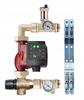
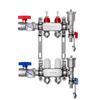
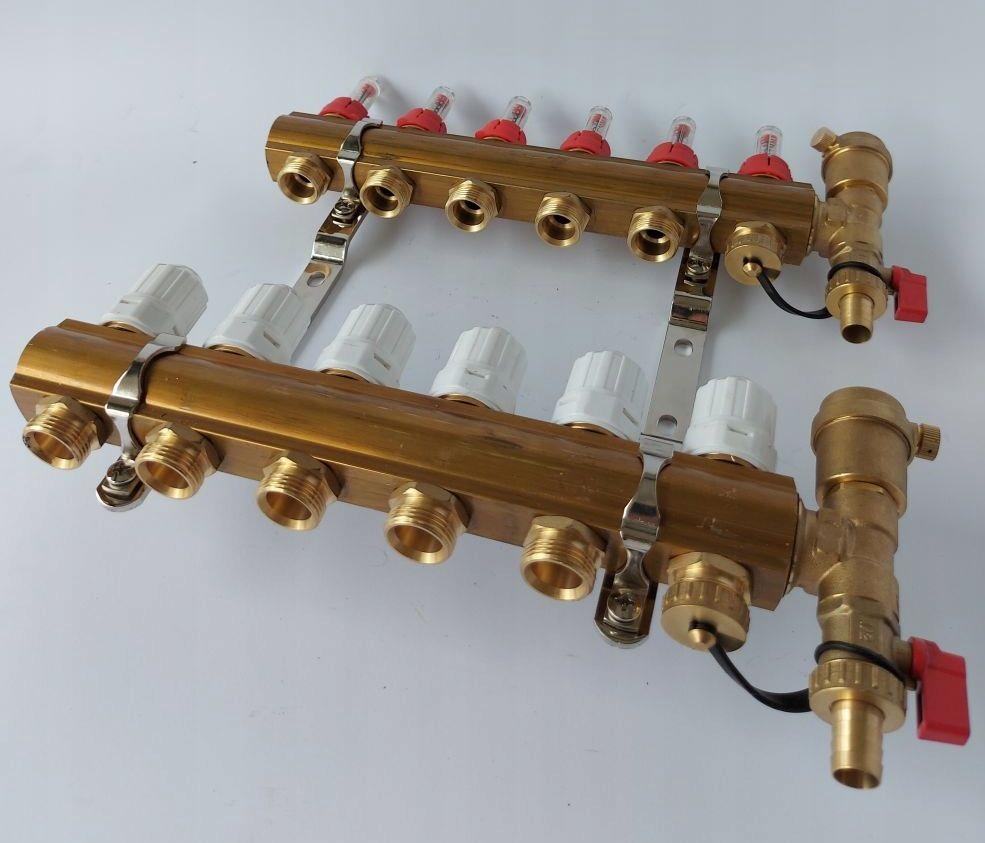
Brass manifold for underfloor heating with flow meters - 15 circuits Drain - vent assembly - 2 pcs. POLISH MANUFACTURER – MADE IN POLAND
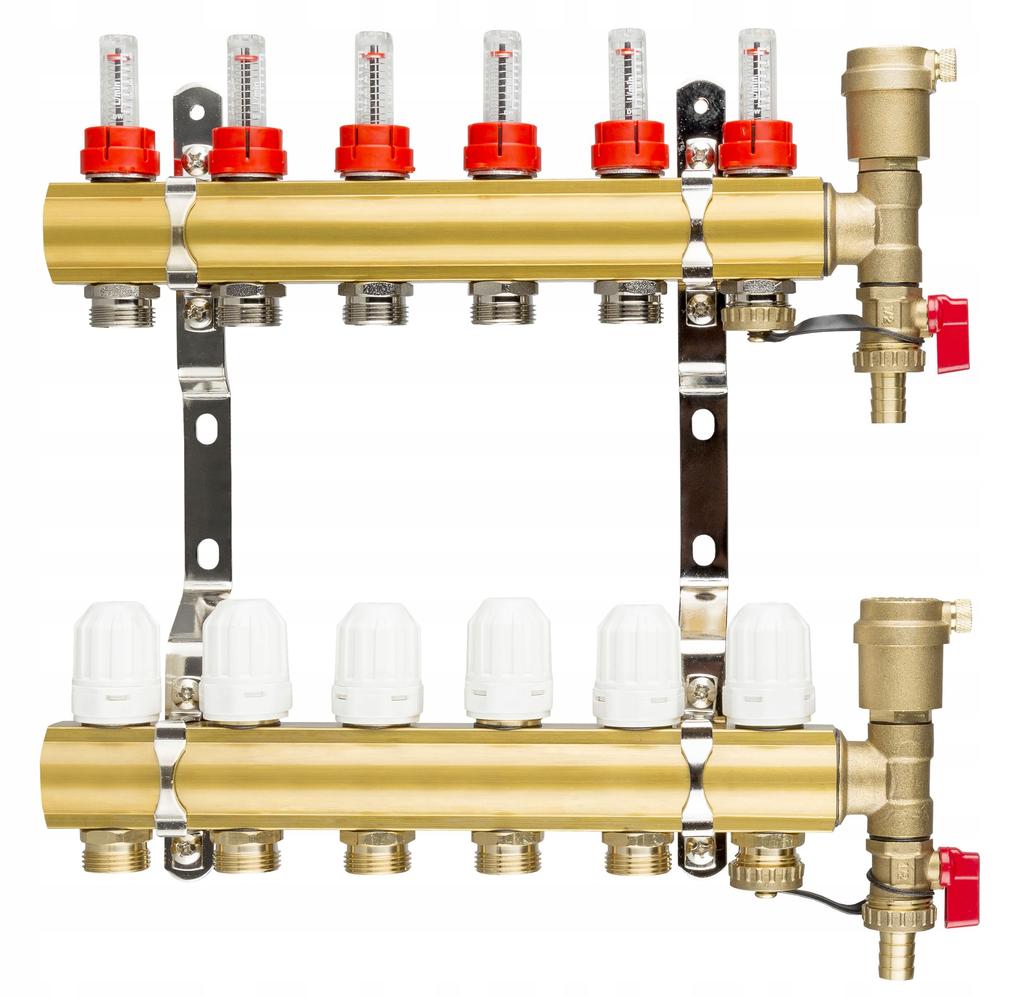
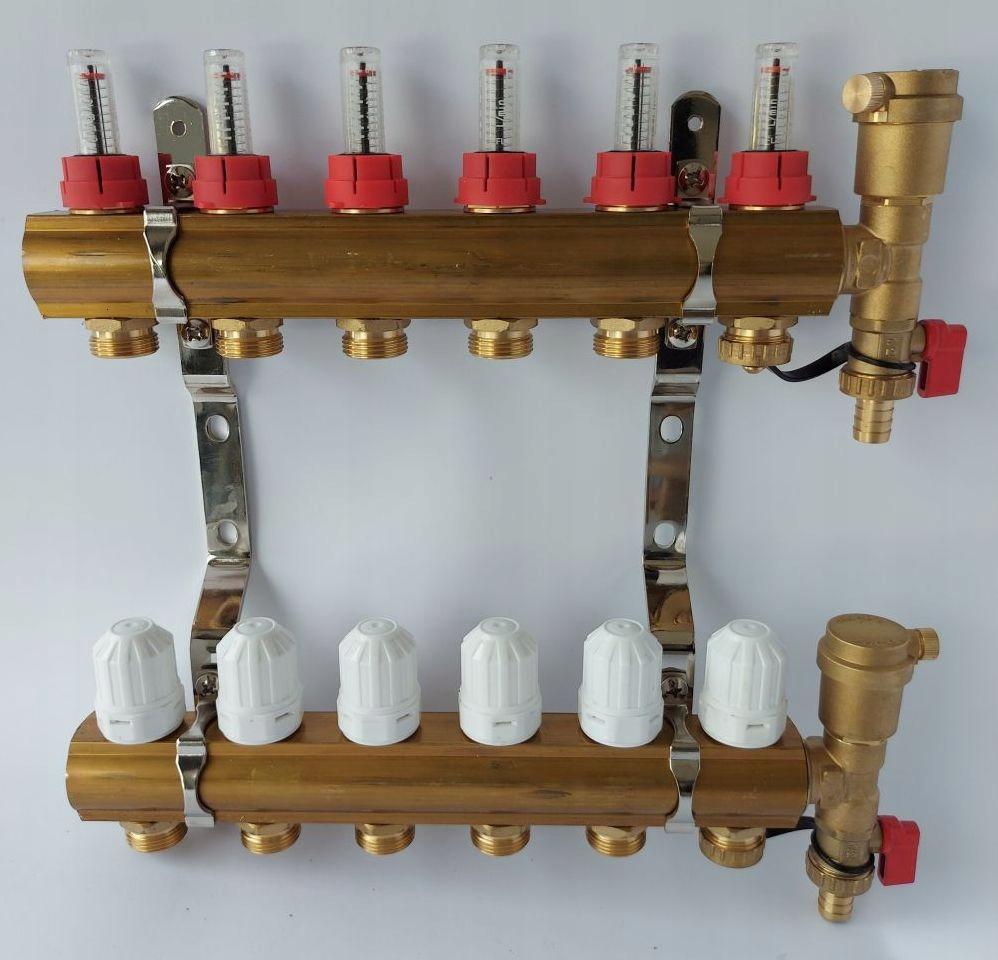
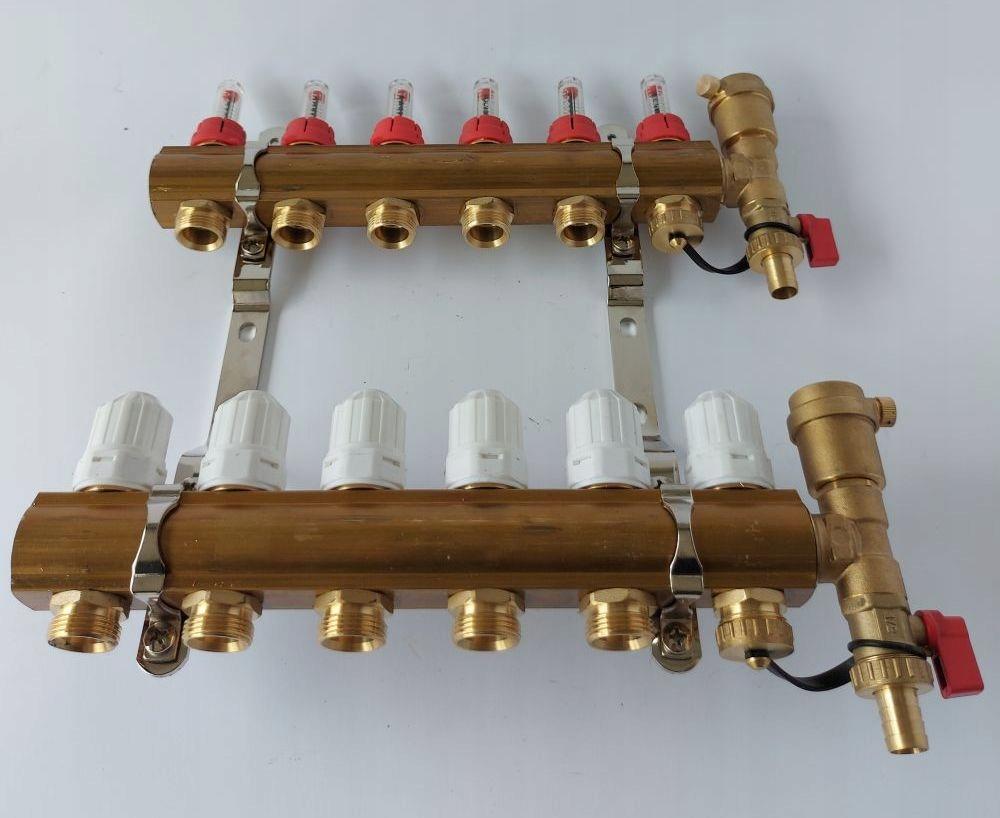
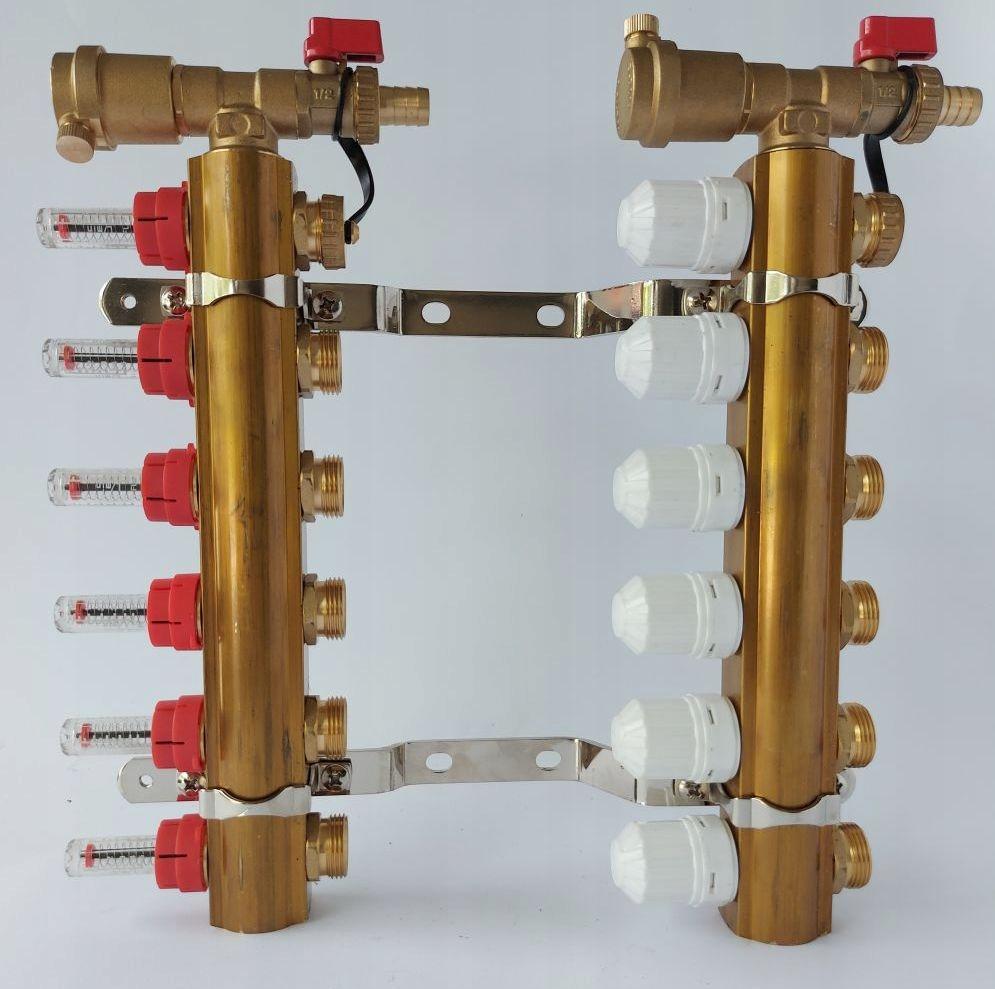
Construction and composition of the distributor:1) Brass upper beam:flow meters,vent valve,drain ball valve,connecting nipples.2) Brass lower beam:thermostatic valves - possibility of mounting electric actuators M30 x 1.5,bleeding valve,drain ball valve,connecting nipples.3) Distributor mounting brackets
The number of circuits in the photos is illustrative - the subject of the sale is a distribution board with the number of circuits listed in the auction title.
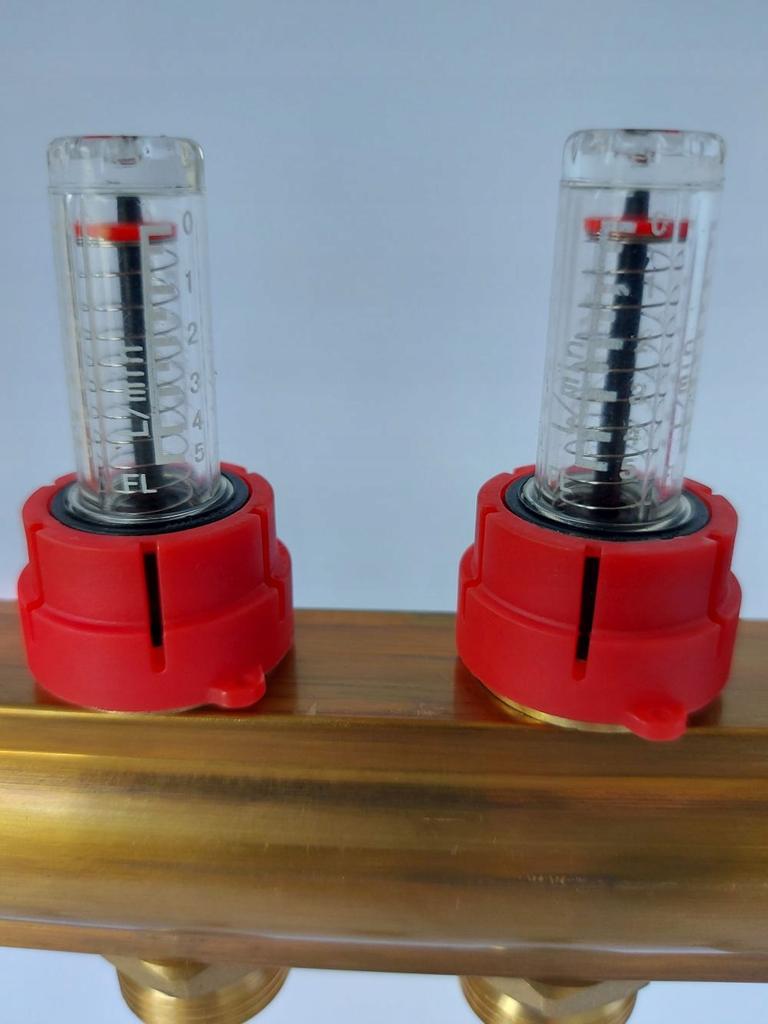
Flow meter (rotameter):
Component mounted on the power strip used for measuring the flow rate of fluids in individual circuits and for precise flow rate adjustment. The flow meter is appropriately scaled (5 liters/min) so that it allows reading the actual flow rate of liquids.
It is made of plastic and a brass body.
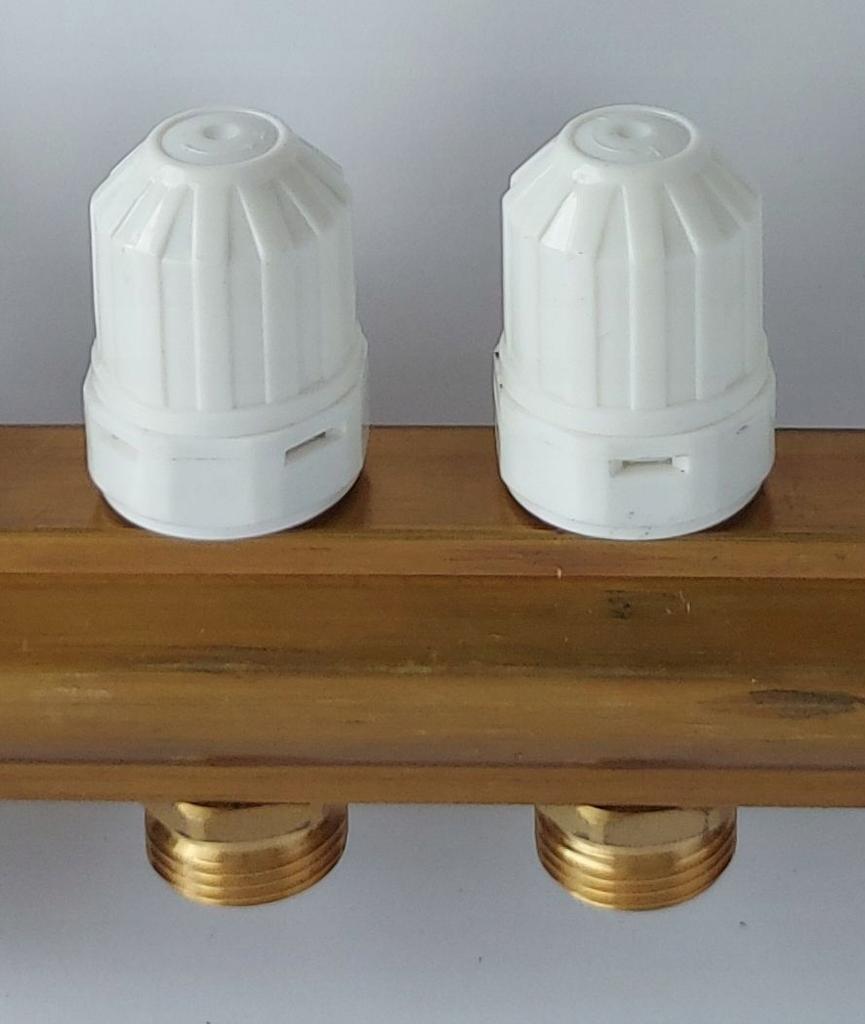
Thermostatic valve with knob:The element mounted on the return line allows for manual flow regulation or complete closure of the loop. The valve is designed for mounting an M30x1.5 electric actuator. The thermostatic insert is made of brass.
The advantage of underfloor heating is the uniform temperature distribution in the rooms, which allows saving on heat generation at home approx. 12-15%.
Modern floor heating systems can also work with heating devices based on heat pumps or condensing boilers, which further reduces the height of energy bills.
Surface heating systems (including underfloor heating) they transfer heat to the surroundings through the phenomenon of thermal radiation, which is considered healthy.
The greatest heating occurs at the floor, which is the place where cold is felt most unpleasantly.. This way, the temperature distribution is closest to ideal, because as studies confirm, we feel best having warm feet and a cool head. For comparison, in the case of traditional radiators, which operate on the principle of convection, all the heat escapes to the ceiling.
Thanks to underfloor heating, less dust is raised into the air, which positively affects allergy and asthma sufferers.
Underfloor heating also provides greater design possibilities and improves the aesthetics and functionality of rooms due to the absence of radiators on the walls.


 No-delivery refund