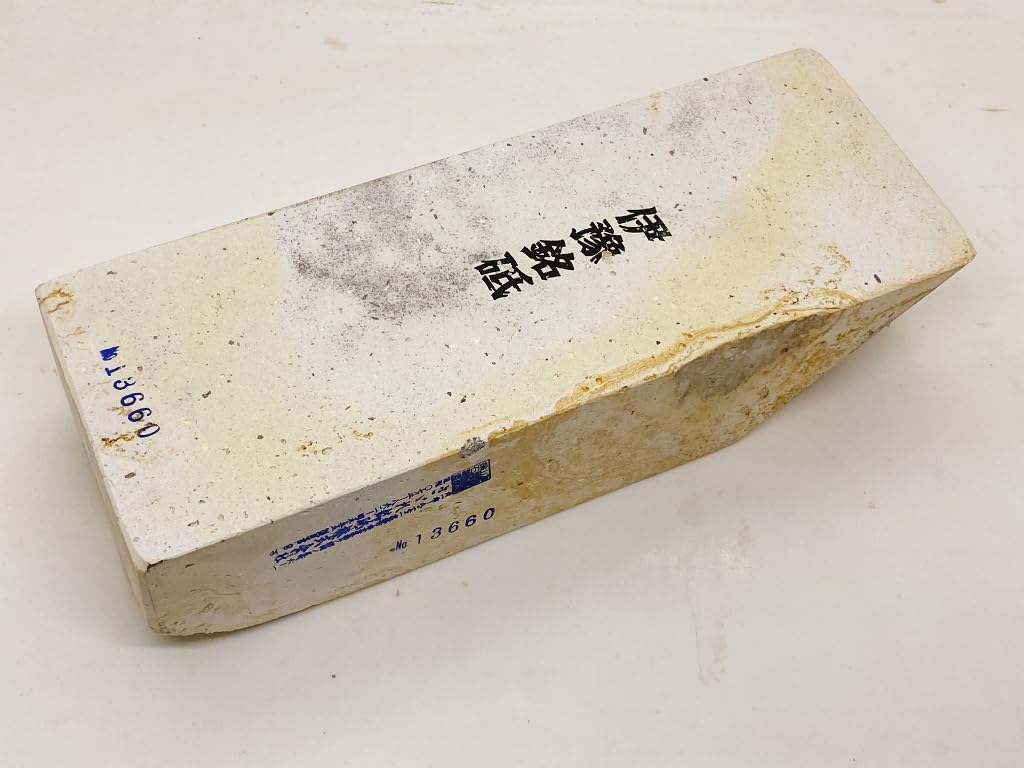
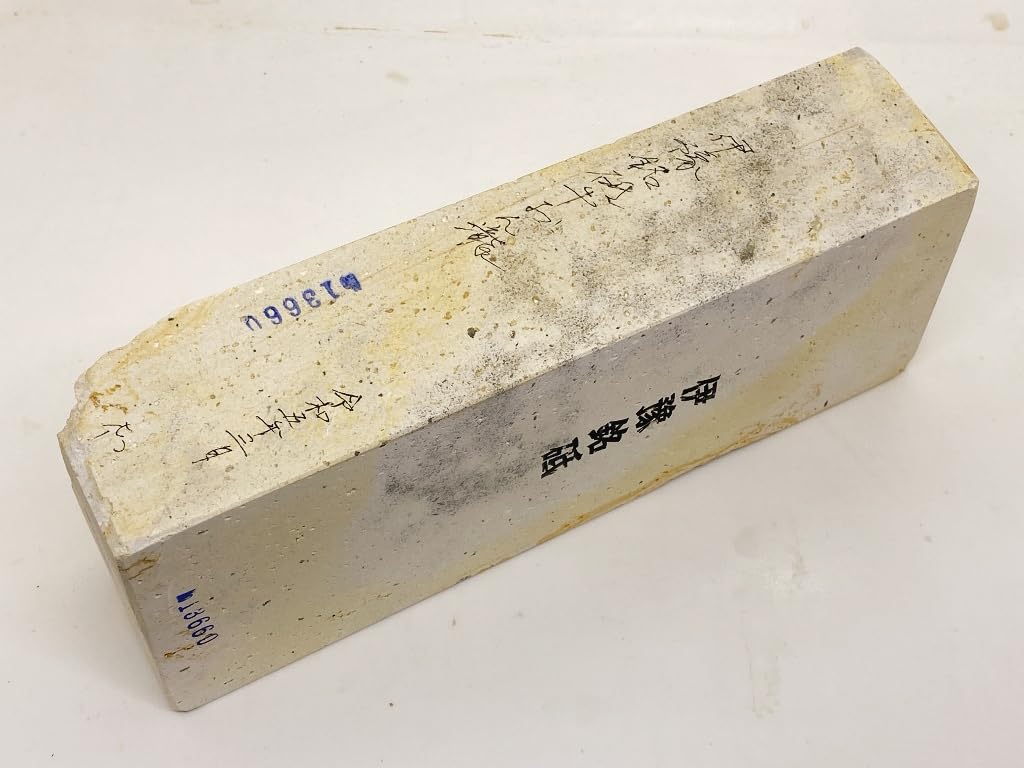
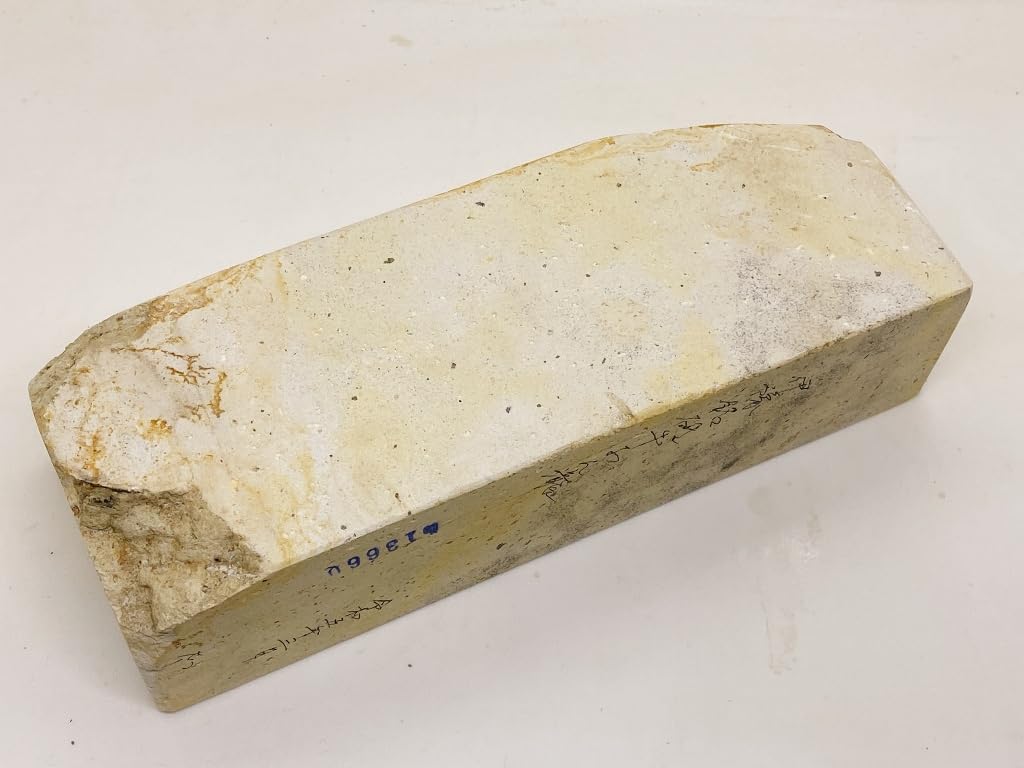
83 x 220 x 52 mm, 2,067 g, firm
The stones in Toyama look somewhat similar, and the location is quite close.
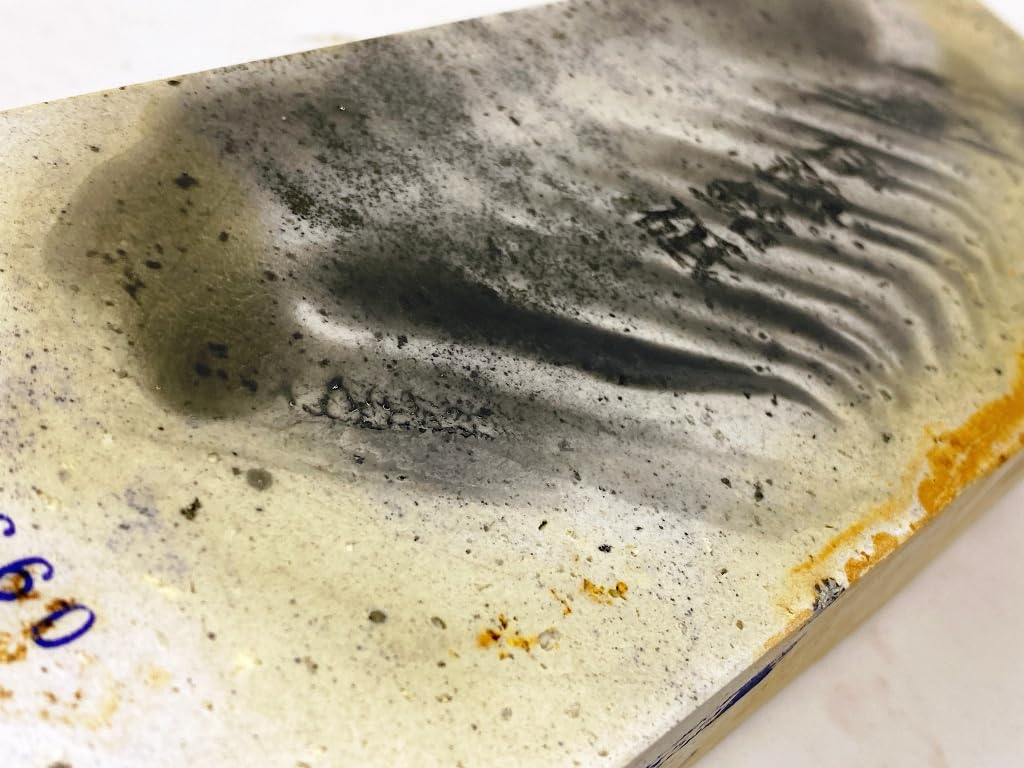
Rough-metamorphosed rhyolite from Tobe-cho, Iyo-gun, Ehime Prefecture. Grade #800-4,000. The harder the stone, the higher the probability of obtaining a finer grain.
The darker the rock, the harder and finer the stone tends to be. Since hardness reduces the sharpness, sharpening should be done by applying a nagura (a type of stone used for sharpening) as needed, depending on the purpose and skill level.
Natural whetstones from Iyo Province are believed to have been circulating in the Seto Inland Sea region since the Kofun period, and are renowned as the world's oldest and largest igneous rock-based whetstone industry, with a history spanning over 1,500 years.
Our country's resources for master whetstones possessed such immense power that they could completely transform the nation and its people.
The scarcity of iron ore, the resulting low yield of their unique iron sand metallurgy, and their location on a remote island in the Far East meant they were the last to develop an iron age, creating conditions as fatal as losing all four limbs when it came to establishing an iron age civilization.
Considering our history and tradition, it is clear that our country's finest whetstones are consumables that allow us to process iron products to be harder and tougher, as desired.
Until the 19th century, the performance of natural whetstones dominated the development of iron tools.
Despite its unsuitable location for construction, it boasts one of the world's oldest and largest wooden structures.
The Japanese sword, a testament to unparalleled skill in ironworking, was the object of a samurai's unwavering dedication to its every swing, a legacy that lasted for 700 years.
Despite being a latecomer in a remote region, it achieved world-leading inventions in iron products by the Middle Ages and is known today as a manufacturing nation.
The Age of Iron, which lasted from prehistoric times until the middle of the Heisei era, was a time when the power to wield iron was the very medium that nurtured not only manufacturing but also the maturation of culture and nations.
These irreplaceable, invaluable, and uniquely authentic whetstone resources have overcome numerous adversities, including those faced by iron.
If we were to judge Japan's various resources using the values of the pre-modern era, when oil and nuclear power were considered worthless, then we could say that Japan is a resource-rich nation.
The strength gained only through the process of overcoming scarcity and hardship is what gives depth, soul, and spirit to history and tradition.


 No-delivery refund