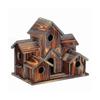
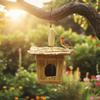
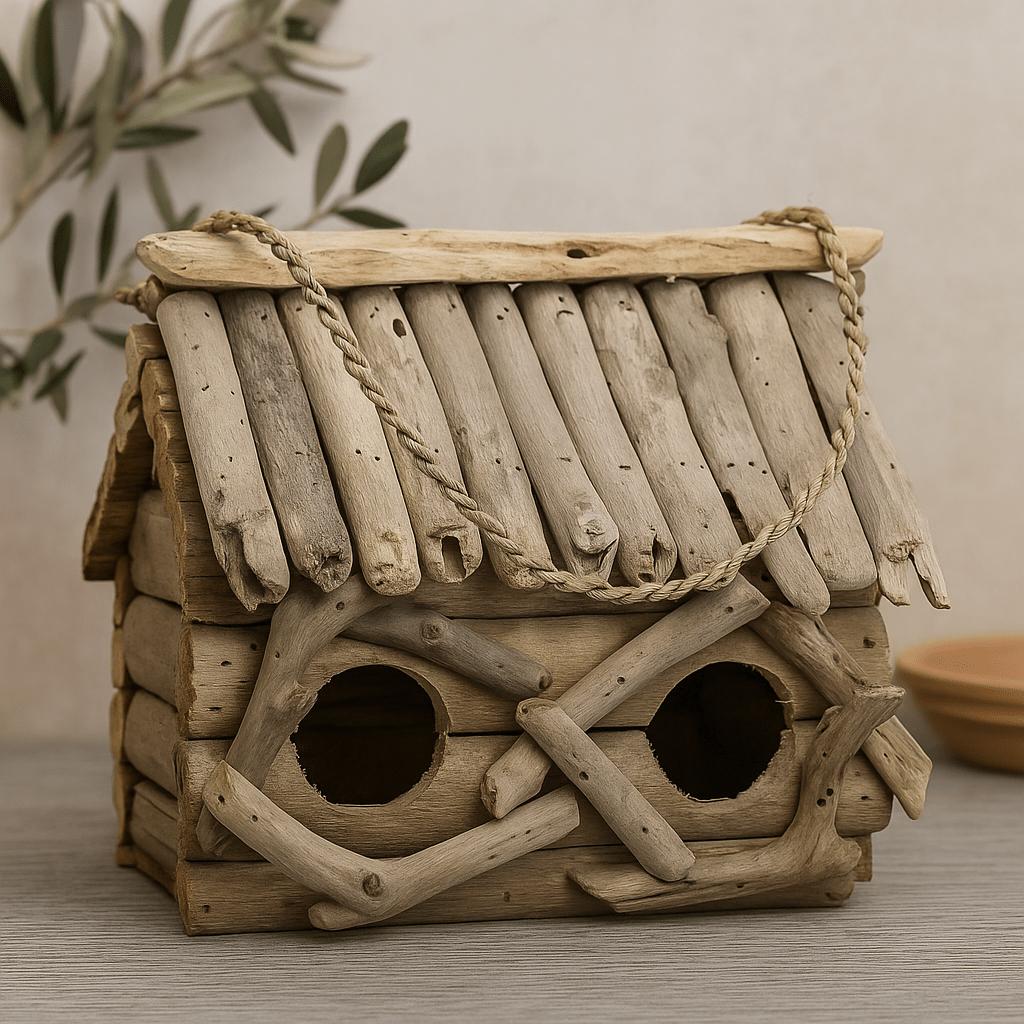
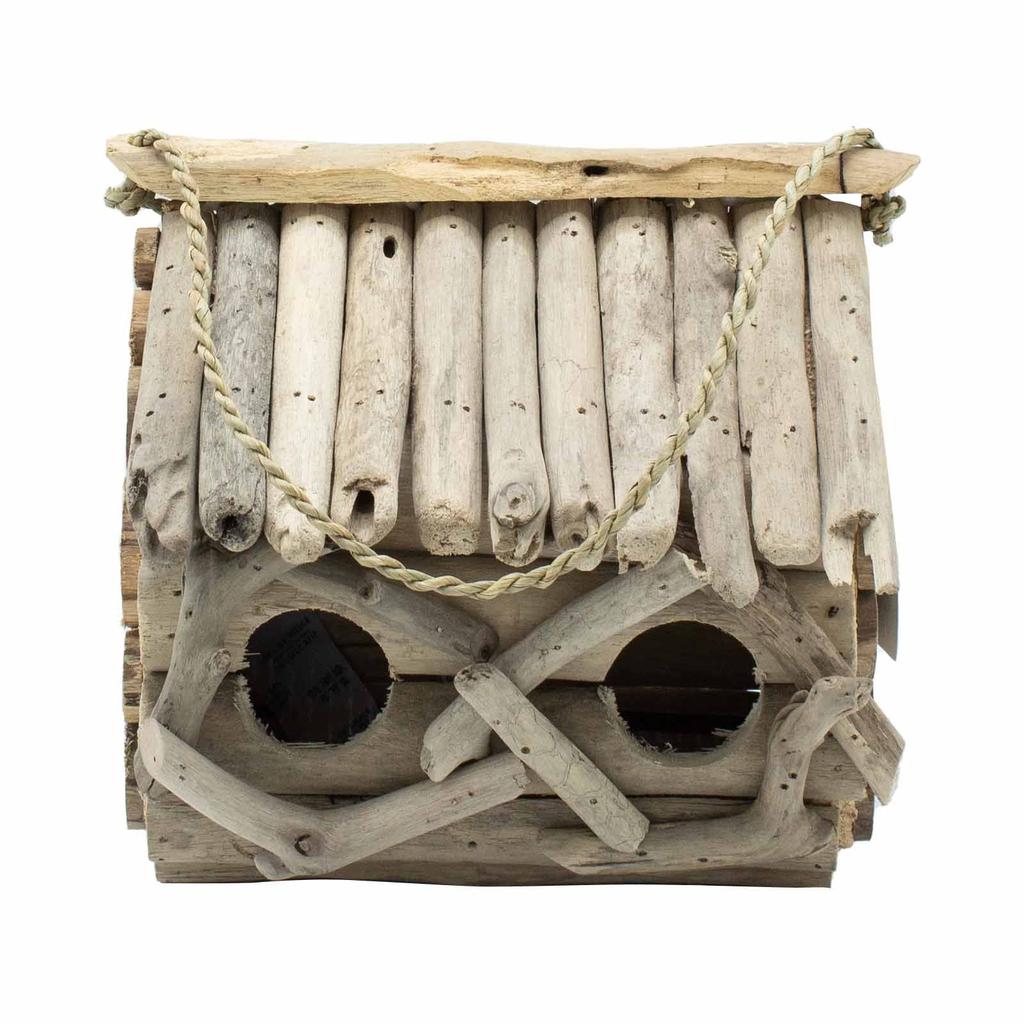
Two chambers, one piece of driftwood. This double birdhouse is built from timber that has already lived a life, bleached, smoothed and silvered by salt water and sun before it was shaped into something new. The result is a garden object that looks as though it grew where it stands: rough-edged, quietly sculptural, and entirely at home against a fence, a wall, or the bark of a tree.
What you'll notice
The surface carries the marks of its origin, uneven grain, pale silver-grey tones, and the slight irregularity that comes from timber shaped by water rather than a mill.
Two entrance holes sit side by side, giving the piece a symmetry that still feels natural rather than manufactured.
The weight (1.5 kg) gives it a solidity that reads as permanence, this is not a lightweight ornament that shifts in the wind.
Up close, the wood shows variation in colour and texture from piece to piece; no two will be identical.
It works as a wall-hung garden feature or as a focal point on a shelf or ledge indoors, where it brings a coastal, weathered texture into the room.
Driftwood from the Indonesian coast
The timber comes from three species, Albecia falcatria, Samanea saman, and Hibiscus tiliaceus, all sourced in Indonesia, where these fast-growing trees are common along the coast and in managed woodland. Using reclaimed and recycled driftwood means each piece carries its own history: the grain, the colour, and the surface texture are shaped by the water and light it has already passed through. Nothing is uniform, and that is the point.
Placement and care
Fix it to a wall, fence post, or tree trunk in a sheltered spot, facing away from the prevailing wind and out of direct afternoon sun where possible. Driftwood is naturally weathered, but prolonged exposure to standing water will shorten its life; a position with some overhead shelter suits it best. Indoors, it needs nothing more than an occasional wipe with a dry cloth.
Size and what's in the box
The birdhouse …
region of manufacture: Indonesia


 No-delivery refund