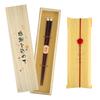
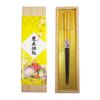
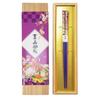
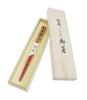
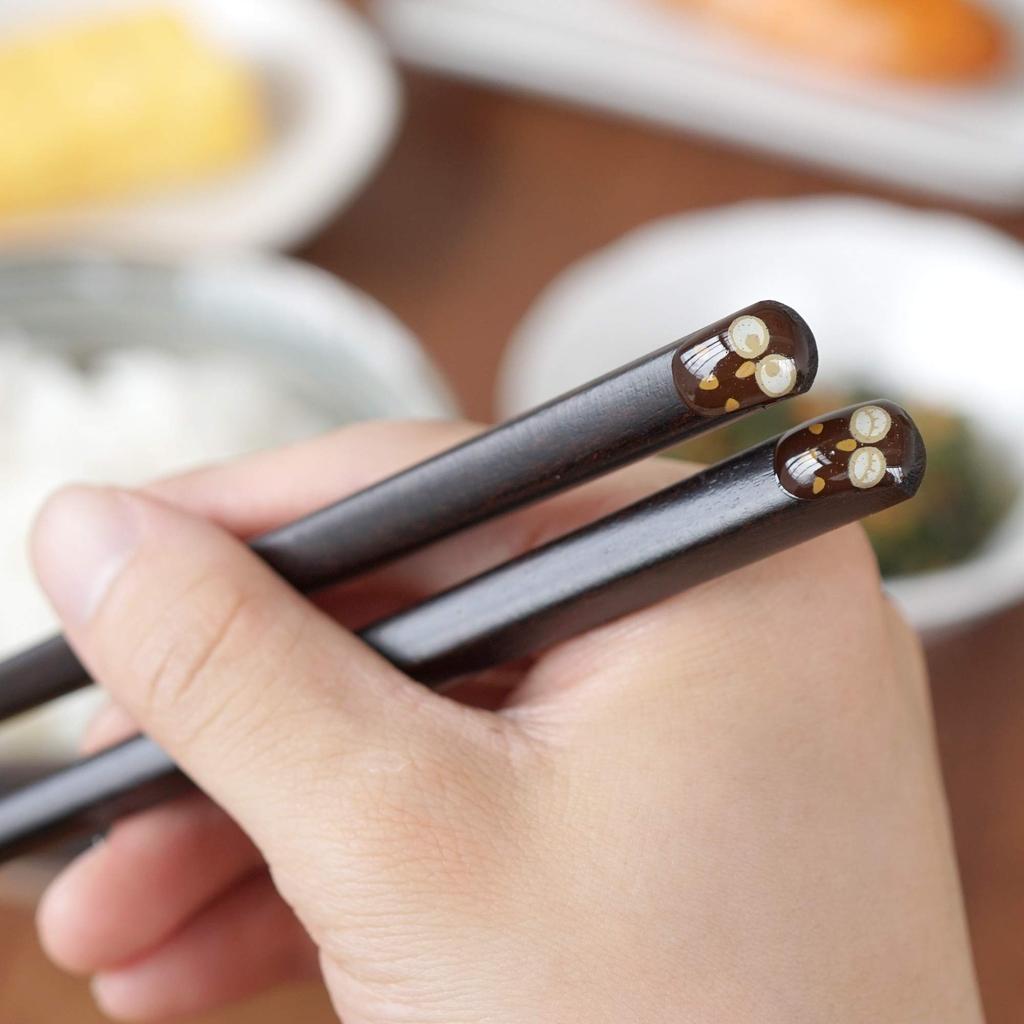
This is a gift set of chopsticks featuring an owl, a bird considered auspicious in Japan.
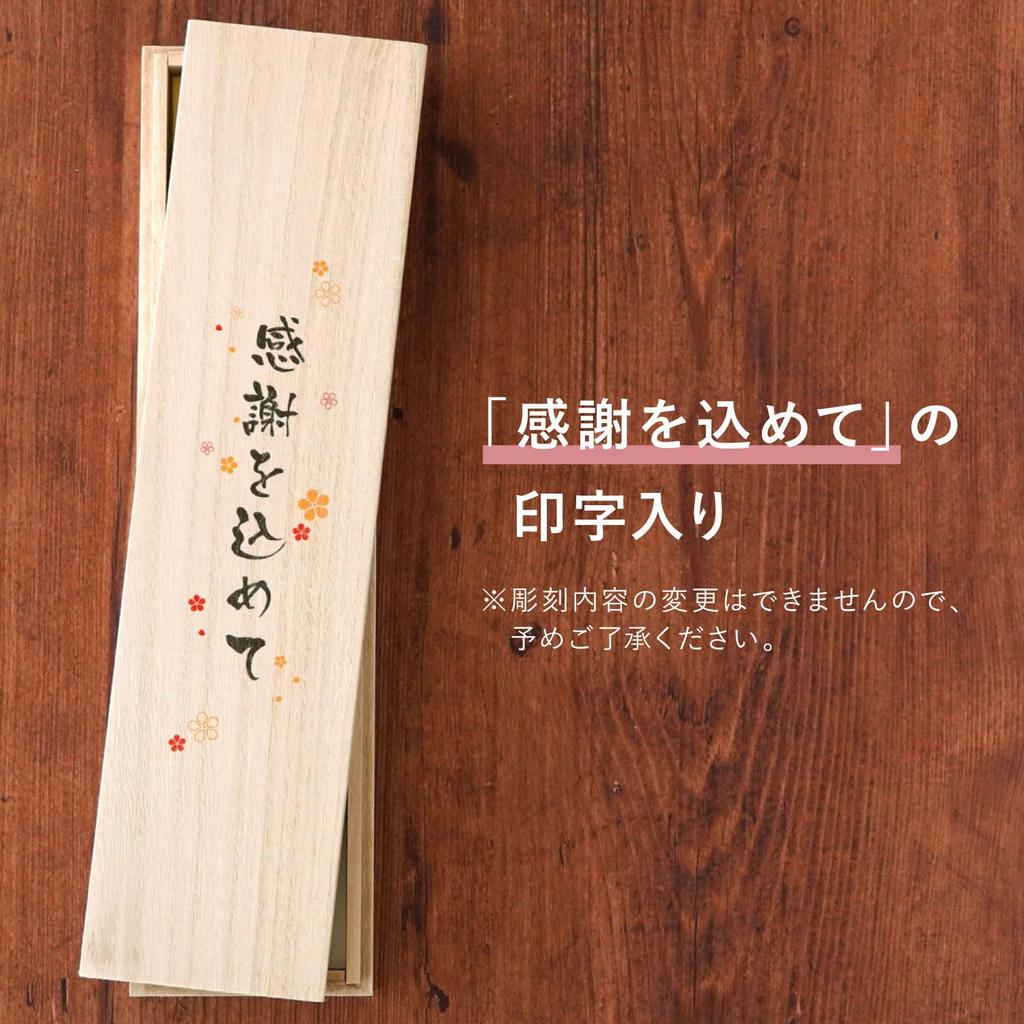
The paulownia wood box includes a message that reads, "With gratitude."
The auspicious bird The owl is considered a symbol of good fortune not only in Japan but also overseas. It is the "bird that presides over arts and intellect (Greek mythology)" and the "wise bird with foresight (Aesop's fables)." In the West, it is a "symbol of wisdom and trust." In Korea, it is the "god that brings good fortune," and every household has an owl-shaped piggy bank, making it a counterpart to Japan's "maneki-neko" (beckoning cat). Wakasa lacquerware Wakasa lacquerware originated when Matsuura Sanjuro, the official lacquerer of the Obama domain, was inspired by a type of Chinese lacquerware called Zonsei and designed it to resemble the underwater world. The mid-to-late Edo period was the golden age of Wakasa lacquerware, and it is said that more than 200 types of lacquering techniques were perfected, using techniques such as gold leaf application (using mother-of-pearl and eggshell) and raden, as well as maki-e (gold lacquer) techniques. *Raden: The lustrous inner surface of seashells is cut into the shapes of flowers and birds, polished, and then inlaid onto the surface of lacquerware or other decorative items. *Makie: A design is drawn with lacquer, and before it dries, gold and silver powder is applied, and then it is polished to give it a shine.
[Material] Natural wood / [Size] Brown 23cm
[Surface coating] Acrylic paint / [Country of origin] Made in Japan
The auspicious bird The owl is considered a symbol of good fortune not only in Japan but also overseas. It is the "bird that presides over arts and intellect (Greek mythology)" and the "wise bird with foresight (Aesop's fables)." In the West, it is a "symbol of wisdom and trust." In Korea, it is the "god that brings good fortune," and every household has an owl-shaped piggy bank, making it a counterpart to Japan's "maneki-neko" (beckoning cat). Wakasa lacquerware Wakasa lacquerware originated when Matsuura Sanjuro, the official lacquerer of the Obama domain, was inspired by a type of Chinese lacquerware called Zonsei and designed it to resemble the underwater world. The mid-to-late Edo period was the golden age of Wakasa lacquerware, and it is said that more than 200 types of lacquering techniques were perfected, using techniques such as gold leaf application (using mother-of-pearl and eggshell) and raden, as well as maki-e (gold lacquer) techniques. *Raden: The lustrous inner surface of seashells is cut into the shapes of flowers and birds, polished, and then inlaid onto the surface of lacquerware or other decorative items. *Makie: A design is drawn with lacquer, and before it dries, gold and silver powder is applied, and then it is polished to give it a shine.




 No-delivery refund