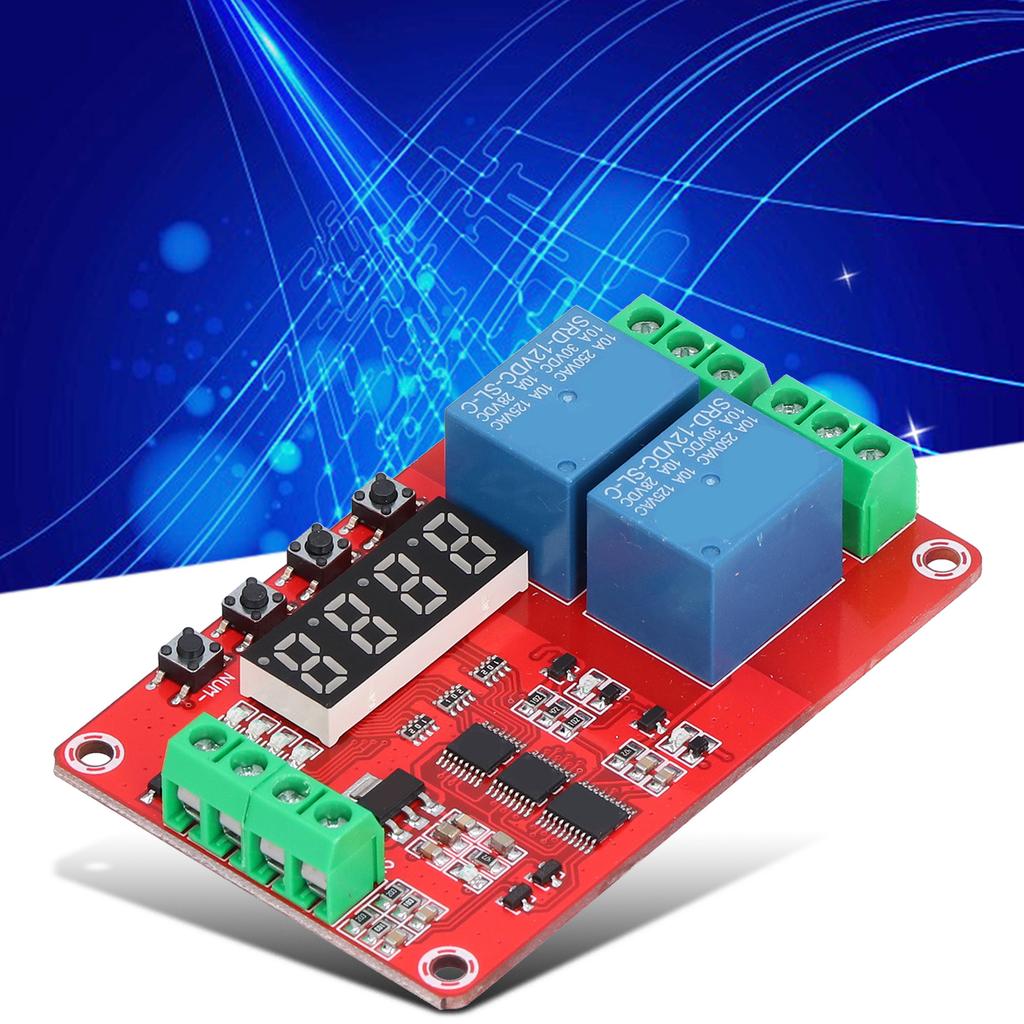
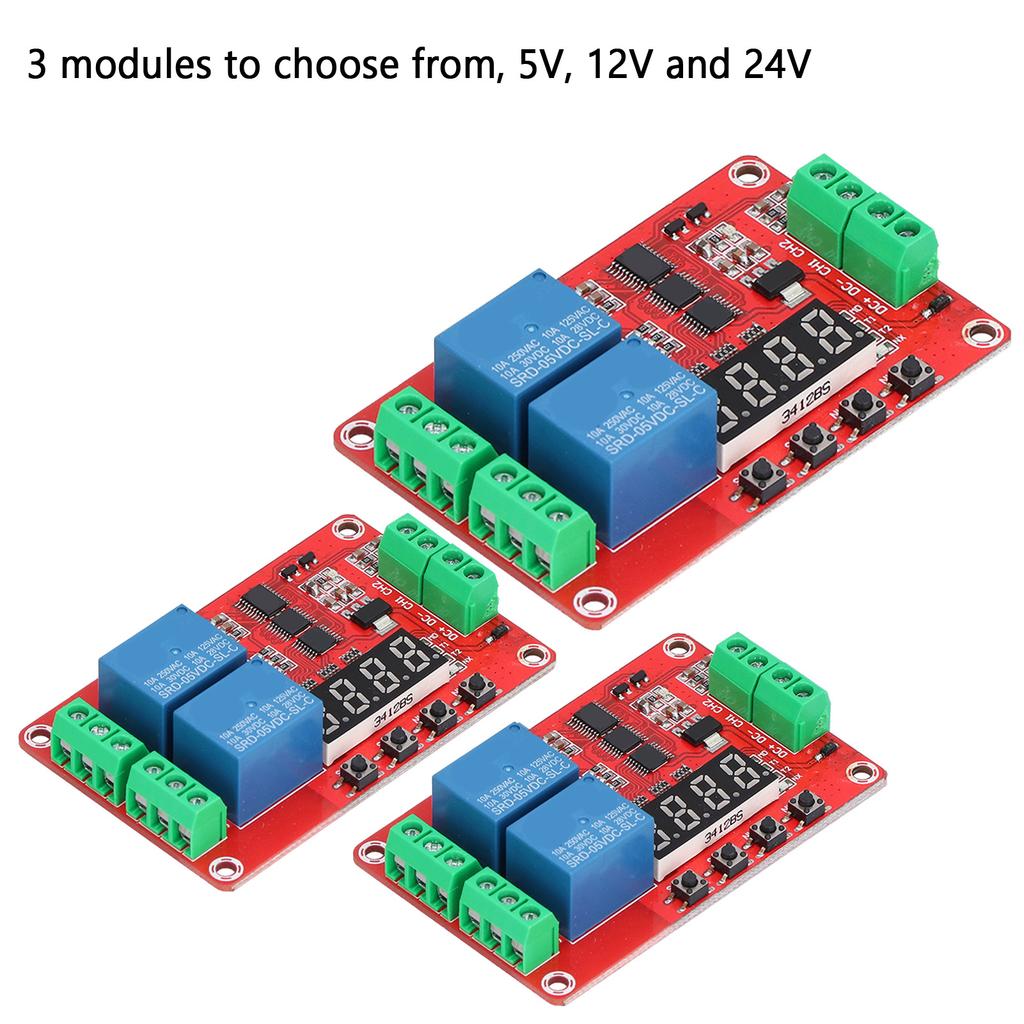
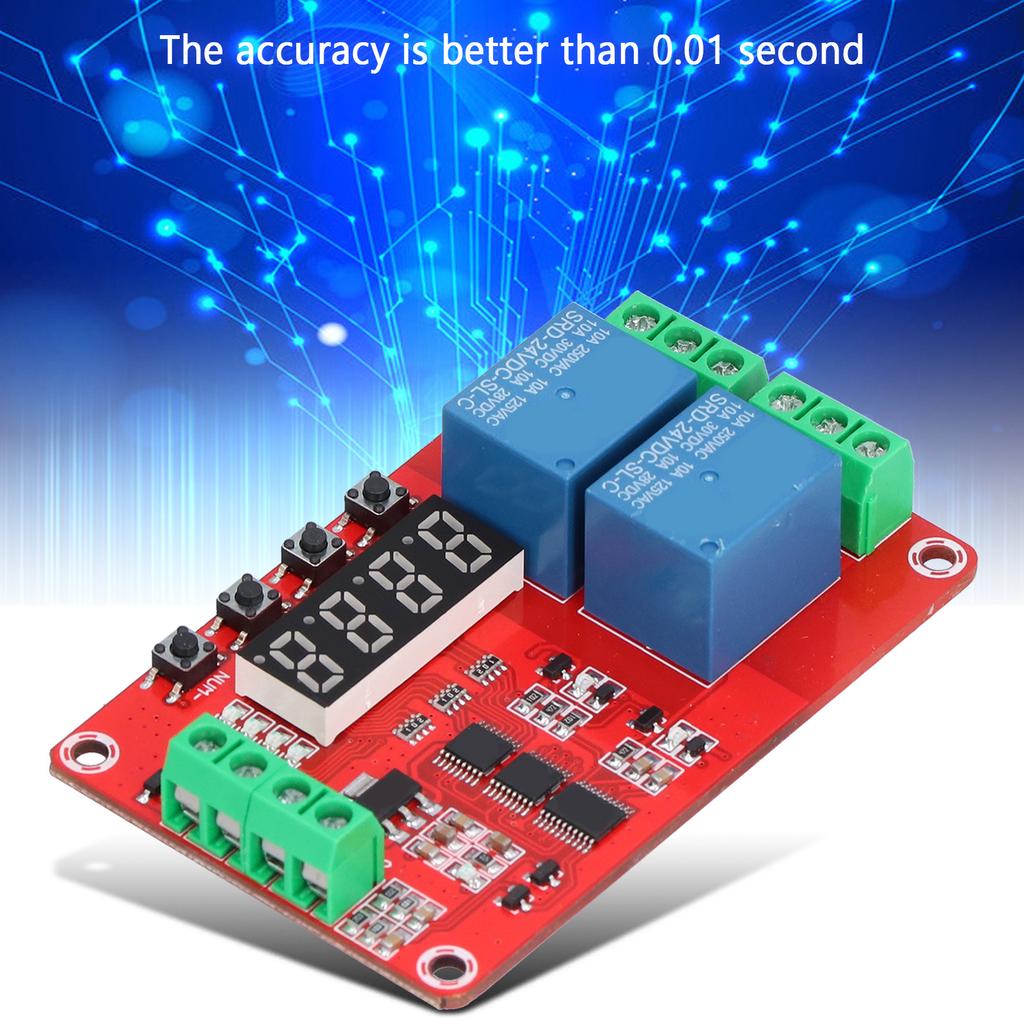
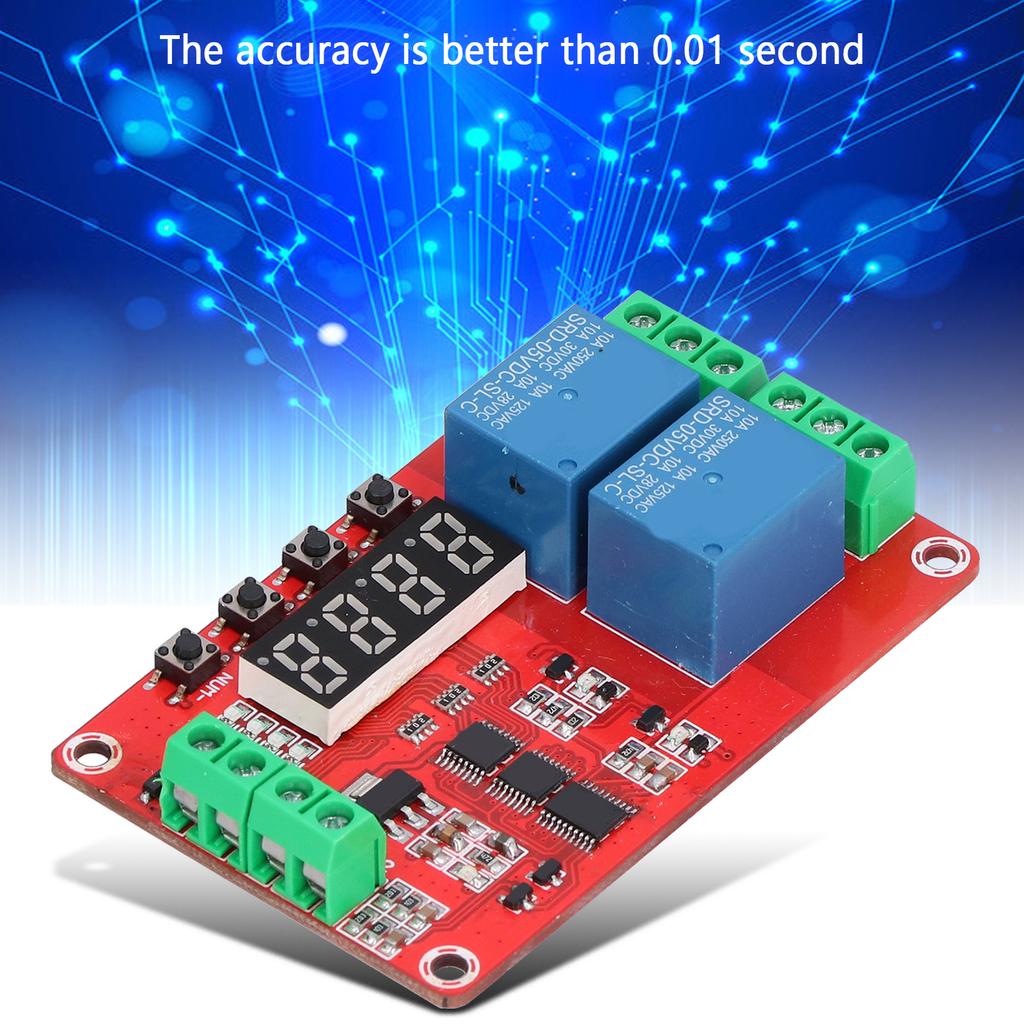
There are 5V, 12V and 24V modules to choose from, can satisfy your multiple needs.
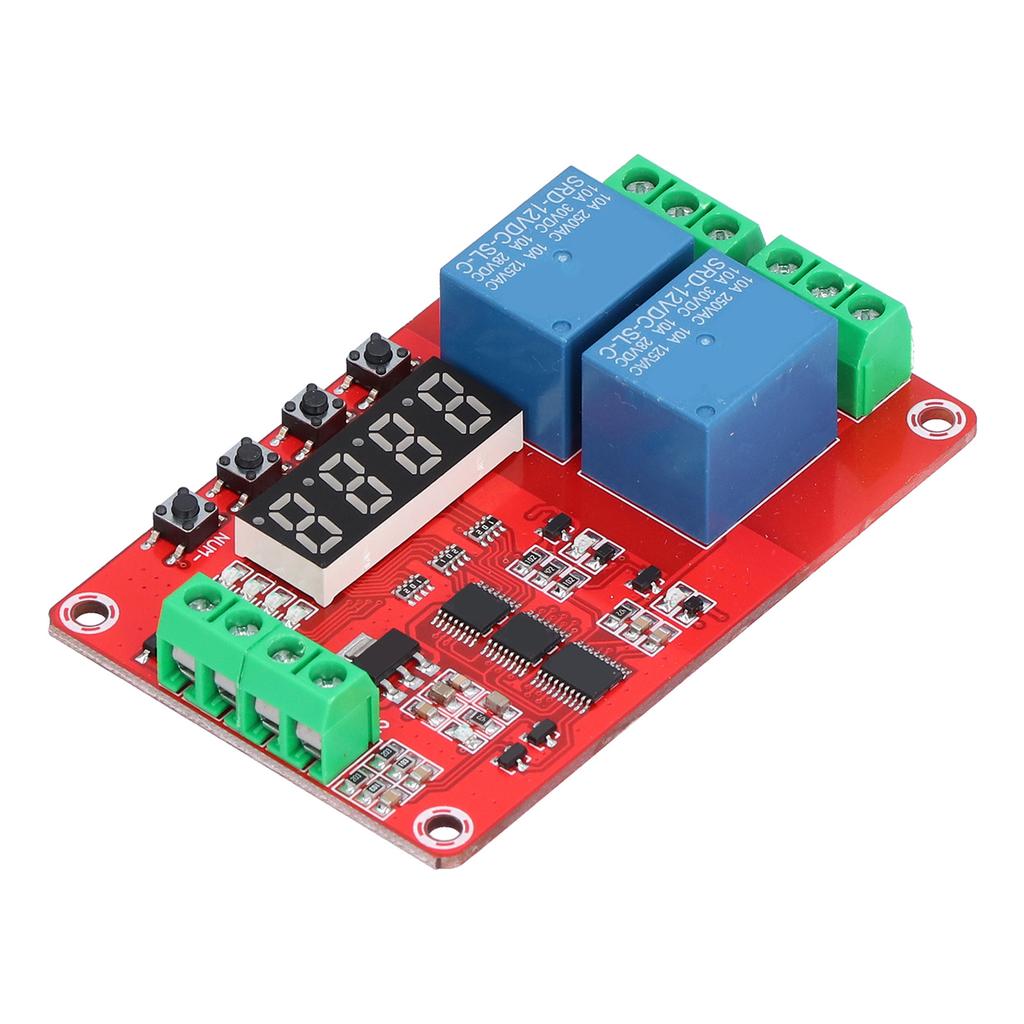
The user can select one of the following 20 functions by pressing the button and display, and can set and save the function parameters, and also view the parameters of the current function.
The time parameter setting is by 0.1 second at minimum, and the accuracy is better than 0.01 second.
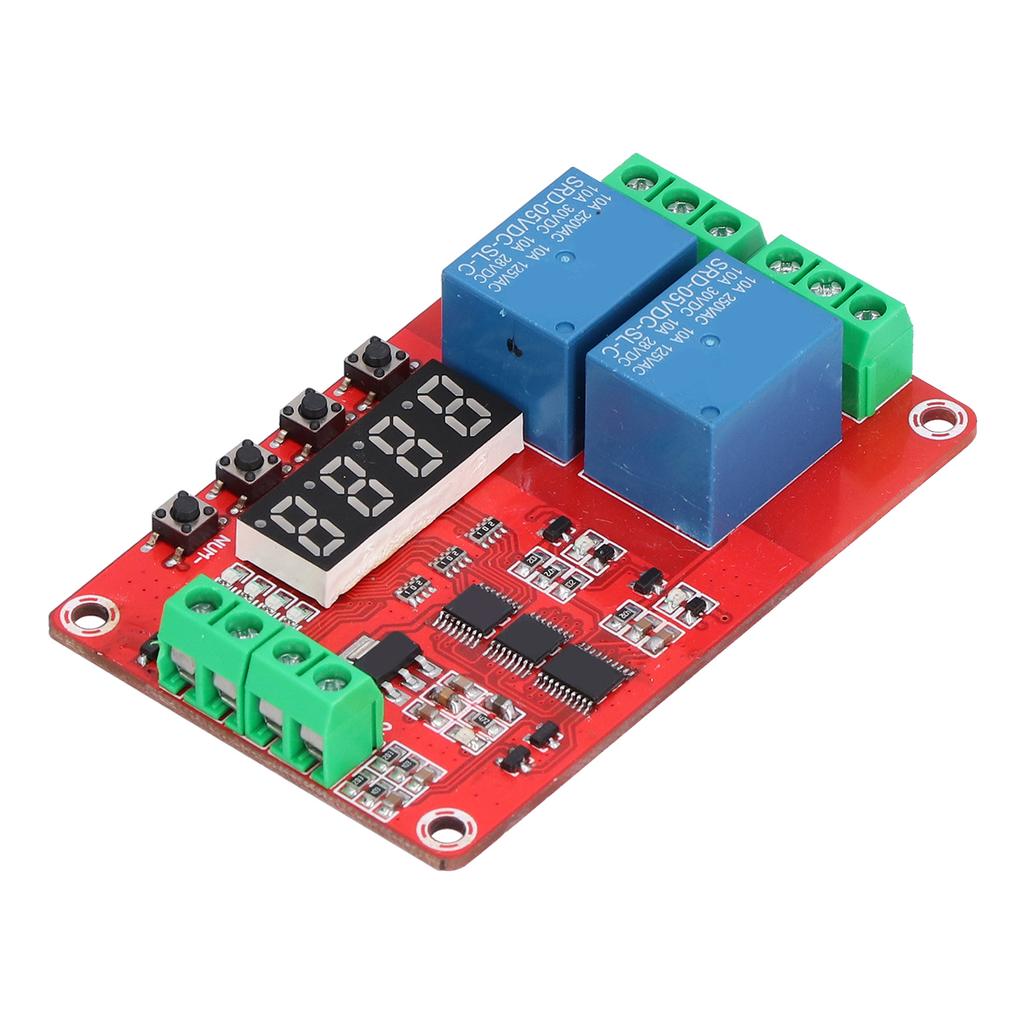
Item Type: Time Delay Relay
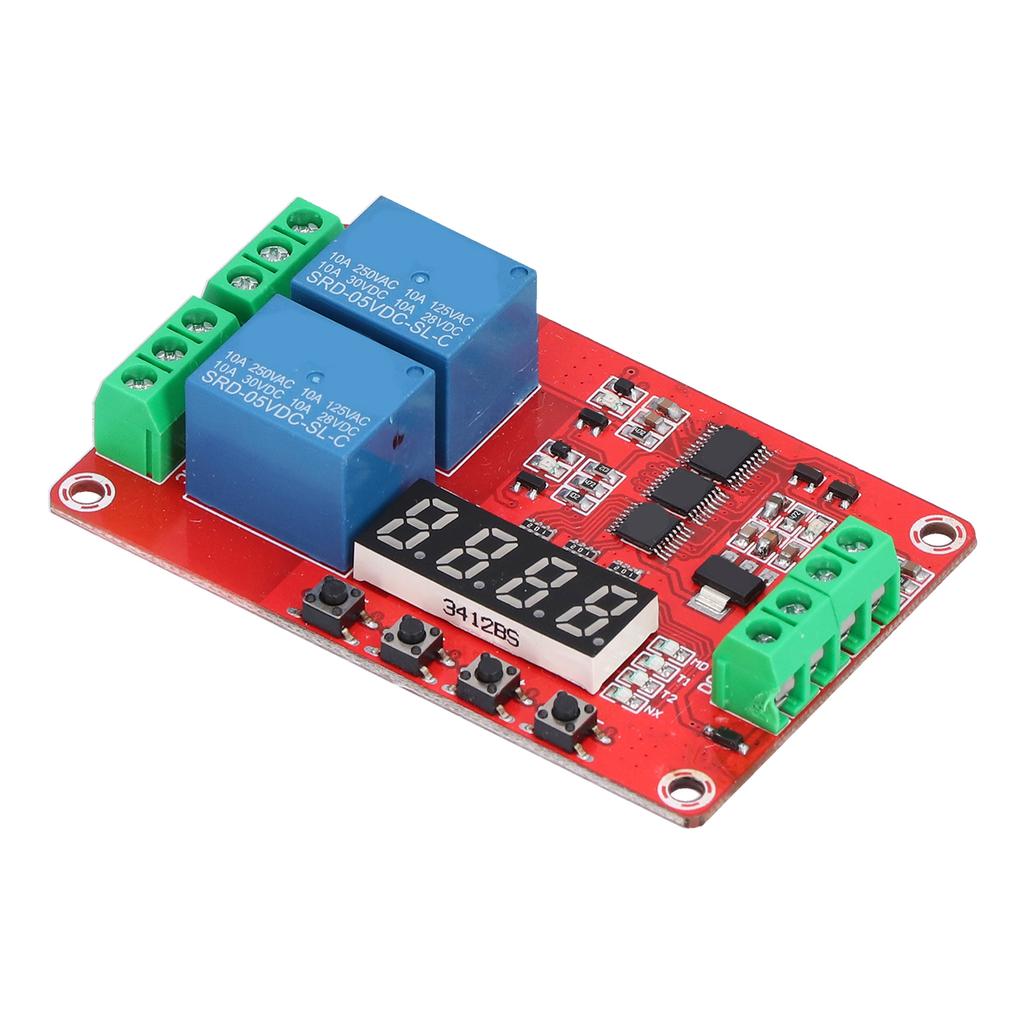
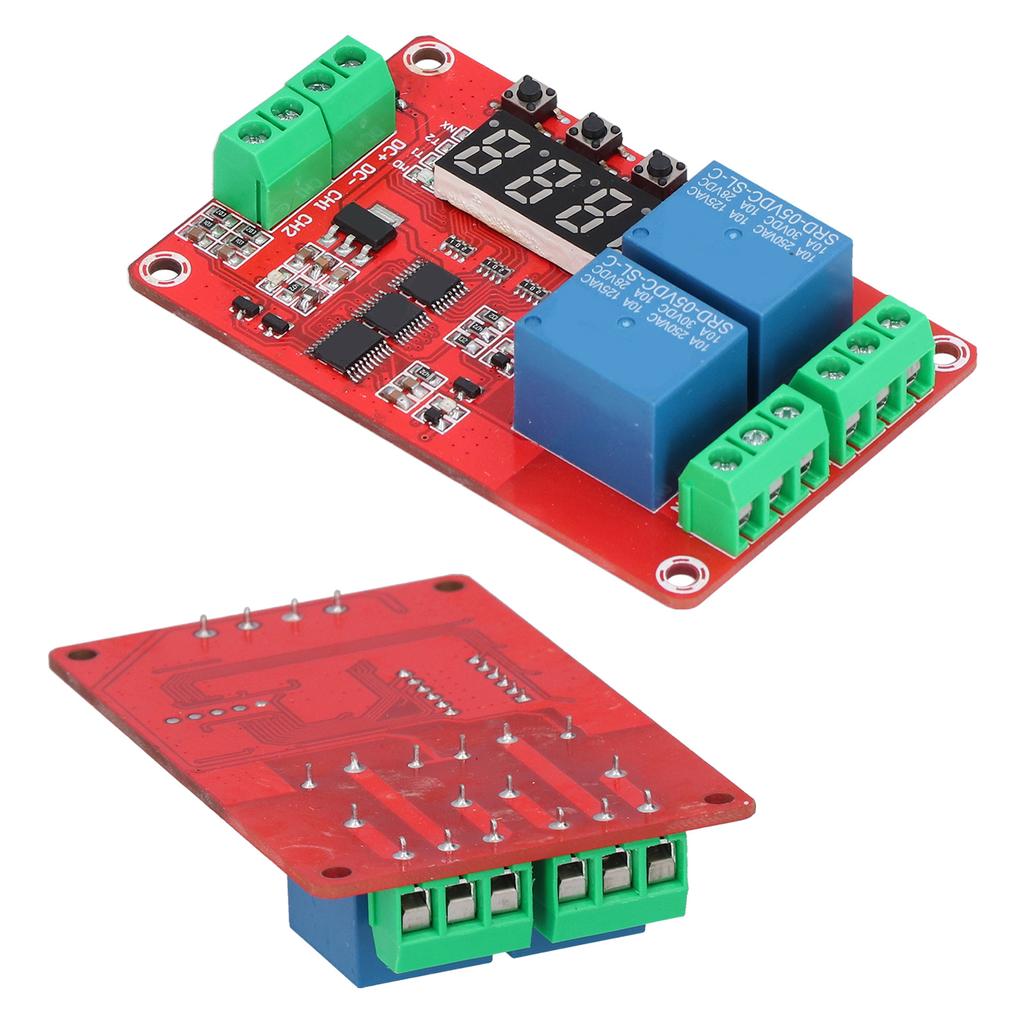
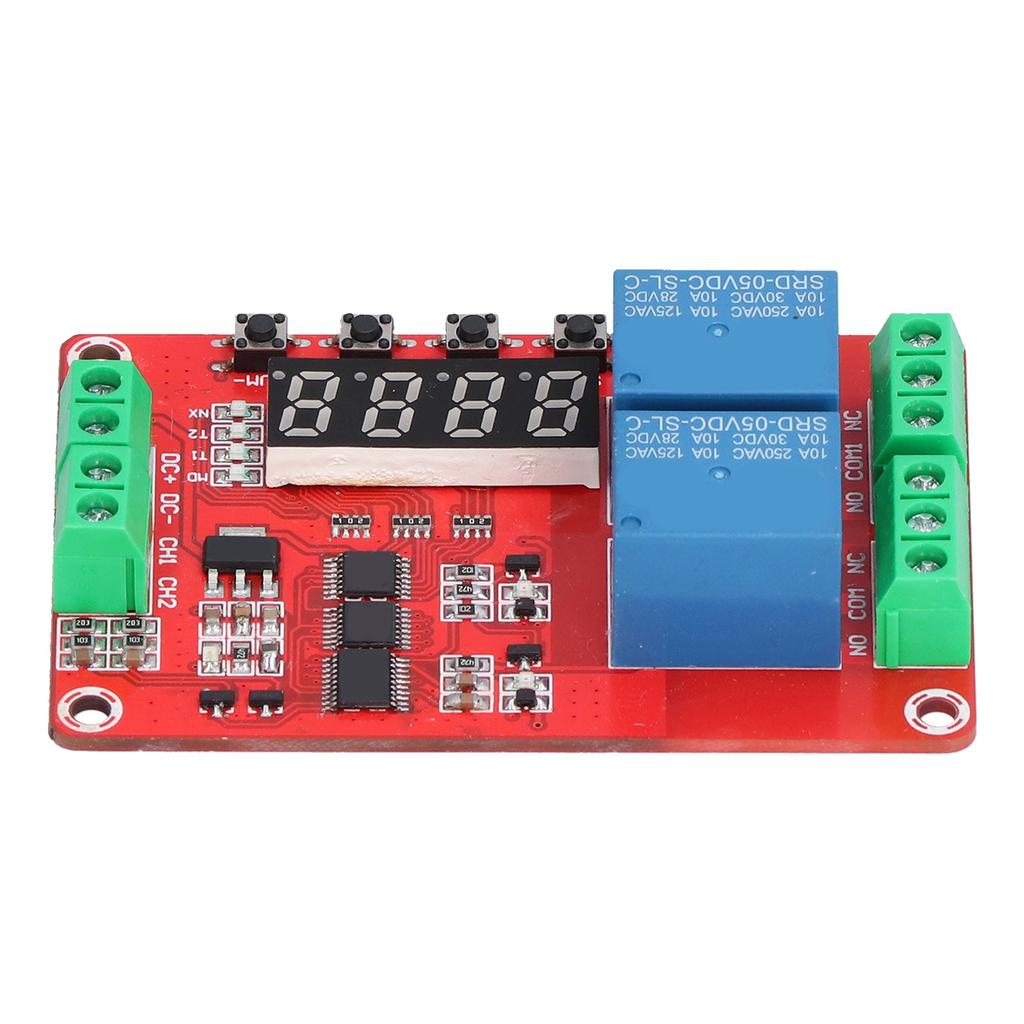
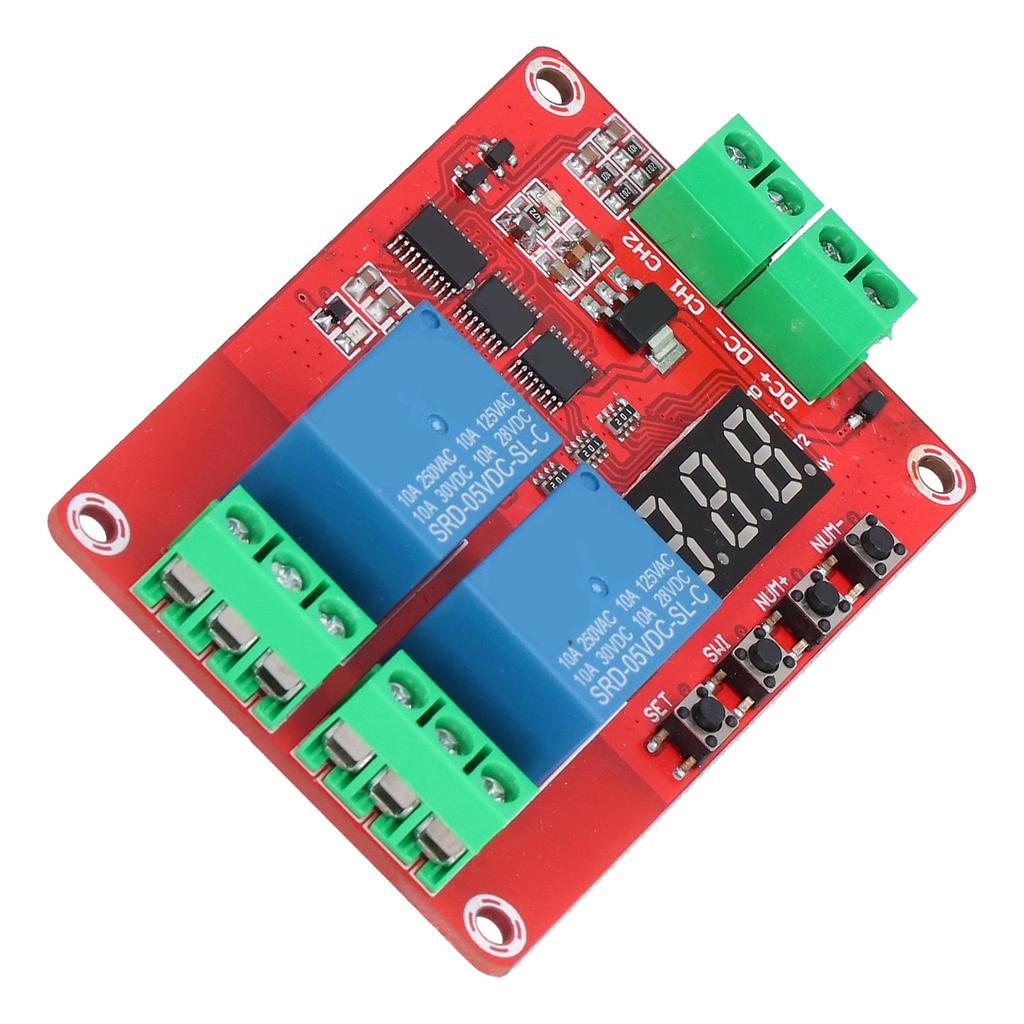
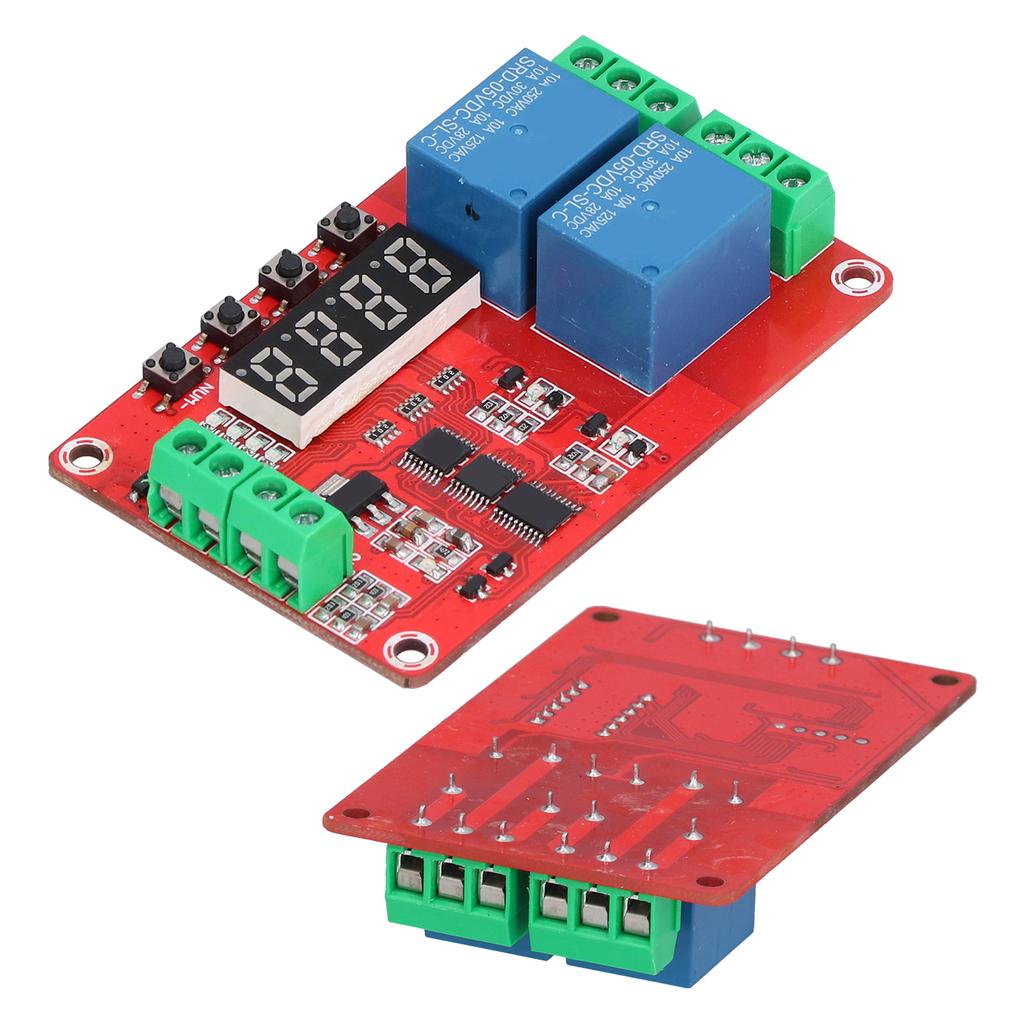
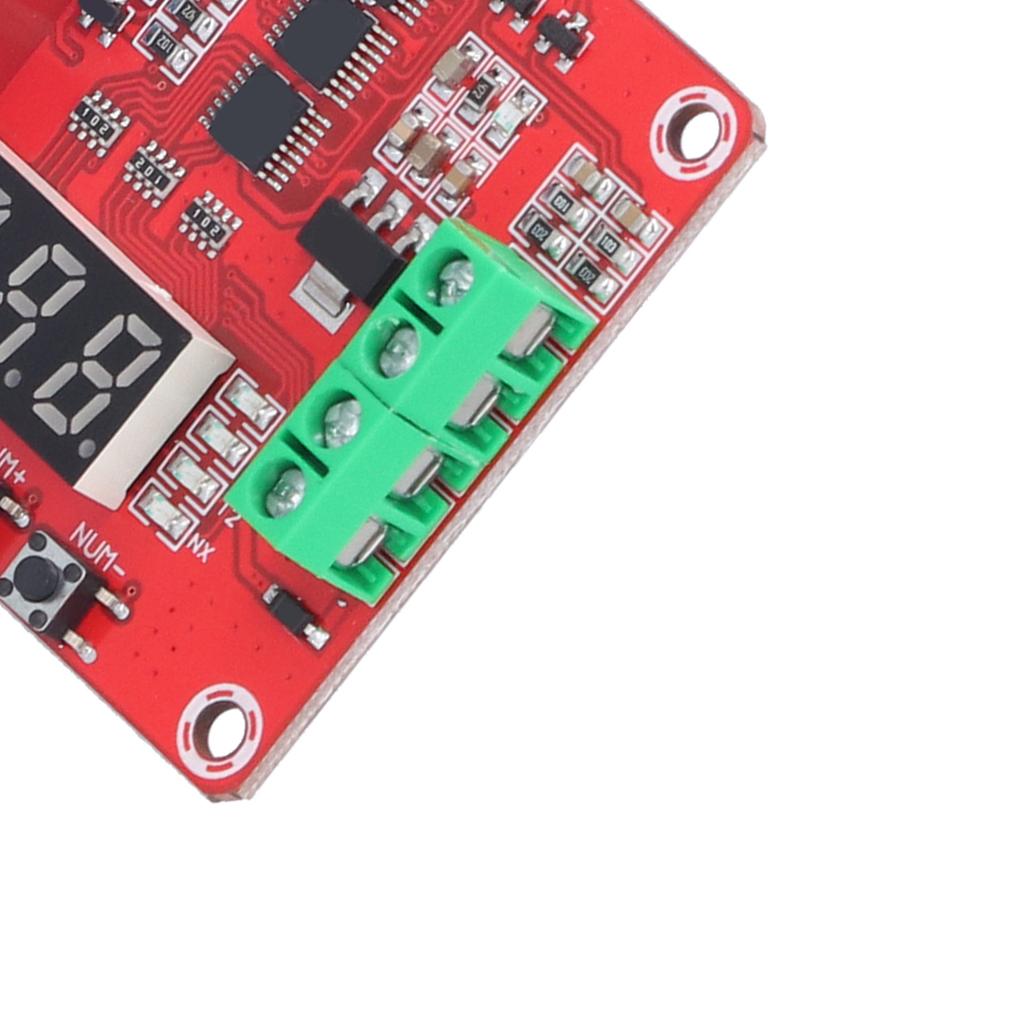
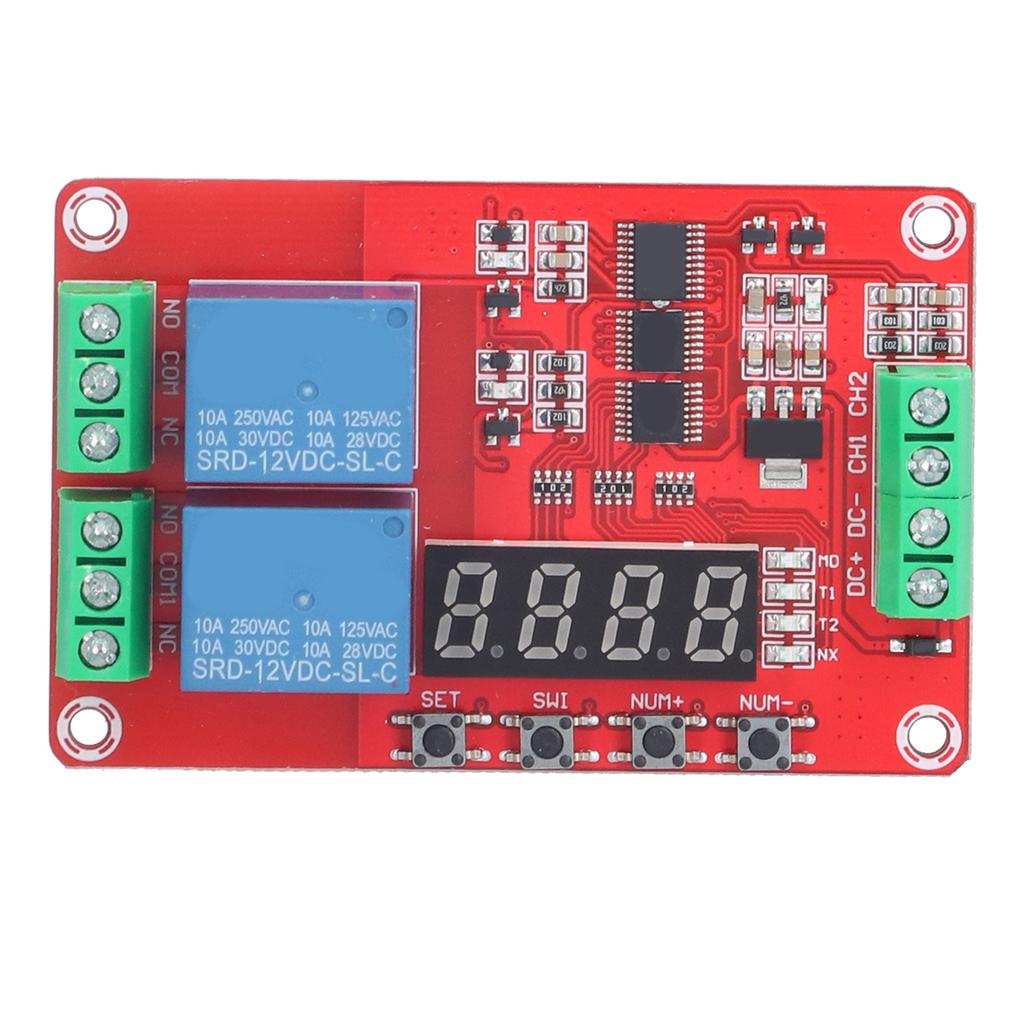
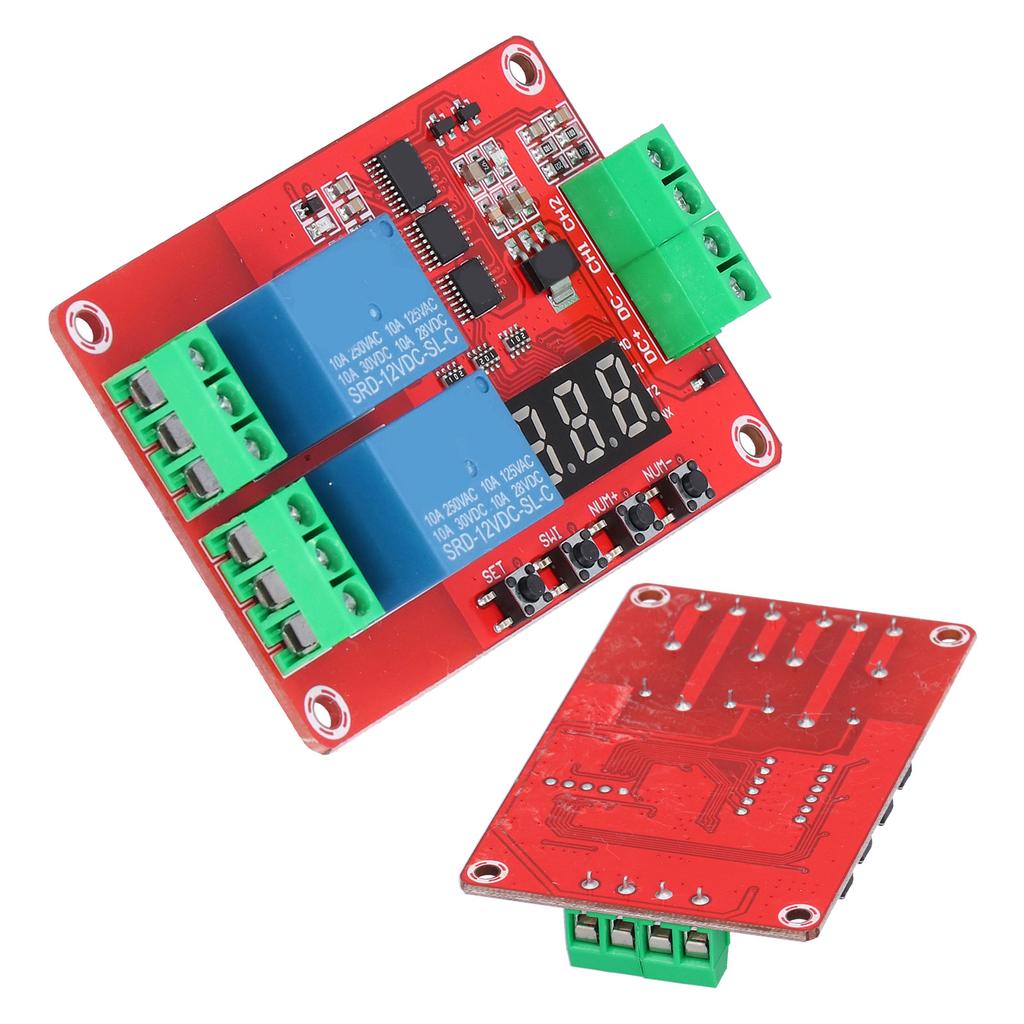
Module Control Terminal: There is a 3-wire interface, all interfaces have wiring terminals, which is convenient for users to use
1. +: power supply (5V, 12V and 24V modules are available)
2. -: negative pole of power supply
3. CH1: Input detection interface 1, active at high
3. CH2: Input detection interface 2, active at high
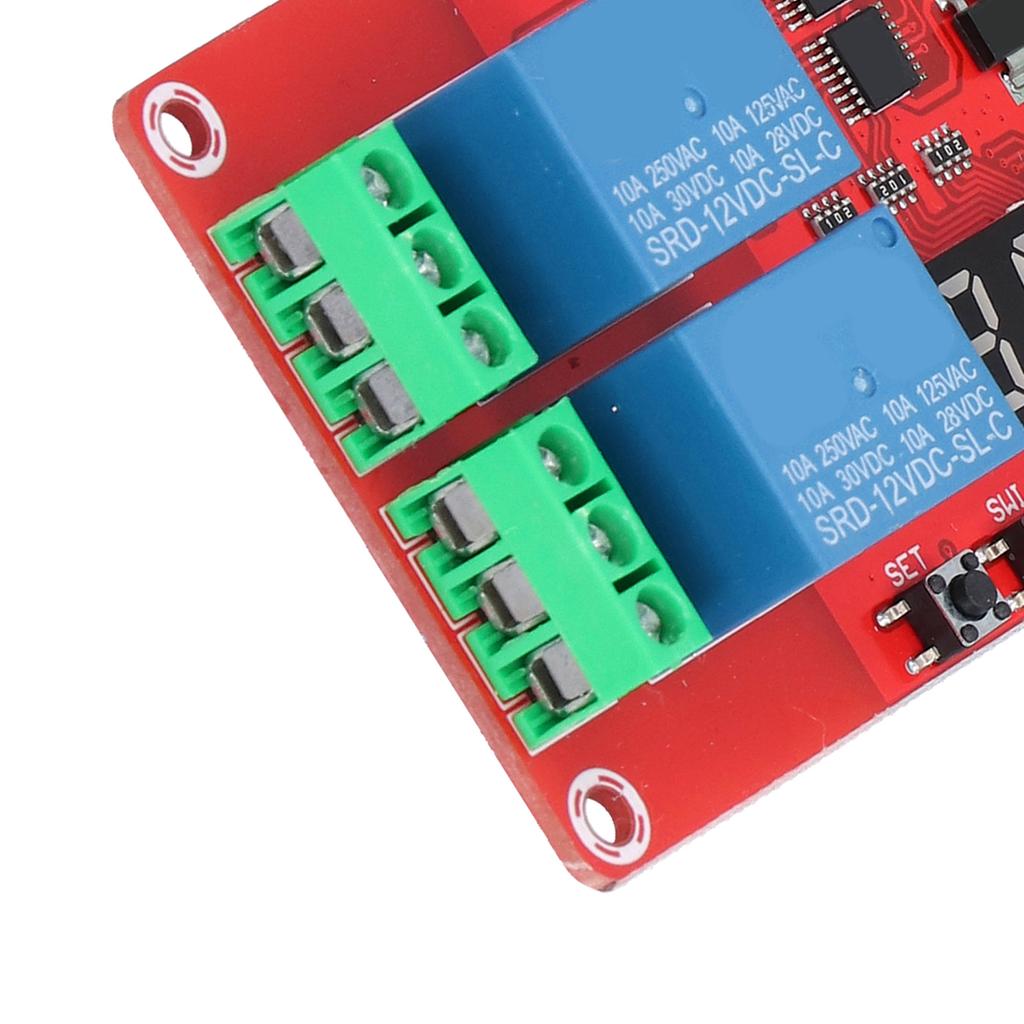
Relay Output Terminal: 6-wire interface, all interfaces have wiring terminals
1. NO1: Relay normally open interface 1, in the before the relay is closed, and short-circuit with COM1 after it is closed
2. COM1: Relay common interface 1
3. NC1: Relay normally closed interface 1, short-circuit with COM1 before the relay is closed, and in the after being closed
4. NO2: Relay normally open interface 2, in the before the relay is closed, and short-circuit with COM2 after it is closed
5. COM2: Relay common interface 2
6. NC2: Relay normally closed interface 2, short-circuit with COM2 before the relay is closed, and in the after being closed
Load Capacity: Maximum load capacity of normally open port: 0-30VCelsius10A, AC 0-250VCelsius10A
Maximum load capacity of normally closed ports: 0-28VCelsius10A, AC 0-125VCelsius10A
The user can select one of the following 20 functions through the button and display, and can set and save the function parameters, or view the current function parameters. The time parameter setting can be adjusted at least 0.1 second, and the accuracy is better than 0.01 second. Setting instructions can be obtained from the seller. Reminder: Function 1-8 will start automatically when power on, function 9-18 needs high- pulse signal (high- duration is not less than 20ms, the same below) to trigger the start, function 19-20 needs continuous high- .
Function 1: Timing pull-in: After power-on, delay T1 time relay pull-in, T1 is between 0.1 second and 270 hours, give a high- pulse signal to the CH1 interface, and repeat the function more than once;
Function 2: Timing off: when power on, the relay is closed, the delay time T1 time relay is off, T1 is between 0.1 second and 270 hours, give a high- pulse signal to the CH1 interface, and repeat the function more than once;
Function 3: Timing pull-in and then disconnection: After power on, the relay does not pull-in first, the relay pulls in after the delay time T1 arrives; the relay disconnects after the pull-in time T2 arrives, and the delay times T1 and T2 are between 0.1 second and 270 hours. , give a high- pulse signal to the CH1 interface, and repeat the function more than once;
Function 4: Timed disconnect and then pull-in: After power-on, the relay pulls in immediately, and the relay is disconnected after the delay time T1 arrives; the relay pulls in after the disconnection time T2 arrives, and the delay times T1 and T2 are between 0.1 seconds and 270 hours. , give a high- pulse signal to the CH1 interface, and repeat the function more than once;
Function 5: Infinite timing mode 1: After power-on, the relay does not turn on first, and the relay turns on after the delay time T1 arrives; the relay turns off after the turn-on time T2 arrives, and then repeats the state, the delay time T1 and T2 are at 0.1 between seconds and 270 hours, a high- pulse signal to the CH1 interface can restart the functions;
Function 6: Infinite timing mode 2: After power-on, the relay will be closed immediately, and the relay will be disconnected after the delay time T1










 No-delivery refund