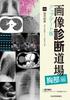
Master chest image interpretation by simulating everyday clinical practice!
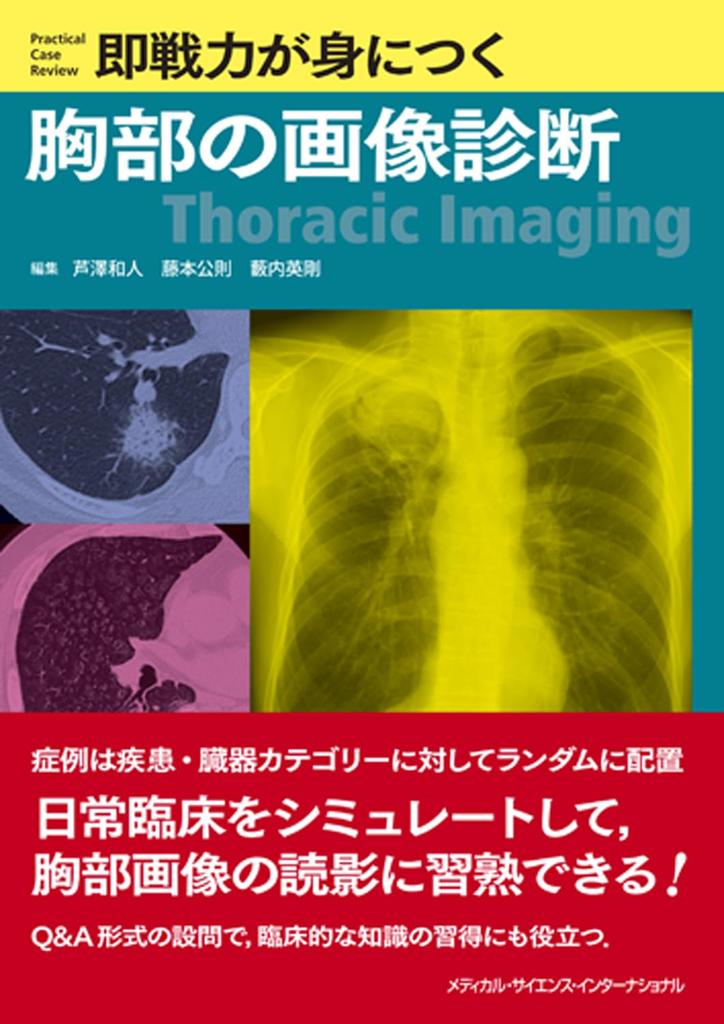
This is the fourth installment in the popular series, following "Brain," "Head and Neck," and "Hepatic, Gallbladder, and Pancreas." This practical guide is structured to align with real-world clinical practice, first presenting the current symptoms and progression, then presenting case images, explaining findings, and clarifying diagnoses (disease names). Divided into three difficulty levels—introductory, advanced, and challenging—cases are randomly arranged at each level to prevent inferring diagnoses, realistically recreating image interpretation in everyday clinical practice. Questions and answers incorporating clinical knowledge are incorporated, making this book useful for specialist examinations. It will be useful not only for radiology residents but also for residents and specialists in respiratory medicine and surgery.
This book is the fourth installment in the "Imaging Diagnostics for Immediate Practice" series, following "Brain," "Head and Neck," and "Hepatic, Gallbladder, and Pancreas." It features a rich selection of 150 diseases across 14 thoracic disease and organ categories. Like the previous three volumes, this one is written based on a concept that assumes actual clinical practice, and its features are listed below.
● After presenting clinical information, imaging findings, and final diagnosis and progression, it is followed by Q&A questions, key points of imaging diagnosis, an explanation of the disease, and differential diagnosis, with Q&A answers placed at the end of the main text. → Not only does it organize knowledge of imaging diagnosis, but the Q&A questions and answers also enable the acquisition of clinical knowledge.
● Cases are divided into "Introductory Level (level equivalent to the specialist examination)," "Proficiency Level (level equivalent to the diagnostic specialist examination)," and "Challenge Level (level to improve the skills of a diagnostic specialist)" based on difficulty. → It is possible to study according to the level of knowledge and experience.
● Cases are randomly arranged by disease/organ category based on difficulty. → In actual clinical practice, images of cases with an "unknown" disease/organ category are interpreted, simulating everyday clinical practice.
While plain chest X-rays are the first choice for diagnostic imaging in the chest region, remarkable advances and widespread adoption of diagnostic technology have led to CT playing a central role in diagnostic imaging. Currently, CT images with a thin reconstruction thickness are common, but the terms "thin-section CT" and "high-resolution CT (HRCT)" are used interchangeably. In this book, we have decided to refer to images with a 1-2 mm reconstruction thickness using high-frequency functions, which are displayed as bilateral reconstruction images, as thin-section CT, and to images displayed as single-lung reconstruction images, as high-resolution CT (HRCT).
This series was designed for residents aiming to obtain specialist qualifications and for diagnostic imaging physicians who do not specialize in the chest region. However, the editors believe that this is a practical clinical manual aimed at a wide range of readers, from beginners to experienced physicians. We sincerely hope that it will be useful to readers in their daily practice.
We would like to express our sincere gratitude to the mid-career and veteran physicians from all over Japan who kindly agreed to write this book despite their busy schedules. Finally, I would like to take this opportunity to express my deepest gratitude to Mr. Masamichi of Medical Science International for his extremely kind support over the two years since the book was first planned and published.
March 2024
Editor
Level 1 (Introductory): Level designed for the specialist examination (69 diseases)
Level 2 (Proficiency): Level designed for the diagnostic specialist examination (54 diseases)
Level 3 (Challenge): Level designed to improve diagnostic specialist skills (27 diseases)
(Cases within each level are arranged randomly)
By Disease/Organ Category
Infectious Diseases (28)
Neoplastic Diseases (21)
Airway Diseases (8)
Inhalation Diseases (4)
Allergic Diseases (7)
Metabolic Diseases (4)
Granulomatous Diseases (3)
Interstitial Lung Diseases (15)
Congenital Diseases (10)
Pulmonary Vascular Diseases (10)
Traumatic Diseases (3)
Mediastinal Diseases (18)
Pleural and Chest Wall Diseases (15)
Great Vascular Diseases (4)
*Numbers indicate the number of diseases


 No-delivery refund