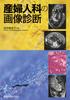
Dr. Yoshifumi Narumi, professor of radiology at Osaka Medical College, asked me if I would be interested in creating a book on obstetrics and gynecology, following on from "Imaging Diagnosis of Urological Diseases: Learning from Case Studies," which I was working on at the time. At first, I declined, feeling that I lacked the necessary skills. However, Dr. Narumi, a gentleman with a kind personality, gently persuaded me, and I ended up co-editing the book with Dr. Kazuhiro Yamamoto. I also felt a sense of obligation to repay the kindness shown to me by Professor Narumi, who lives in the same Kinki region.
This book, modeled after the previously published "Imaging Diagnosis of Urological Diseases," has the following features.
1) Case presentation + question format: This format creates a sense of tension and helps the material to remain firmly in the reader's memory. While this format is intended for residents preparing for the diagnostic specialist interview exam, it is also thought to be useful for reviewing diagnostic specialist and supervising physician classes. 2) Cases are categorized into three levels of difficulty: Level 1: Introductory cases (presumably for specialist interviews), Level 2: Qualification cases (to develop specialist skills), and Level 3: Challenging cases (review of supervising classes). While the appropriate target audience for each case is clearly indicated, it is not necessary to adhere to these levels; it is sufficient to use them as a guide to the difficulty of the cases.
3) Rare diseases have been kept to a minimum, and rare cases that are rarely encountered in daily clinical practice have been included as reference cases or notes whenever possible.
4) Each case and commentary is approximately 2-4 pages long, and in addition to key images for each case, images of similar cases and differential diagnosis cases are included as appropriate.
With the help of Dr. Narumi and Dr. Yamamoto, we were able to ask leading physicians involved in diagnostic imaging in obstetrics and gynecology to contribute to the book. We also made a generous request to Professor Takako Kiyokawa of Jikei University School of Medicine to contribute to the pathology findings section. Following on from the urology section, we believe the content is substantial.
Finally, we would like to express our deepest gratitude to the authors of each chapter who carved out valuable time from their extremely busy clinical routines, and to Mr. Osamu Masaji of the editorial department for his kind encouragement throughout the book's completion.
February 2020, Junko Takahama


 No-delivery refund