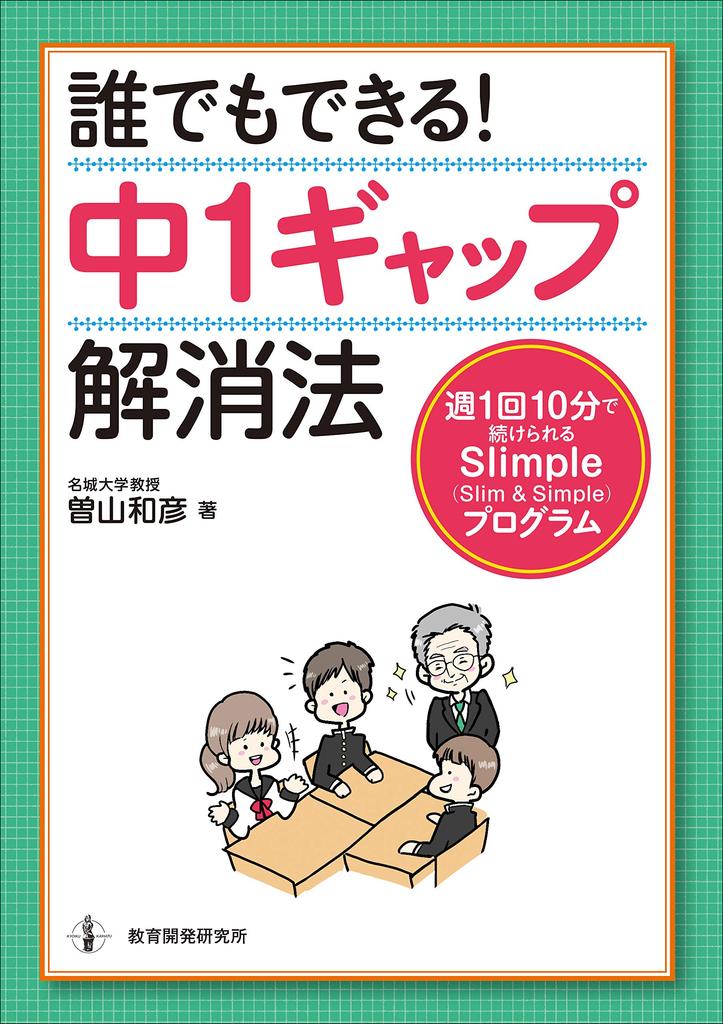
★A detailed and easy-to-understand introduction to this remarkable program that achieved zero school absenteeism with just 10 minutes of practice once a week, from implementation methods to lesson plans and concrete examples of exercises!
★Easy to incorporate into your busy daily life, and as you enjoy practicing with your children, your "power of interaction" will grow rapidly!
★Illustrated explanations make the exercises easy to follow!
{Main Table of Contents}
Introduction...You can do this! Recommendations for the "Slimple (Slim & Simple)" program
§1 The "Royal Way" to Resolving School Refusal and Bullying
1. The Characteristics of Children of Concern and What Teachers Need
2. School Maladjustment and the "Power of Interaction"
3. School Maladjustment and the First-Year Junior High School Gap
4. Recommendations: The "Royal Way" to Resolving School Refusal and Bullying
§2 Sakuragaoka Junior High School's Practices that Resulted in Zero First-Year Junior High School Refusal
1. A Practice Born from an Encounter with Two Principals
2. Sakuragaoka Junior High School's Practices: "Sakurazaki Time & Sakurazaki Talk"
3. A Roundtable Discussion with Principal Nakauchi, Teacher Takafuji, and Soyama
4. The Effects of "Sakurazaki Time & Sakurazaki Talk" on First-Year Students
5. Newspaper Feature and Comments from Alumni
§3 Elementary and Junior High School Collaboration "Slimple" Program
1. How the "Slimple" Program Was Born
2. Features and Basic Structure of the "Slimple" Program
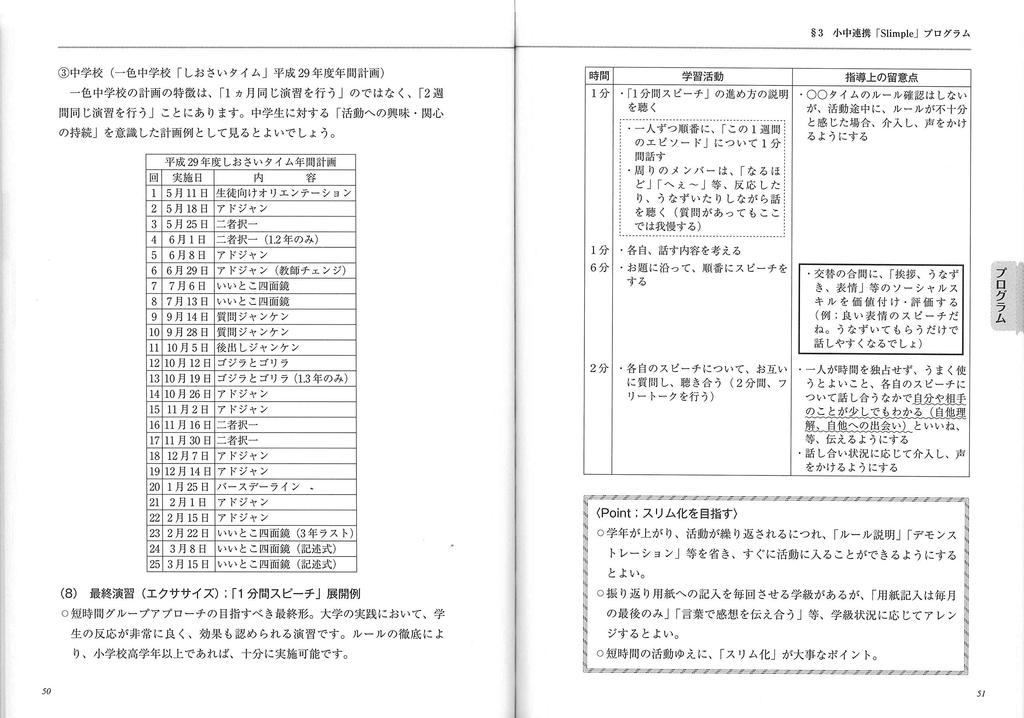
3. Short-Term Group Approach: Once-Weekly "XX Time": Examples and Points to Note
4. Worksheet Examples
5. Lesson Plans and Examples of Pair and Group Activities for Various Classroom Situations
6. Examples of Various Teaching Materials and Resources
7. Q&A on Program Implementation
8. Program Implementation Benefits and Challenges
9. Recommended Schools that Implement the "Slimple" Program
§4 Seven Techniques Supporting the "Slimple" Program
1. Social Skills Training
2. Structured Group Encounter
3. Eye Messages (I-Messages)
4. Encouragement
5. Reframing
6. Resource Search
7. Exception Search
§5 Seven Theories to Support Students and Teachers
1. "Handkerchief" Theory
2. "Glove" Theory
3. "Hole-in-the-Cup" Theory
4. "Weaving" Theory
5. "Reality's Magic Mallet" Theory
6. "Two Antennas" Theory
7. "Swimming Ability & Float" Theory
§6 Creating a "Culture" in the "Slimple" Program at School
1. A School That Created a "Culture": Yosami Junior High School
2. A School Working with Parents to Cultivate a "Culture": Yoshida Elementary School
§7 Expanding the "Slimple" Program to Various Regions
1. Three Functions of Student Guidance and "Takuto Time & Taku Talk"
2. Various Opinions from the Workshop
3. Tips for "Building a Solid Practice"
§8 Exercise-Related Materials
1. Question Rock-Paper-Scissors
2. Alternative (Which One to Choose)
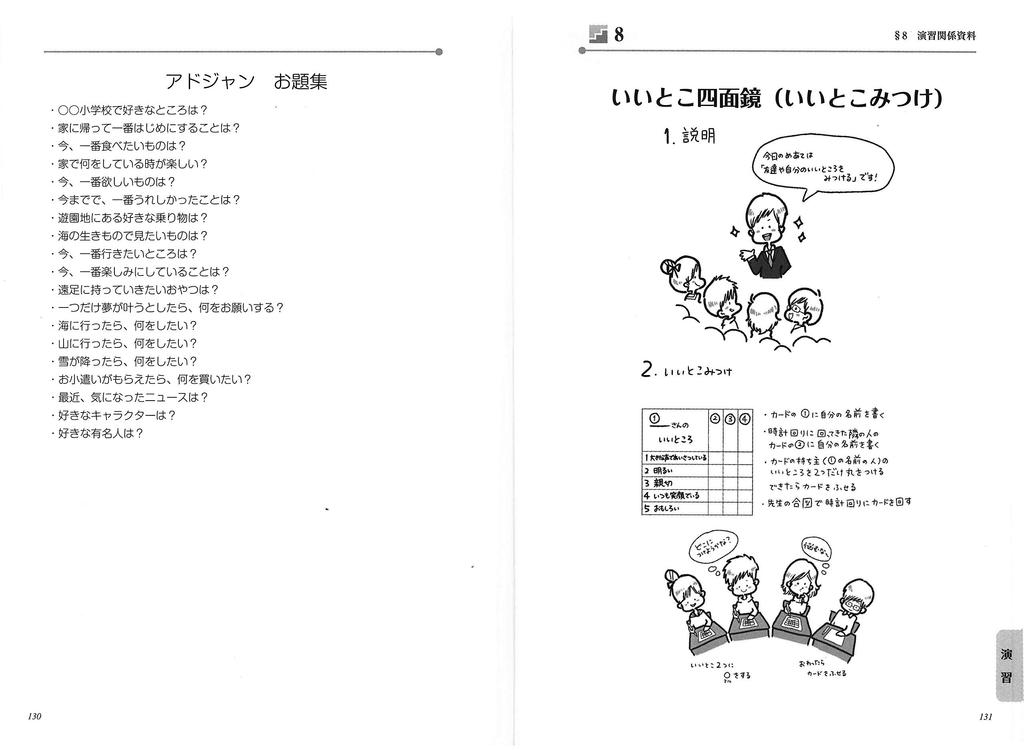
3. Ad-Jump
4. The Good Points of Four Mirrors (Finding the Good Points)
Conclusion


 No-delivery refund

![A Book That Clearly Explains All the Math You Need To Know for Six Years of Elementary School [Revised Edition]](https://img.joomcdn.net/f056e247595e7eaae2481c7586781507ca76b802_68_100.jpeg)




![Fukushima Method Writing Skills Workbook School 200-Character [Elementary Edition]](https://img.joomcdn.net/5574c6d3501e2b5e2e6b6f5b9050c812ec2de726_70_100.jpeg)